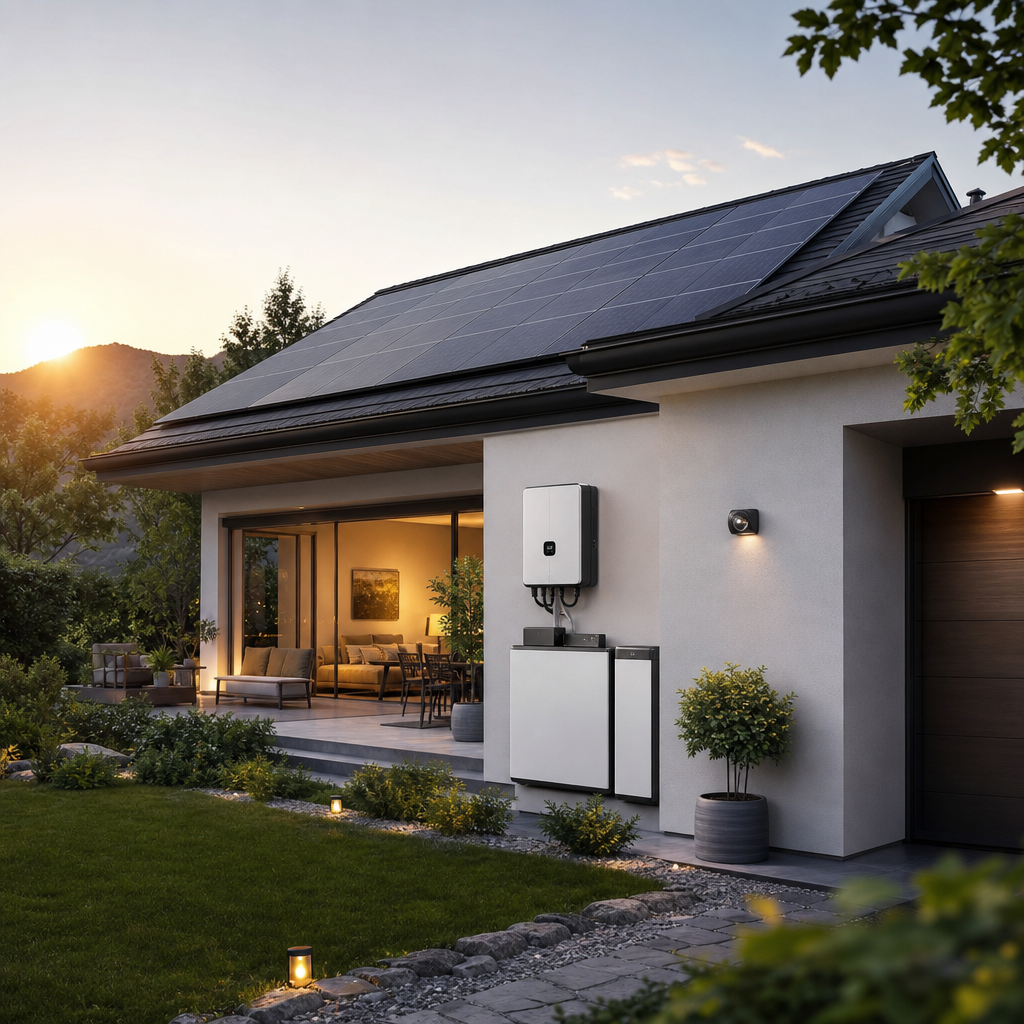
The US Made Solar Panels Mistake Most California Homeowners Don't Realize They're Making
September 17, 2026
|
California
Solar shopping in California looks simple on the surface: pick a panel, sign a contract, and start saving on electricity. In reality, the phrase "US made solar panels" hides a surprising amount of nuance, and homeowners who don't understand it often end up overpaying, underperforming, or discovering warranty gaps years too late. As of 2026, domestic manufacturing has expanded significantly under federal incentive programs, but not every "American-made" claim means the same thing — and not every installer backs that claim with real accountability.
This article breaks down the most common mistakes, myths, and pitfalls homeowners encounter when researching US made solar panels, and what to actually look for before signing a contract.
Many homeowners assume that because a panel is manufactured domestically, it must automatically outperform imported alternatives. That's not strictly true. Manufacturing location affects supply chain reliability, tariff exposure, and labor standards — but panel efficiency and durability come down to cell technology, materials, and quality control processes, regardless of where the factory sits.
That said, there are real advantages to sourcing domestically produced panels:
The mistake isn't choosing US-made panels — it's assuming the label alone guarantees performance. Homeowners still need to check the underlying cell technology, third-party efficiency certifications, and how the manufacturer stands behind its product over 25 years, not just at installation.
This is where many California homeowners get burned. A panel can be assembled in a US facility while the company backing the warranty is thinly capitalized, has no long-term service infrastructure, or has already gone through bankruptcy restructuring once before. A warranty is only as good as the company's ability to honor it decades from now.
Before assuming a warranty protects you, verify:
This is one reason www.everysun.com pairs US-made, high-efficiency panels with a 25-year product warranty and its own 20-year installation guarantee — so homeowners aren't solely dependent on a manufacturer's solvency a decade down the road.
Federal Trade Commission guidelines distinguish between products that are merely assembled domestically using imported components and those that meet a stricter "all or virtually all" domestic content standard. According to the FTC's Made in USA labeling guidance, marketing language can legally imply more domestic content than actually exists if a company isn't careful — or if a homeowner isn't reading closely.
This distinction matters financially. The domestic content bonus credit under the Inflation Reduction Act requires specific percentages of US-manufactured steel, iron, and manufactured products. A system that's only partially domestic may not qualify for the full incentive, leaving homeowners with a smaller tax credit than they expected.
| Label Claim | What It Usually Means | Tax Credit Eligibility Risk |
|---|---|---|
| "Made in USA" | Final assembly plus major components manufactured domestically | Low risk, typically qualifies |
| "Assembled in USA" | Final assembly only; cells/wafers may be imported | Moderate risk, partial qualification possible |
| "US Company" | Headquarters is domestic; manufacturing may be overseas | High risk, likely does not qualify |
| "Designed in USA" | Engineering only; manufacturing location unspecified | High risk, does not indicate domestic content |
Homeowners should ask installers directly for documentation on domestic content percentages rather than relying on marketing copy.
It's true that some overseas manufacturers have historically offered lower sticker prices, largely due to manufacturing scale and, at times, government subsidies. But sticker price isn't the full financial picture. Tariffs imposed under Section 201 and antidumping/countervailing duty orders have repeatedly increased the landed cost of imported cells and modules, sometimes erasing the initial price advantage. The U.S. International Trade Commission has documented multiple rounds of these trade actions affecting solar imports over the past decade, creating price unpredictability for anyone locking in a multi-year financing agreement.
Domestic panels, by contrast, are less exposed to these swings, which makes long-term cost projections more stable — an important factor when homeowners are comparing 20- or 25-year financing terms.
| Factor | US-Made Panels | Imported Panels |
|---|---|---|
| Tariff exposure | Low | Moderate to high |
| Supply chain lead time | Shorter | Longer, subject to shipping disruptions |
| IRA domestic content bonus eligibility | Typically yes | Often no or partial |
| Price stability over 10+ years | Generally stable | Historically volatile |
| Availability of local factory support | More common | Less common |
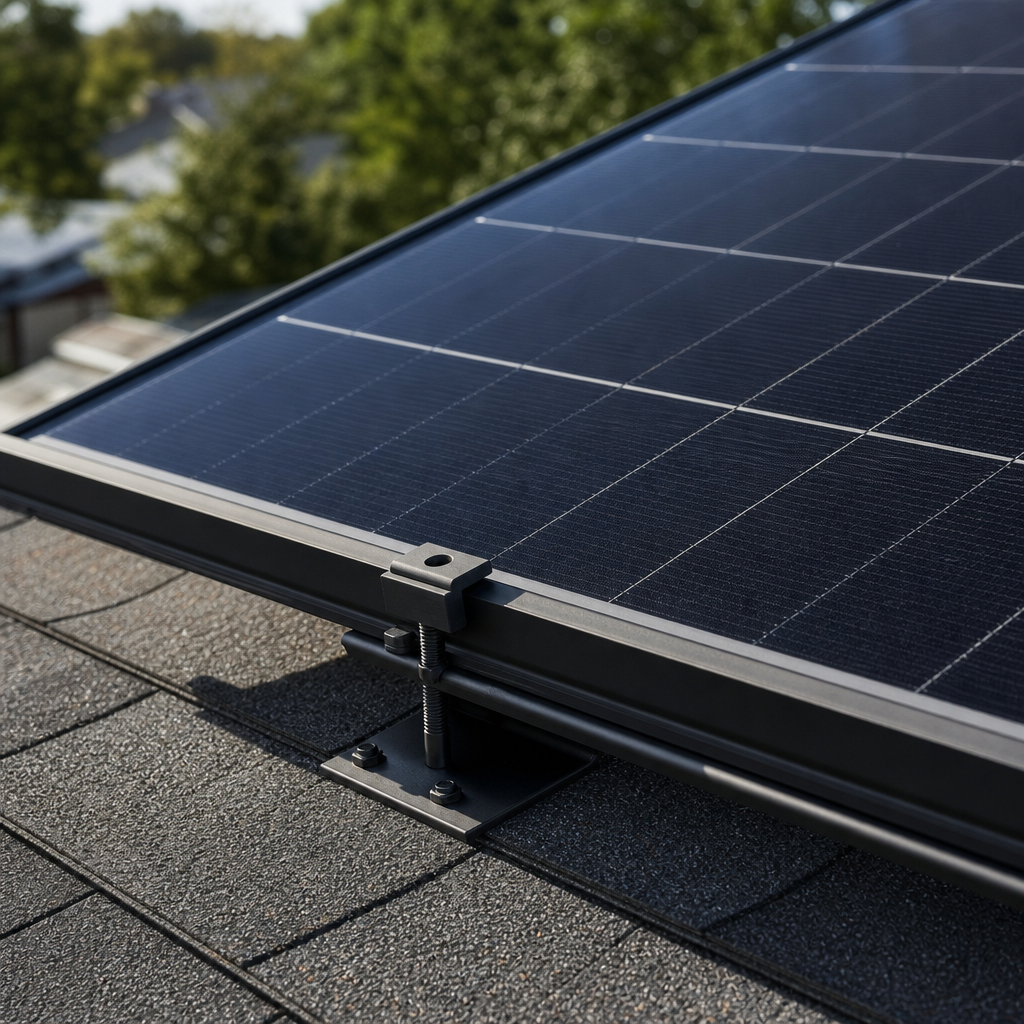
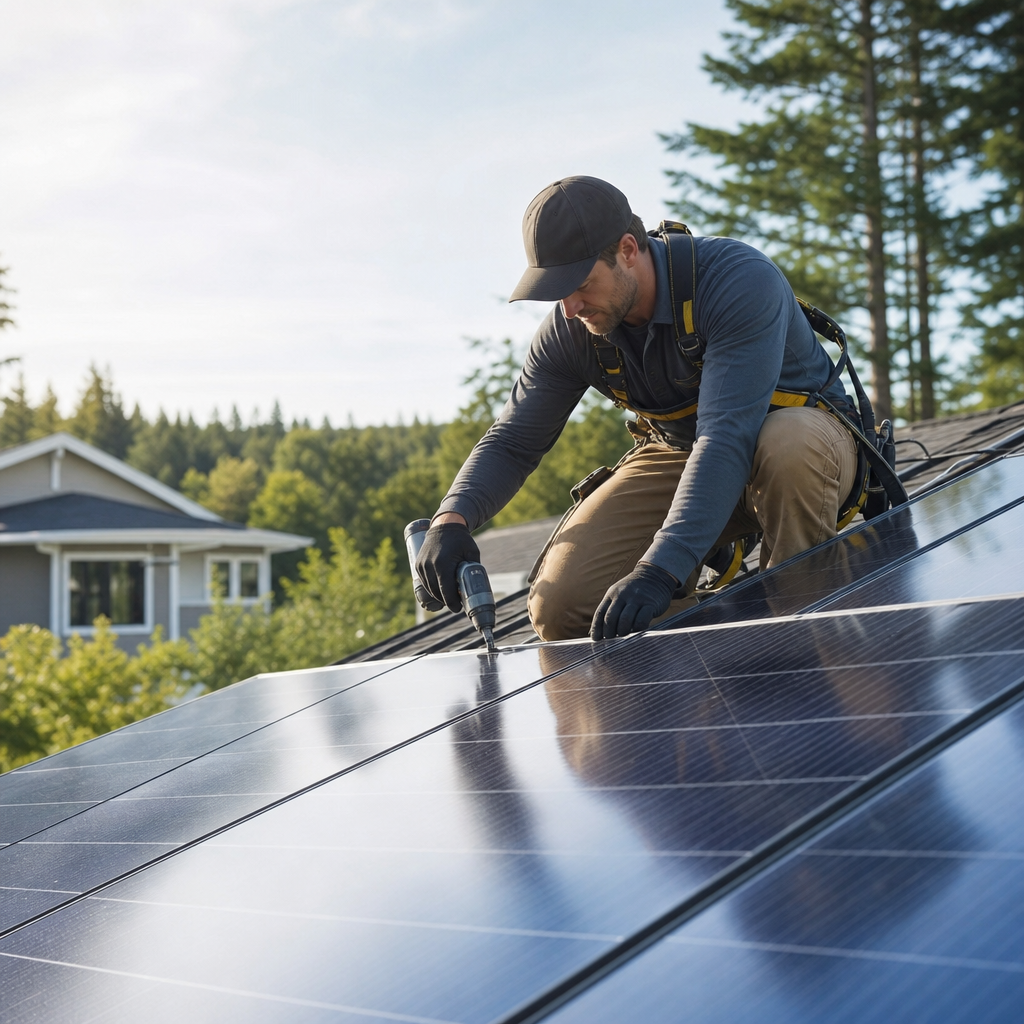
Even the best US made solar panels underperform when installed poorly. Roof penetration technique, wiring management, inverter placement, and racking quality all affect system output and long-term durability — and none of that is determined by the panel manufacturer. The National Renewable Energy Laboratory has published extensive research showing that improper installation is a leading cause of reduced solar output and premature system degradation, independent of panel quality.
This is a critical, often overlooked point: homeowners spend weeks comparing panel brands and efficiency ratings, then choose an installer based on price alone. A mismatched or rushed installation can undercut even premium-grade domestic panels.
Look for installers who:
Everysun addresses this gap directly by combining US-made panels with Swedish safety and installation standards — a rigorous approach to workmanship that goes beyond minimum code compliance, backed by a 20-year installation guarantee.
Some homeowners assume that because federal and state incentive programs exist, all systems are roughly the same value after subsidies. This isn't accurate. The Database of State Incentives for Renewables & Efficiency (DSIRE) tracks dozens of California-specific programs, and eligibility rules vary based on system specifications, installation date, and equipment sourcing. A system that doesn't meet domestic content thresholds may miss out on the 10% bonus credit entirely, while a comparable system using qualifying US-made components secures the full benefit.
Additionally, California's Self-Generation Incentive Program offers separate battery storage incentives that are calculated independently of panel sourcing but still depend on proper documentation and installer certification. Missing paperwork or using non-qualifying equipment can delay or disqualify rebate applications — another reason installer experience matters as much as panel selection.
Many homeowners choose panels first and treat battery storage as an afterthought. But not all panels and inverters are optimized for battery integration, and retrofitting a system later can be more expensive than installing an integrated solar-plus-storage system from the start. Given California's time-of-use electricity rates and periodic grid reliability concerns, battery storage has shifted from a luxury add-on to a near-necessity for maximizing savings.
Key considerations when planning for battery storage alongside US made solar panels:
Everysun designs systems with battery storage integration in mind from day one, rather than treating it as a bolt-on decision, which helps California homeowners avoid costly reconfiguration later.
A product warranty is a performance guarantee, not an expiration date. Most manufacturers guarantee panels will still produce at or above roughly 80-85% of their original rated output after 25 years — not that they'll stop functioning afterward. Many well-maintained systems continue generating usable electricity well beyond the warranty period, according to long-term degradation studies published by NREL. The mistake homeowners make is treating the warranty length as a lifespan estimate rather than what it actually is: a minimum performance commitment.
Understanding degradation rates helps homeowners compare panels more accurately than relying on warranty length alone.
| Panel Tier | Typical Annual Degradation Rate | Expected Output at Year 25 |
|---|---|---|
| Standard efficiency | 0.5%–0.8% per year | 80%–87% of original output |
| High-efficiency US-made | 0.3%–0.5% per year | 87%–92% of original output |
| Premium monocrystalline | 0.25%–0.4% per year | 90%–93% of original output |
Lower degradation rates translate directly into more electricity generated — and more savings — over the life of the system, which matters more than the warranty number printed on a brochure.
Solar installation safety standards vary more than most homeowners expect. Building codes set a minimum bar, but minimum compliance and best practice are not the same thing. Loose conduit fittings, undersized wiring, or improper grounding may pass a basic inspection while still creating long-term fire or performance risks. The National Fire Protection Association has published specific guidance on solar PV installation safety precisely because inconsistent practices across installers have led to preventable incidents.
Swedish installation standards, which emphasize rigorous safety protocols and long-term structural integrity, are one reason Everysun structures its installation process around requirements that often exceed baseline US code minimums. For homeowners comparing installers, it's worth asking directly what safety certifications and internal quality control processes are followed beyond what's legally required.
Some homeowners select financing after choosing equipment, assuming the two decisions are unrelated. In practice, financing terms can influence which systems make financial sense. A lease or power purchase agreement, for example, may not transfer ownership benefits like the tax credit to the homeowner at all, while a loan or cash purchase does. Understanding this distinction matters just as much as comparing panel brands.
Flexible payment options that still preserve homeowner access to tax credits — like those offered through www.everysun.com — allow California households to adopt solar without the tradeoffs that come with third-party ownership structures.
Before signing any solar contract, homeowners should get clear, documented answers to the following:
Installers unwilling or unable to answer these questions clearly and in writing should be treated as a red flag, regardless of how competitive their pricing appears.
Choosing US made solar panels is a genuinely smart move for California homeowners — it supports more stable pricing, stronger incentive eligibility, and often shorter supply chains. But the label alone doesn't protect against poor installation, weak warranty backing, or mismatched battery integration. The real value comes from pairing quality domestic panels with a rigorous, accountable installation process and financing that keeps ownership — and its benefits — in the homeowner's hands.
Everysun combines high-efficiency, US-made panels with Swedish-engineered safety and installation standards, a 20-year installation guarantee, and 25-year product warranties, giving California homeowners a way to avoid these common pitfalls from the start. For anyone comparing options, visiting www.everysun.com is a straightforward way to see how thoughtful engineering, transparent warranties, and flexible financing come together to make solar both dependable and genuinely affordable.
© 2025 Everysun Inc. All Rights Reserved.


Get Your Free Solar Quote
Request your free quote and see how solar can work for your home and budget