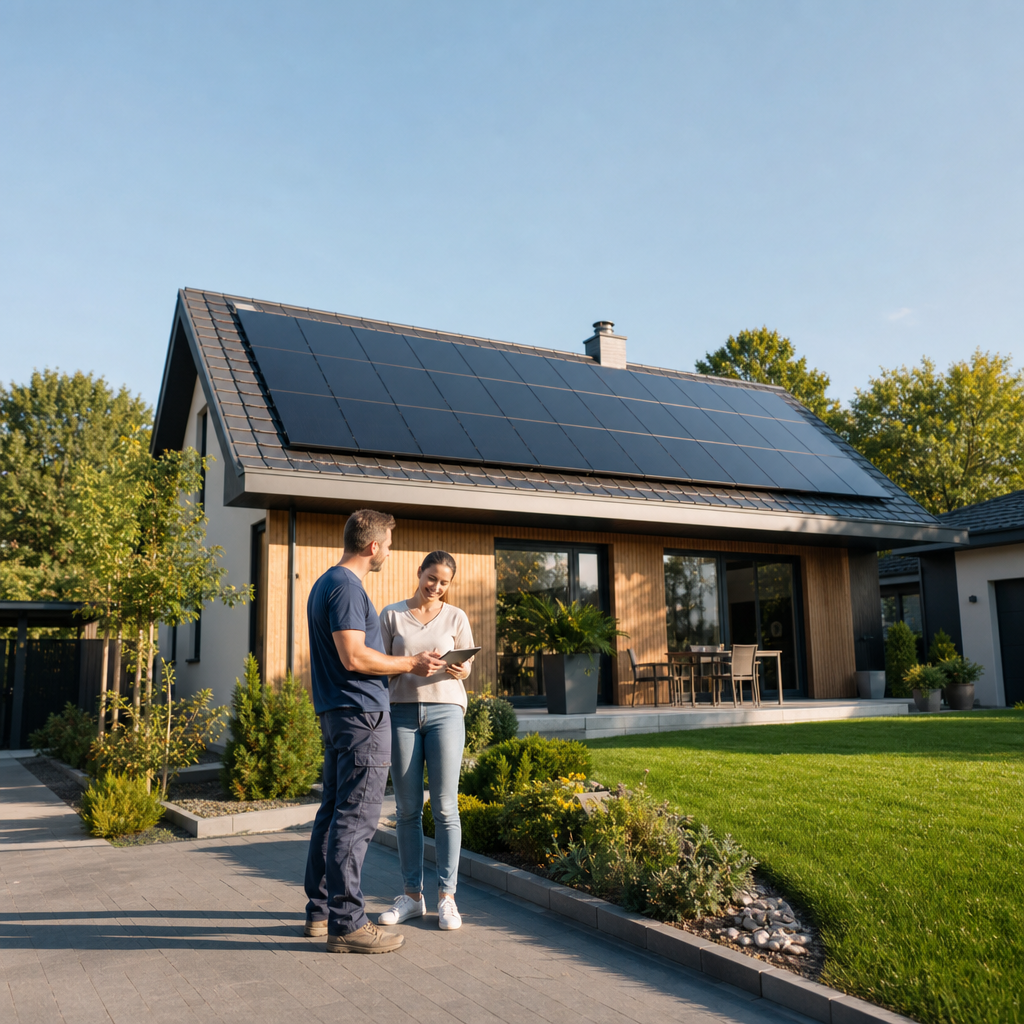
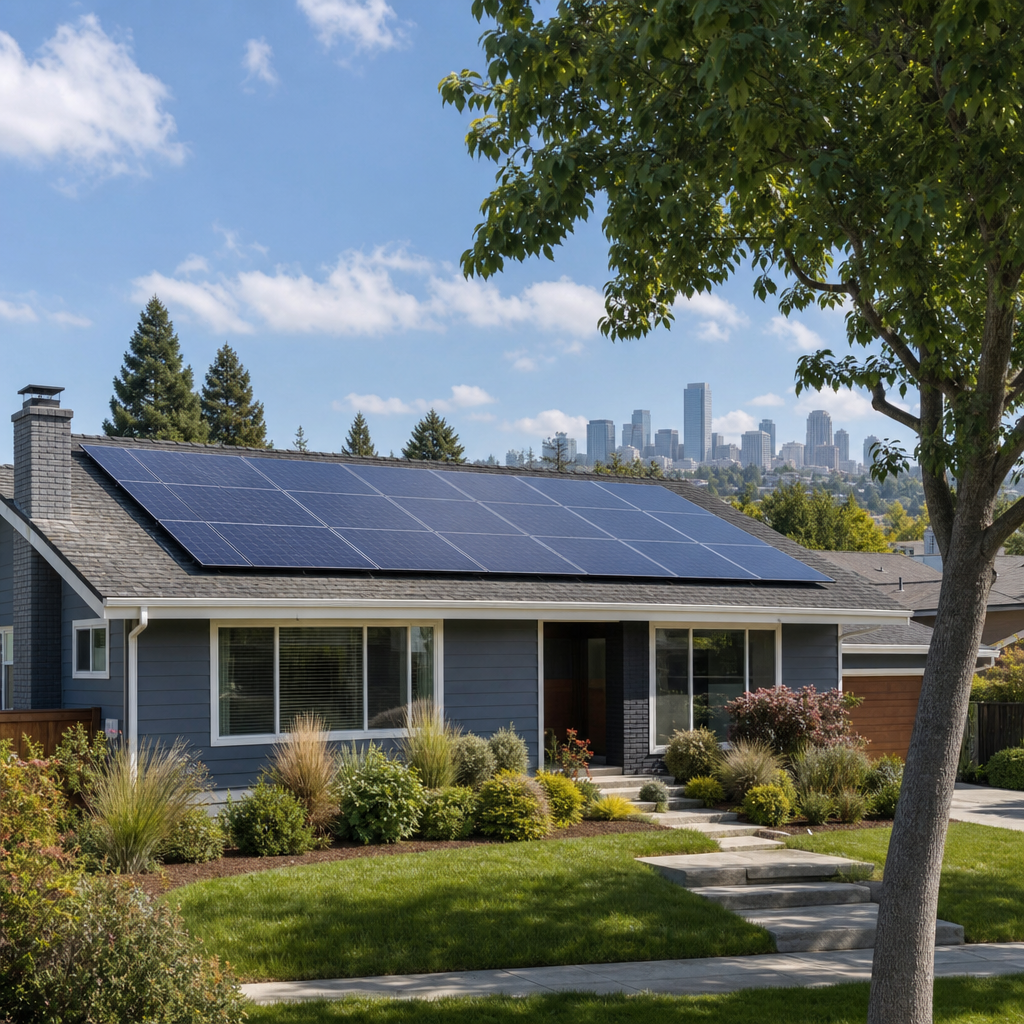
California Homeowners, Meet the Solar Power System for House With Battery That Keeps Lights On During Outages
September 18, 2026
|
California
California homeowners have spent the last few years watching electricity rates climb, wildfire-related outages disrupt daily life, and utility policies shift under programs like NEM 3.0. For many, the response has been the same: install a solar power system for house with battery storage rather than a panels-only setup. Adding a battery changes the entire value proposition of solar — it's no longer just about lowering a monthly bill, it's about controlling when and how you use the energy your roof produces, and keeping the lights on when the grid can't.
This article breaks down how these systems work, what they cost, how to size one correctly, and what to look for in an installer, so you can make a confident, well-informed decision for your home.
For years, California homeowners could install solar panels alone and rely on net energy metering to bank excess daytime production as credits against nighttime usage. That math changed significantly when the California Public Utilities Commission overhauled the compensation structure. Under NEM 3.0, the value of exporting excess solar power back to the grid dropped by roughly 75% compared to the previous policy, making it far less attractive to simply sell power back to your utility.
Batteries fill that gap. Instead of exporting surplus midday solar generation for a few cents per kilowatt-hour, homeowners now store it and use it themselves during the evening peak-rate hours when utility electricity is most expensive. This single shift — from exporting to self-consumption — is why battery attachment rates on new residential solar installations in California have climbed sharply since 2023.
Beyond the financial incentive, California's wildfire season brings recurring Public Safety Power Shutoffs (PSPS) that can leave neighborhoods without grid power for hours or days. A properly sized battery keeps essential circuits — refrigerators, medical equipment, Wi-Fi, well pumps — running through these events without needing a noisy gas generator.
A modern residential solar-plus-storage system has four core components working together:
During the day, solar panels typically produce more electricity than a home needs. Rather than sending that surplus to the grid for minimal credit, the system routes it into the battery. Once the battery reaches full charge, any additional excess can still be exported. In the evening, when solar production drops off and utility rates rise under time-of-use plans, the home draws from the battery instead of the grid. If the battery depletes overnight, the home seamlessly pulls from the grid until the sun comes up again.
During a grid outage, a battery equipped with backup capability disconnects the home from the grid (for safety, so utility workers aren't at risk) and powers essential circuits directly, often switching over in under a second so refrigerators and electronics never lose power.
Sizing depends on household energy consumption, roof space, sun exposure, and whether you want partial or whole-home backup. Everysun's design consultations typically start with 12 months of utility usage data to model production against consumption hour by hour, but the table below offers general benchmarks for typical California households.
| Household Profile | Avg. Monthly Usage (kWh) | Suggested Solar Size | Suggested Battery Capacity |
|---|---|---|---|
| Small home, 1-2 residents | 400–600 | 4–5 kW | 5–10 kWh |
| Average family home, 3-4 residents | 700–1,000 | 6–8 kW | 10–15 kWh |
| Larger home w/ EV charging | 1,100–1,500 | 9–12 kW | 15–25 kWh |
| Home with pool + EV + AC | 1,600+ | 12–15+ kW | 25–30+ kWh |
For most families wanting whole-home backup rather than just a few essential circuits, installers typically recommend stacking two battery units or choosing a higher-capacity modular battery. It's worth noting that backing up high-draw appliances like electric ranges, AC compressors, or EV chargers requires significantly more battery capacity and often a larger inverter, so being clear about your backup priorities before installation is essential.
Not all solar panels are built the same, and the differences matter more over 25 years than they do on day one. Panel efficiency — how much sunlight is converted to usable electricity — determines how much power you can generate from a limited roof area, which is especially important on California homes with dormers, skylights, or partial shading.
US-manufactured panels have also become more relevant to homeowners for a few practical reasons:
Everysun combines these high-efficiency, US-made panels with installation practices drawn from Swedish safety and engineering standards — known globally for rigorous electrical code compliance and long-term durability testing in harsh climates. That combination of domestic hardware and Nordic-grade installation discipline is designed to give California homeowners a system that performs reliably through decades of sun exposure, heat cycling, and occasional wildfire smoke and ash.
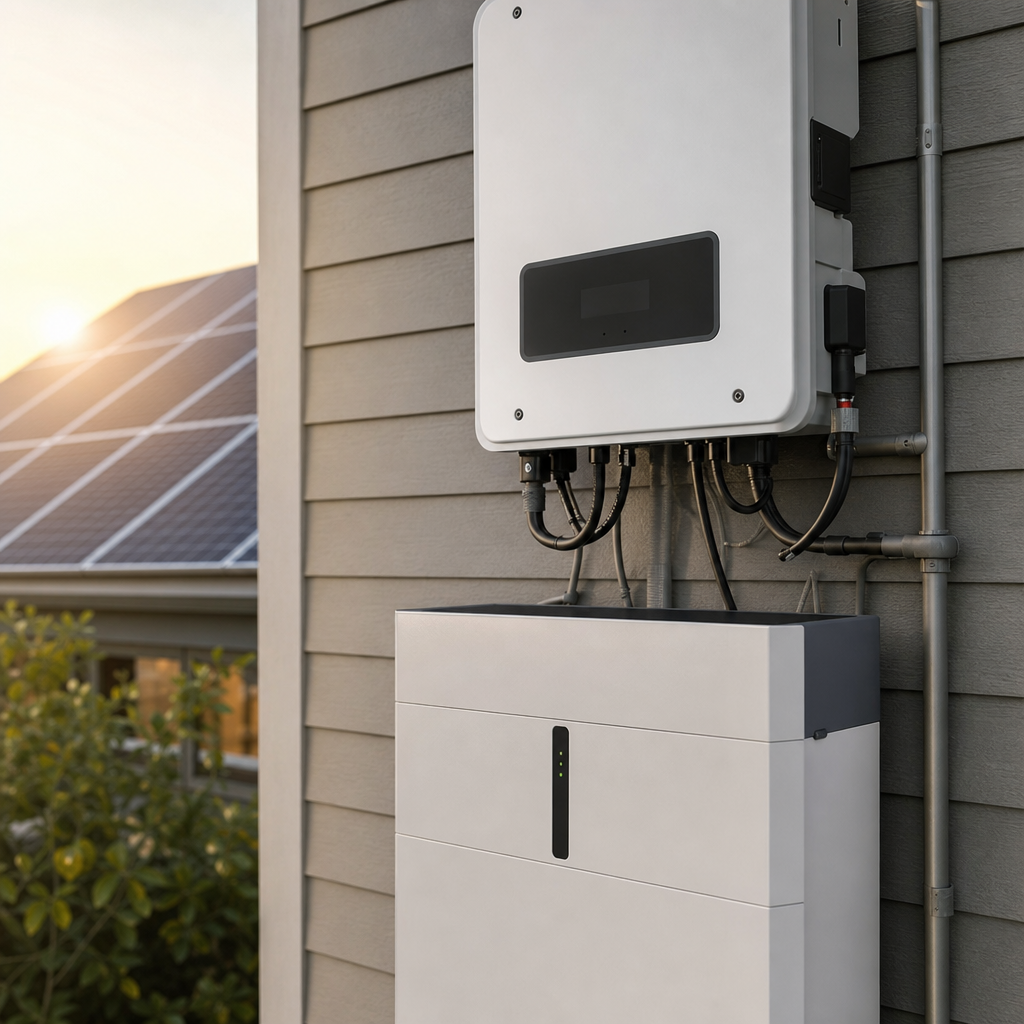
Not all home batteries offer the same chemistry, lifespan, or backup behavior. Lithium iron phosphate (LFP) batteries have become the dominant choice in residential solar because of their thermal stability and long cycle life compared to older nickel-manganese-cobalt (NMC) chemistries.
| Feature | LFP (Lithium Iron Phosphate) | NMC (Lithium Nickel Manganese Cobalt) |
|---|---|---|
| Typical cycle life | 6,000–10,000 cycles | 2,000–4,000 cycles |
| Thermal stability | High — lower fire risk | Moderate |
| Energy density | Slightly lower | Higher (more compact) |
| Common use case | Home backup storage | EVs, some early home batteries |
| Typical warranty | 10 years | 8–10 years |
Beyond chemistry, homeowners should compare how batteries handle outages:
Homeowners in wildfire-prone or PSPS-affected areas of the state should pay particular attention to how quickly a system transfers to battery power during a grid failure, since even a several-second delay can disrupt sensitive electronics or medical devices. The U.S. Department of Energy publishes useful consumer guidance on evaluating storage systems for exactly these scenarios.
Cost is naturally the first question most homeowners ask, and it depends heavily on system size, battery capacity, roof complexity, and available incentives. As of 2026, a fully installed solar-plus-battery system in California typically ranges as follows:
| System Component | Typical Cost Range (Installed) |
|---|---|
| Solar panels only (6–8 kW) | $16,000–$24,000 before incentives |
| Single battery (10–13 kWh) | $9,000–$14,000 |
| Solar + single battery combo | $23,000–$36,000 before incentives |
| Solar + whole-home battery backup | $35,000–$55,000+ before incentives |
After applying the 30% federal solar tax credit and any available state or utility rebates, many California homeowners bring their net cost down substantially. Financing options — including solar loans, leases, and power purchase agreements — can also spread the cost over 10-25 years, often resulting in monthly payments lower than a typical electric bill. Everysun offers flexible payment structures specifically designed to make the upfront transition manageable, backed by a 20-year installation guarantee and 25-year product warranties that protect the investment well beyond the payback period.
Payback period varies by household, but most California homeowners with time-of-use utility rates see their system pay for itself within 6-9 years, with 20+ years of largely free electricity generation remaining afterward given typical panel and battery lifespans.
Not every solar company builds systems to the same standard, and battery installations in particular involve electrical work that must be done correctly for both performance and safety. Before signing a contract, homeowners should ask:
Asking these questions upfront avoids the common frustration of homeowners left navigating manufacturer warranty claims alone after their installer has gone out of business — a real risk in an industry that has seen high turnover among smaller regional installers.
One of solar's biggest advantages is how little maintenance it requires compared to other home systems. That said, understanding the long-term care involved helps homeowners plan realistically:
Because Everysun backs installations with a 20-year workmanship guarantee alongside 25-year manufacturer warranties on panels, California homeowners get a long runway of protection that few installers in the state currently match. You can review the specifics of coverage and system options directly at www.everysun.com.
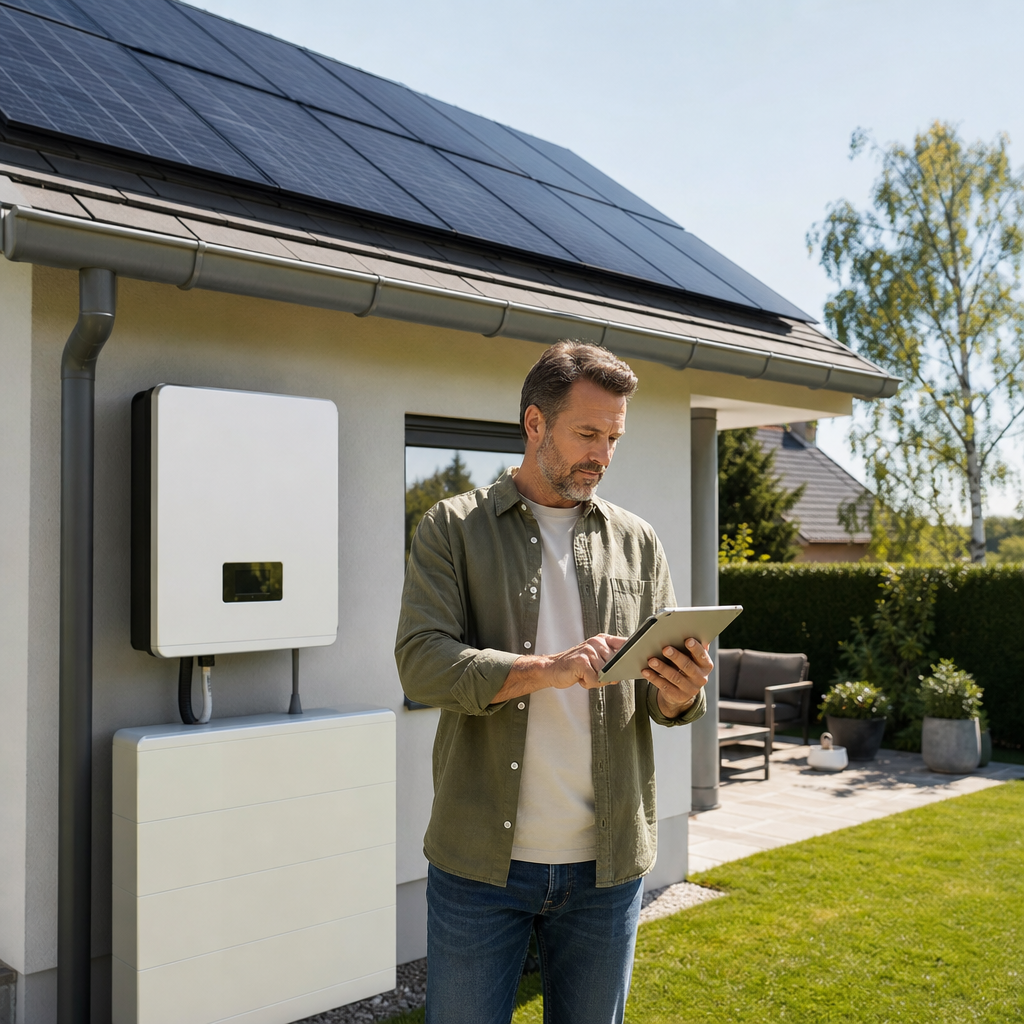
Not every household needs the largest battery on the market, and not every home requires whole-house backup. The right configuration depends on a few honest questions:
For most California households, the financial case for pairing solar with at least a modest battery has become considerably stronger since the shift to NEM 3.0, while the resilience case has grown alongside more frequent extreme weather and wildfire-driven outages. A well-designed system, sized to actual usage patterns rather than generic estimates, tends to deliver the best combination of savings and reliability.
Choosing a solar power system for house with battery storage is one of the more consequential home upgrades a California homeowner can make — both financially and in terms of everyday reliability. The technology has matured considerably: panels are more efficient, batteries are safer and longer-lasting, and financing options have made the upfront cost far more approachable than it was even a few years ago.
What matters most is working with a team that designs the system around your actual home and usage, not a one-size-fits-all package, and that stands behind the installation for decades, not just the first year. Everysun combines US-made, high-efficiency panels with Swedish-grade installation standards, flexible payment options, a 20-year installation guarantee, and 25-year product warranties — giving California homeowners a dependable path to lower bills and real energy independence. To see how a custom-designed solar and battery system could work for your home, visit www.everysun.com and start with a personalized consultation.
© 2025 Everysun Inc. All Rights Reserved.


Get Your Free Solar Quote
Request your free quote and see how solar can work for your home and budget