How Many Hours of Backup Power Does Solar Power Outage Protection Give Your California Home?
November 5, 2026
|
California
California homeowners lost power for an average of several hours per outage event during the past few wildfire seasons, and Public Safety Power Shutoffs (PSPS) continue to strike without much warning. If you've ever sat in the dark wondering why you invested in solar panels but still lost power the moment the grid went down, you're not alone. Standard grid-tied solar systems automatically shut off during outages for safety reasons — meaning solar power outage protection for your home requires a specific combination of equipment, not just rooftop panels.
This guide breaks down exactly what it takes to keep your California home powered during an outage, what it costs in 2026, and how to choose the right level of protection for your household.
Many homeowners are surprised to learn that a grid-tied solar system without battery storage will not power your home during a blackout. This isn't a flaw — it's a federally mandated safety feature called "anti-islanding." When the grid goes down, utility crews need to know that no electricity is flowing back into the lines they're repairing. Your inverter senses the outage and automatically disconnects your solar system, even on a sunny day.
This means that unless your system includes battery storage with the proper transfer equipment, your home goes dark right alongside your neighbors during a PSPS event or storm-related outage. According to the U.S. Department of Energy, homeowners who want backup power during outages need either a battery storage system or a generator paired with the right switching hardware.
True solar power outage protection for your home comes from three components working together:
Pricing varies significantly based on battery capacity, home energy use, and whether you're installing a new solar system or adding storage to an existing one. Below is a general cost breakdown for California homeowners this year.
| Protection Level | Equipment | Typical Cost Range | What It Covers |
|---|---|---|---|
| Basic backup | Single battery (10 kWh) + critical load panel | $12,000–$16,000 | Fridge, Wi-Fi, lights, a few outlets |
| Standard whole-home backup | Two batteries (20 kWh) + smart panel | $20,000–$28,000 | Most daily appliances, well pump, HVAC (limited) |
| Full whole-home backup | Three+ batteries (30 kWh+) + whole-home transfer switch | $30,000–$45,000 | Entire home, including HVAC and EV charging |
| Battery-only retrofit (existing solar) | Battery + inverter upgrade | $10,000–$18,000 | Depends on battery size chosen |
Federal tax credits, California-specific incentives, and manufacturer rebates can offset a meaningful portion of these costs. As of 2026, the federal residential solar tax credit still allows homeowners to claim a percentage of total system costs, including battery storage, so it's worth confirming current eligibility before you budget.
Sizing your battery system correctly is the difference between genuine peace of mind and a backup system that runs out of power after two hours. The right size depends on your household's average daily energy consumption, which appliances you consider essential, and how long outages typically last in your area.
A few sizing guidelines:
| Household Need | Recommended Battery Capacity | Estimated Backup Duration |
|---|---|---|
| Refrigerator, lights, Wi-Fi, phone charging | 5–10 kWh | 12–24 hours |
| Above + microwave, TV, washer | 10–20 kWh | 10–18 hours |
| Whole-home including HVAC and well pump | 20–30 kWh | 8–14 hours |
| Whole-home + EV charging | 30+ kWh | 6–10 hours (without solar recharge) |
Keep in mind these figures assume no solar recharging during the outage. If the sun is out, your panels can extend these windows considerably by recharging the battery during daylight hours, which is one of the key advantages solar-plus-storage has over generator-only backup.
Homeowners often ask whether a gas or propane generator is a simpler, cheaper way to get outage protection. The honest answer is that it depends on your priorities. Here's how the two options stack up.
| Factor | Battery Storage | Gas/Propane Generator |
|---|---|---|
| Upfront cost | Higher ($10,000–$45,000) | Lower ($3,000–$10,000) |
| Fuel needed | None (recharges via solar or grid) | Requires ongoing fuel supply |
| Noise | Silent | Loud, 60–80 decibels |
| Maintenance | Minimal | Regular oil changes, fuel stabilization |
| Emissions | Zero | Produces carbon emissions |
| Startup time | Instant, seamless | 10–30 seconds, may cause flicker |
| Lifespan | 10–15 years | 15–20 years with maintenance |
| Works during fuel shortages | Yes | No |
Battery storage tends to appeal more to homeowners who already have or are installing solar, since the two technologies work together seamlessly. Generators remain popular for whole-home backup at a lower upfront price, but ongoing fuel costs and maintenance add up over time. The California Energy Commission also notes that battery storage paired with solar provides emissions-free backup, which matters increasingly in wildfire-prone regions where air quality is already a concern.
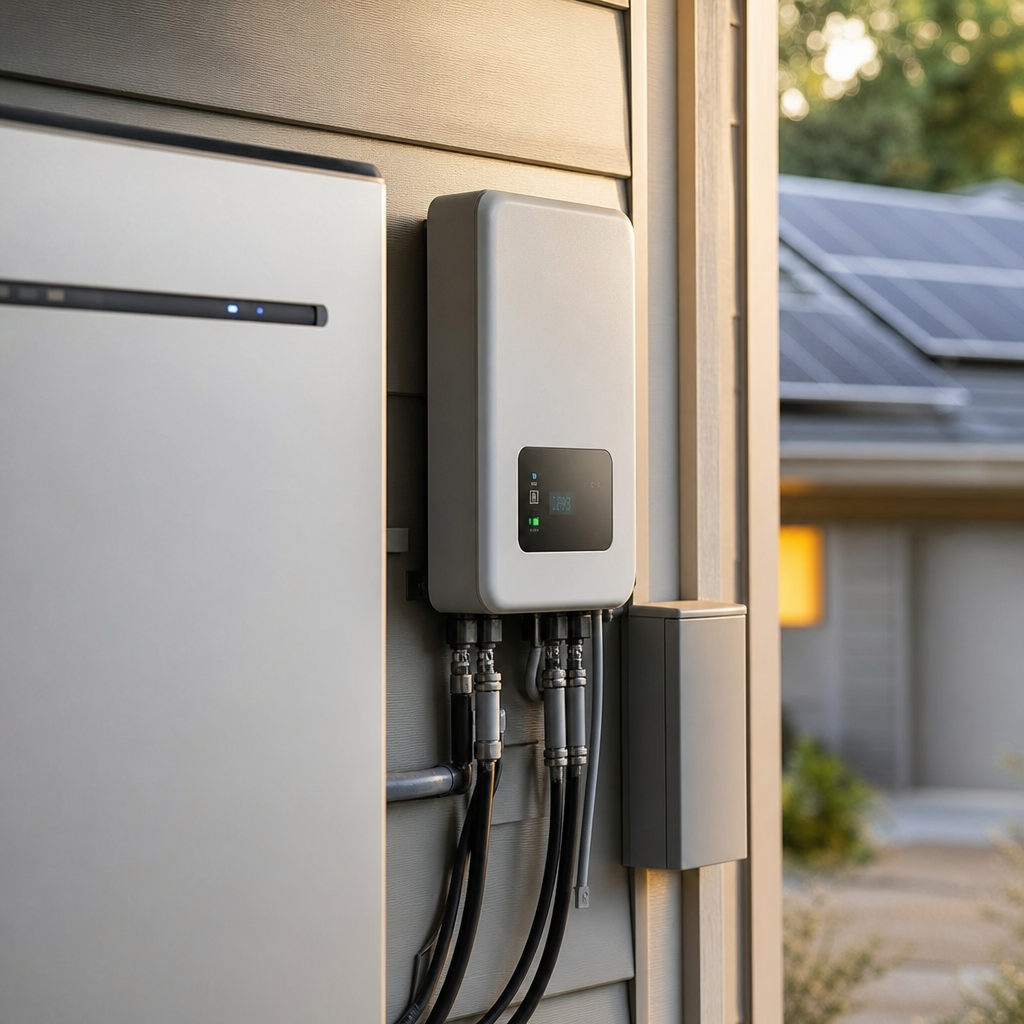
California homeowners face a unique set of circumstances that make solar power outage protection for the home more than a convenience — for many, it's becoming essential infrastructure.
These factors combine to make battery storage less of a luxury add-on and more of a practical necessity for homeowners who want reliable power regardless of what's happening on the grid.
Not all solar-plus-storage systems are created equal, and the quality of your components has a direct impact on how well your home performs during an outage. When evaluating options, homeowners should pay attention to:
At www.everysun.com, every system is built around US-made, high-efficiency panels combined with Swedish-engineered safety standards, ensuring that outage protection isn't just about having a battery installed, but having a system engineered to perform reliably when you need it most. The company backs its installations with a 20-year installation guarantee and 25-year product warranties, giving homeowners long-term confidence in their investment.
Adding solar power outage protection to your home typically follows a predictable sequence, whether you're starting from scratch or retrofitting an existing solar array.
Step 1: Energy audit and consultation A qualified installer reviews your past electricity bills, identifies your essential loads, and recommends a battery size based on your actual usage patterns rather than generic estimates.
Step 2: System design Engineers design the solar array (if needed), select battery capacity, and plan the placement of a critical load panel or whole-home transfer switch.
Step 3: Permitting and utility interconnection California requires permits for solar and battery installations, along with utility approval for interconnection. This step can take anywhere from a few days to several weeks depending on your local jurisdiction.
Step 4: Installation Panels, inverters, batteries, and switching equipment are installed, typically within one to three days for most residential systems.
Step 5: Inspection and activation A local inspector verifies code compliance, after which the utility grants permission to operate, and your system is fully activated.
Step 6: Homeowner training A reputable installer will walk you through how your system behaves during an outage, including which circuits are backed up and how to monitor battery levels through a mobile app.
Working with an experienced, licensed installer like www.everysun.com ensures each of these steps is handled correctly, reducing the risk of delays, code violations, or underperforming systems once the next outage hits.
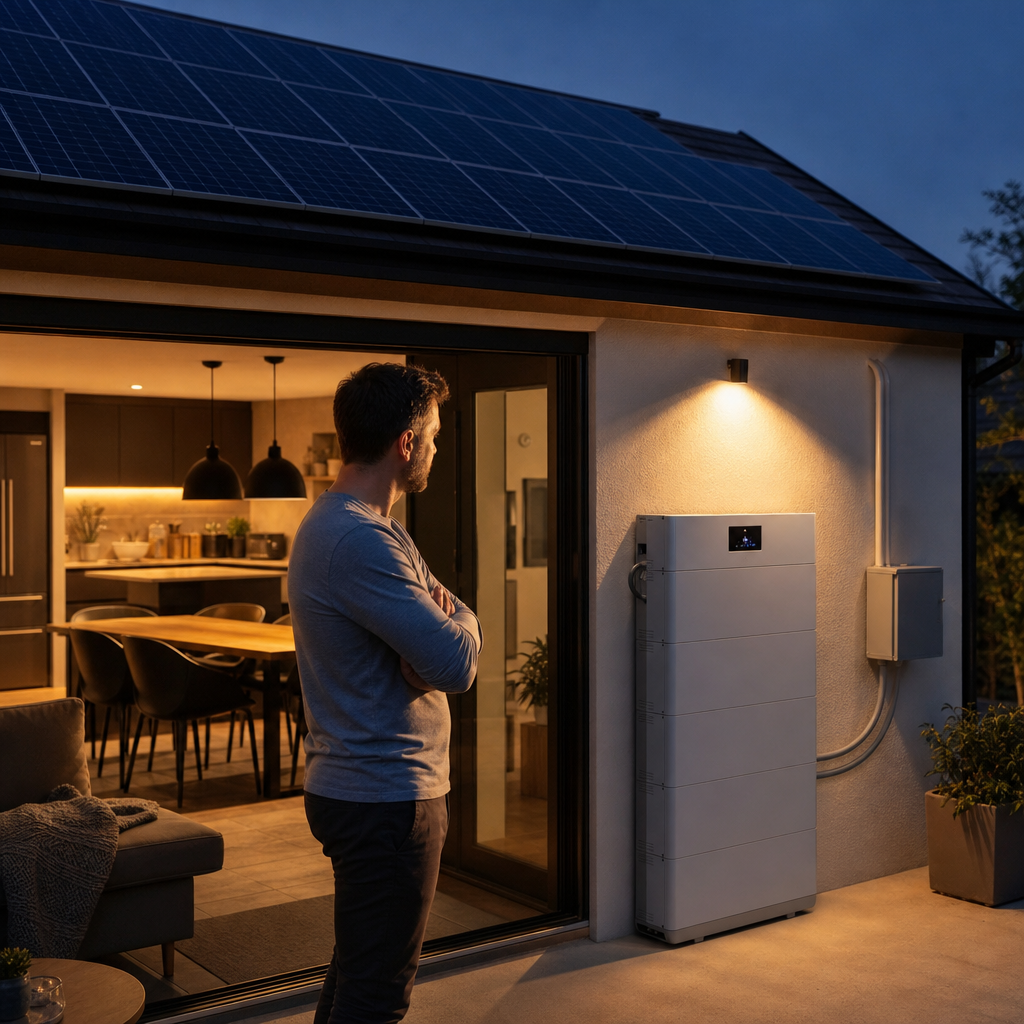
Outage protection is only one benefit of a well-designed solar-plus-storage system. To get the most value from your investment, consider these strategies:
According to NREL (National Renewable Energy Laboratory), homes with solar-plus-storage systems also tend to see improved resale value compared to homes with solar alone, since buyers increasingly view battery backup as a desirable feature rather than an optional extra.
Does my battery recharge during an extended outage? Yes, as long as your solar panels are generating power and the system is configured correctly, your battery will recharge during daylight hours even while the grid is down.
Will my whole house run normally during an outage? This depends on your system size. Basic systems back up only critical circuits, while larger systems with whole-home transfer switches can power your entire house, though you may still need to moderate usage of high-draw appliances like electric dryers or large HVAC units.
How long does battery backup last during an outage? This depends on battery capacity and your usage. A 10 kWh battery might last 12–24 hours covering essentials, while a 30 kWh system covering a full home might last 8–14 hours without solar recharging.
Is battery storage worth it if I don't experience frequent outages? Many homeowners find that the financial benefits from time-of-use rate management alone justify the investment, with outage protection serving as a valuable secondary benefit.
Solar power outage protection for your home isn't just about convenience during a storm — it's about energy independence, financial savings, and peace of mind in a state where grid reliability has become increasingly uncertain. By understanding the true costs, properly sizing your battery system, and choosing high-quality equipment installed by experienced professionals, California homeowners can ensure their lights, refrigerators, and essential devices stay on no matter what's happening with the grid.
Everysun combines US-made, high-efficiency solar panels with rigorous Swedish safety and installation standards to deliver outage protection systems built to last. With flexible payment options, a 20-year installation guarantee, and 25-year product warranties, www.everysun.com makes it straightforward for California homeowners to invest in reliable, affordable solar and battery backup — so the next outage becomes nothing more than a minor inconvenience rather than a household emergency.
© 2025 Everysun Inc. All Rights Reserved.


Get Your Free Solar Quote
Request your free quote and see how solar can work for your home and budget