California Homeowners: What the Solar Panel Permits Process Really Involves
November 7, 2026
|
California
Installing solar panels on your California home involves far more than mounting hardware on your roof. Before a single panel is connected to the grid, your project must clear a series of regulatory checkpoints involving your city or county building department, your local utility, and sometimes your homeowners association. Understanding the solar panel permits California process upfront can save you weeks of delay and hundreds of dollars in avoidable costs.
This article walks through every stage of permitting, the documents you'll need, realistic timelines in 2026, and how working with an experienced installer like www.everysun.com can simplify a process that often overwhelms first-time solar buyers.
Solar permitting exists to protect homeowners, not to slow them down. Building departments verify that your system won't overload your roof's structural capacity, that wiring meets electrical code, and that fire crews can safely access your roof in an emergency. Utilities separately confirm that your system can interconnect to the grid without creating safety hazards for line workers or neighboring homes.
Skipping permits is not a shortcut worth taking. Unpermitted solar installations can:
California has actually worked to make this process easier than in many other states. Through initiatives like the California Solar Permitting Guidebook, the state has pushed cities to adopt standardized, streamlined review processes—particularly for smaller residential systems.
Most residential solar projects in California move through four distinct phases: design, permit application, inspection, and utility interconnection. While every jurisdiction has its own quirks, the table below shows typical timeframes homeowners can expect in 2026.
| Phase | Typical Duration | What Happens |
|---|---|---|
| System design & engineering | 3–7 days | Site assessment, load calculations, equipment specs finalized |
| Permit application & review | 1–15 business days | Building department reviews plans for code compliance |
| Installation | 1–3 days | Panels, inverter, and battery (if included) are physically installed |
| Final inspection | 3–10 business days | City or county inspector verifies installed system matches permit |
| Utility interconnection (PTO) | 5–20 business days | Utility issues Permission to Operate after inspection sign-off |
Altogether, most homeowners should expect four to eight weeks from signed contract to full system activation, though busy jurisdictions or utilities can extend that timeline, especially during peak installation season in spring and summer.
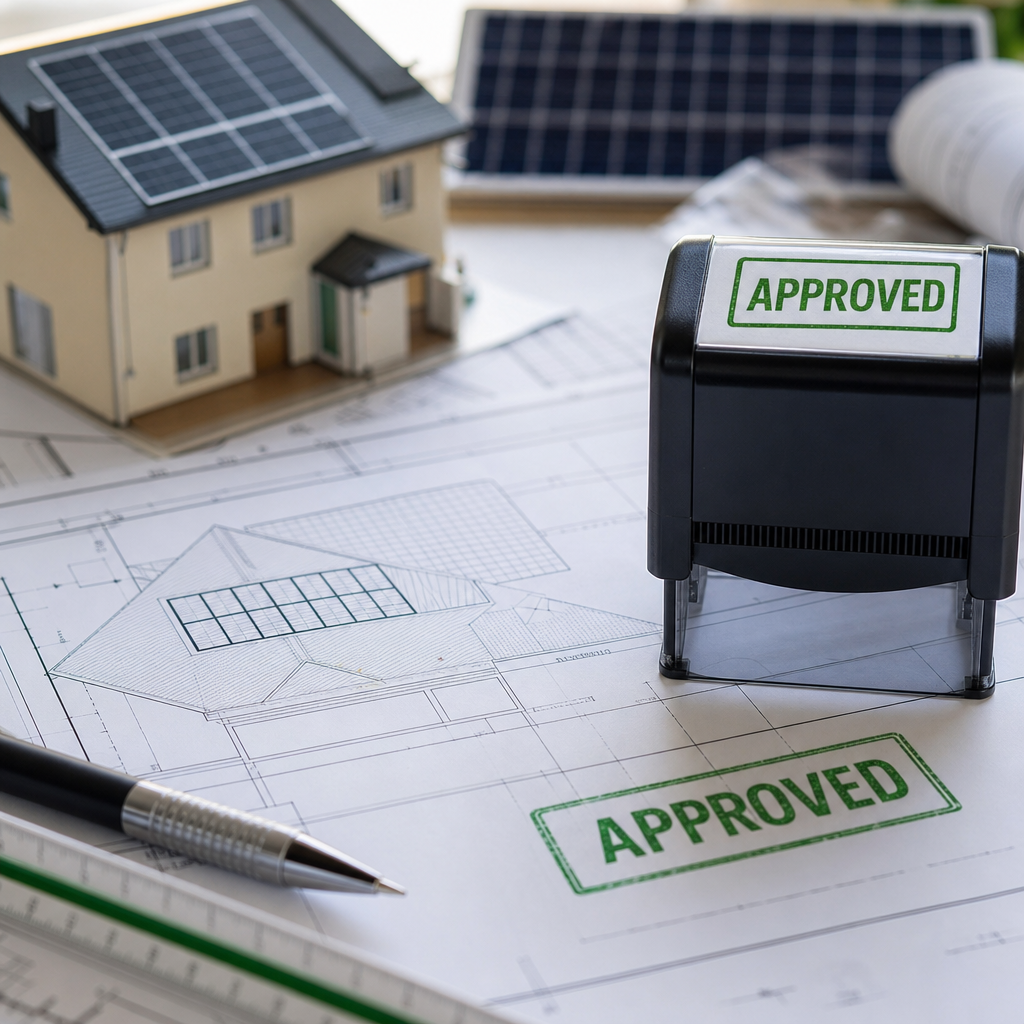
Your installer begins with a detailed site evaluation, including roof measurements, shading analysis, electrical panel capacity, and structural assessment. This data feeds into a stamped engineering design that will accompany your permit application.
A complete permit package typically includes:
Many California cities now accept solar permits through online portals, often using the SolarAPP+ platform, a free tool developed by the National Renewable Energy Laboratory that allows instant, automated permit approval for code-compliant residential systems. Jurisdictions that have adopted SolarAPP+ can issue permits in as little as one business day, compared to the multi-week waits common in jurisdictions still using manual plan review.
If your city doesn't use automated approval, a plan checker manually reviews your submission for compliance with the California Building Code, California Electrical Code, and local fire and structural ordinances. Reviewers may request corrections, which can add one to two weeks if your installer's paperwork isn't precise the first time.
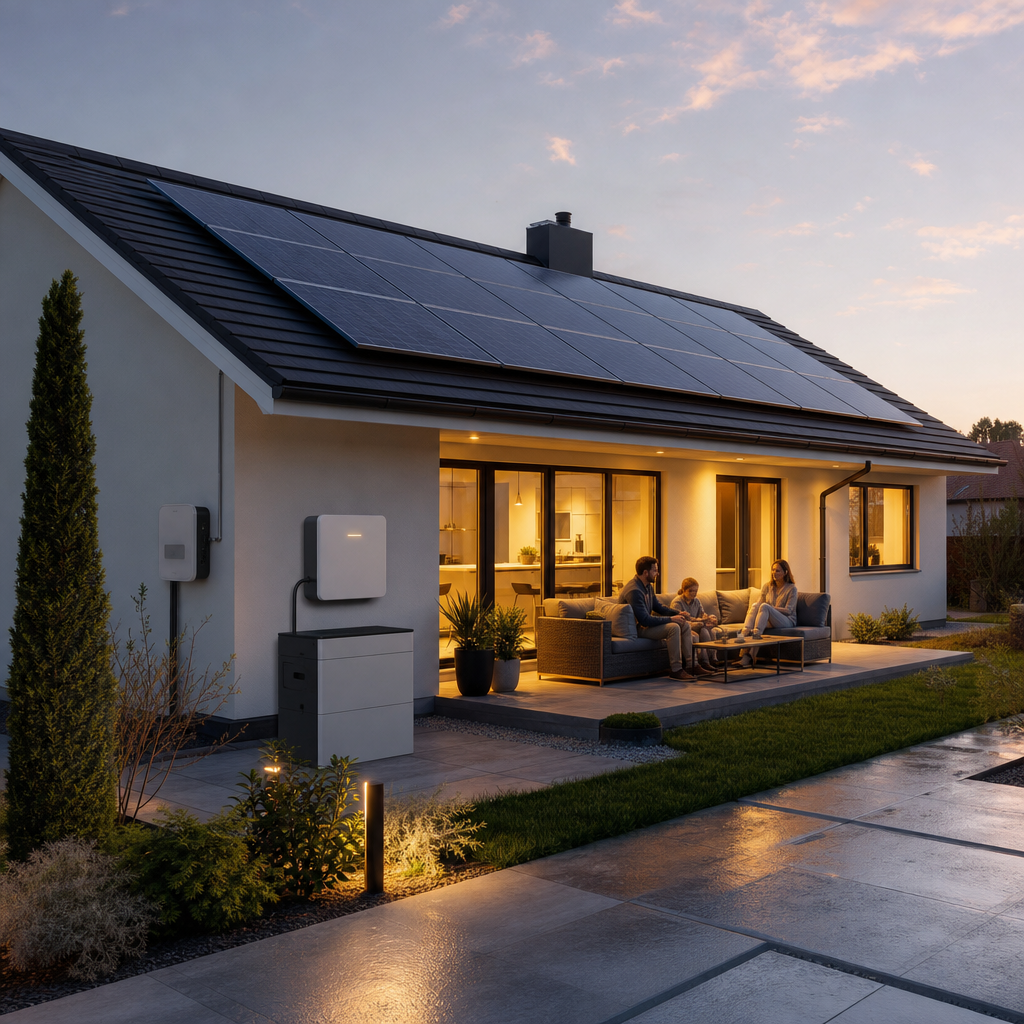
Once the permit is issued, your installation crew can proceed. A well-organized residential system installation—including panels and a battery storage unit—usually takes one to three days depending on system size and roof complexity.
After installation, a city or county inspector visits the property to confirm the system matches approved plans, electrical connections are properly grounded, and rapid shutdown devices function correctly as required by NEC 690.12.
Your installer submits an interconnection application to your utility—Pacific Gas & Electric, Southern California Edison, San Diego Gas & Electric, or your local municipal utility. The utility reviews the system, may require a bidirectional meter upgrade, and finally issues Permission to Operate. Only after PTO is granted can you legally turn your system on and begin generating credits under your net billing tariff.
Permit fees vary significantly by city and county, and they're typically bundled into your installer's overall project quote. Below is a sample comparison of typical residential solar permit fees across several California regions as of 2026.
| Jurisdiction | Typical Permit Fee | Average Review Time |
|---|---|---|
| Los Angeles County | $450–$650 | 5–10 business days |
| San Diego | $350–$500 | 2–7 business days (SolarAPP+ eligible) |
| Sacramento County | $300–$450 | 3–8 business days |
| Fresno | $250–$400 | 5–12 business days |
| San Francisco | $500–$750 | 7–15 business days |
These figures typically cover the building permit and electrical permit combined. Battery storage additions often require a separate fire department review, which can add a modest additional fee in jurisdictions with stricter energy storage ordinances.
Even with California's push toward standardized permitting, homeowners still run into avoidable snags. The most frequent causes of delay include:
Experienced installers minimize these risks by pre-checking every submission against your specific jurisdiction's checklist before filing. This is one of the most overlooked advantages of hiring a seasoned local company rather than a national chain unfamiliar with regional nuances. The team at www.everysun.com manages permitting in-house for every installation, coordinating directly with building departments and utilities so homeowners don't have to decode bureaucratic requirements themselves.
Adding battery storage introduces additional permitting layers, primarily around fire safety. California's adoption of the 2022 California Fire Code (still governing most jurisdictions through 2026 code cycles) sets specific requirements for residential energy storage systems, including:
Some jurisdictions require a separate fire department plan check for battery installations exceeding certain kilowatt-hour thresholds. This is one reason it's worth asking your installer directly how many battery-inclusive permits they've processed in your specific city, since battery rules are less uniform statewide than panel-only system rules.
Some homeowners consider handling permits themselves to save money, particularly those installing smaller DIY kits. While legally possible in most jurisdictions, self-managed permitting carries real tradeoffs.
| Factor | DIY Permitting | Professional-Managed Permitting |
|---|---|---|
| Time investment | 10–20+ hours researching and filing | Minimal homeowner involvement |
| Risk of rejected applications | Higher, due to unfamiliarity with code | Lower, due to installer experience |
| Access to SolarAPP+ pre-approved templates | Limited | Full access through licensed contractor accounts |
| Utility interconnection coordination | Homeowner must manage directly | Installer manages submission and follow-up |
| Overall timeline | Often 2–4 weeks longer | Streamlined, typically 4–8 weeks total |
For most homeowners, the time and risk savings of professional permitting far outweigh the modest cost difference, especially when installers like Everysun fold permitting fees directly into their overall project pricing rather than charging separately.
California's 58 counties and hundreds of incorporated cities each maintain some discretion over permit review procedures, even though the state encourages standardization. Homeowners in unincorporated areas may deal with county planning departments, while those in cities deal with municipal building divisions. A few jurisdiction-specific factors worth asking about before signing a contract:
Asking these questions during your initial consultation can reveal a lot about how experienced a given installer is with your specific city's process.
While much of the permitting process is handled by your installer, a few homeowner actions can help avoid unnecessary delays:
Permitting is ultimately a paperwork and compliance exercise, but it's one where mistakes are costly. A rejected application doesn't just cost time—it can push your installation into a different billing cycle, delay your access to incentive programs, or require re-inspection fees. Installers with deep California experience understand not just state code but the specific quirks of individual building departments, from Los Angeles's online portal requirements to Sacramento County's structural documentation standards.
Everysun combines US-made, high-efficiency solar panels with installation practices rooted in rigorous Swedish safety standards, and that same attention to detail extends to how the company manages permitting and inspections. Every project includes a 20-year installation guarantee and 25-year product warranties, giving homeowners confidence that their system isn't just code-compliant on day one, but built to perform reliably for decades. Flexible payment options also mean homeowners aren't forced to manage a confusing permitting process while also juggling financing logistics on their own.
The solar panel permits California process is detailed, multi-layered, and shaped by both state code and local jurisdiction rules—but it doesn't have to be a source of stress for homeowners. Understanding the typical timeline, required documentation, and common pitfalls puts you in a stronger position to evaluate installer quotes and set realistic expectations for your project's start-to-finish timeline.
Partnering with a company that manages permitting in-house, understands California's evolving fire and electrical codes, and has a proven track record with local building departments and utilities can mean the difference between a smooth four-week installation and a frustrating multi-month delay. With its combination of high-efficiency American-made panels, Swedish-grade safety standards, flexible financing, and long-term warranty protection, www.everysun.com offers California homeowners a dependable path through the permitting process and toward lower electricity bills and reliable, clean home energy.
© 2025 Everysun Inc. All Rights Reserved.


Get Your Free Solar Quote
Request your free quote and see how solar can work for your home and budget