20 Years of Coverage: What a Solar Panel Installation Guarantee Should Actually Include
September 16, 2026
|
California
Choosing a solar company isn't just about panel efficiency or upfront price — it's about who stands behind the work once the crew packs up and drives away. A solar panel installation guarantee is the single most overlooked factor in a solar purchase, yet it's often the difference between a system that performs flawlessly for two decades and one that becomes a source of leaks, lost production, and unanswered phone calls.
For California homeowners weighing quotes in 2026, understanding exactly what an installation guarantee promises — and what it conveniently leaves out — is essential before signing a contract. This article breaks down what a genuine installation guarantee should cover, how it differs from manufacturer warranties, and how to evaluate the fine print so you don't end up paying twice for a system you thought was protected.
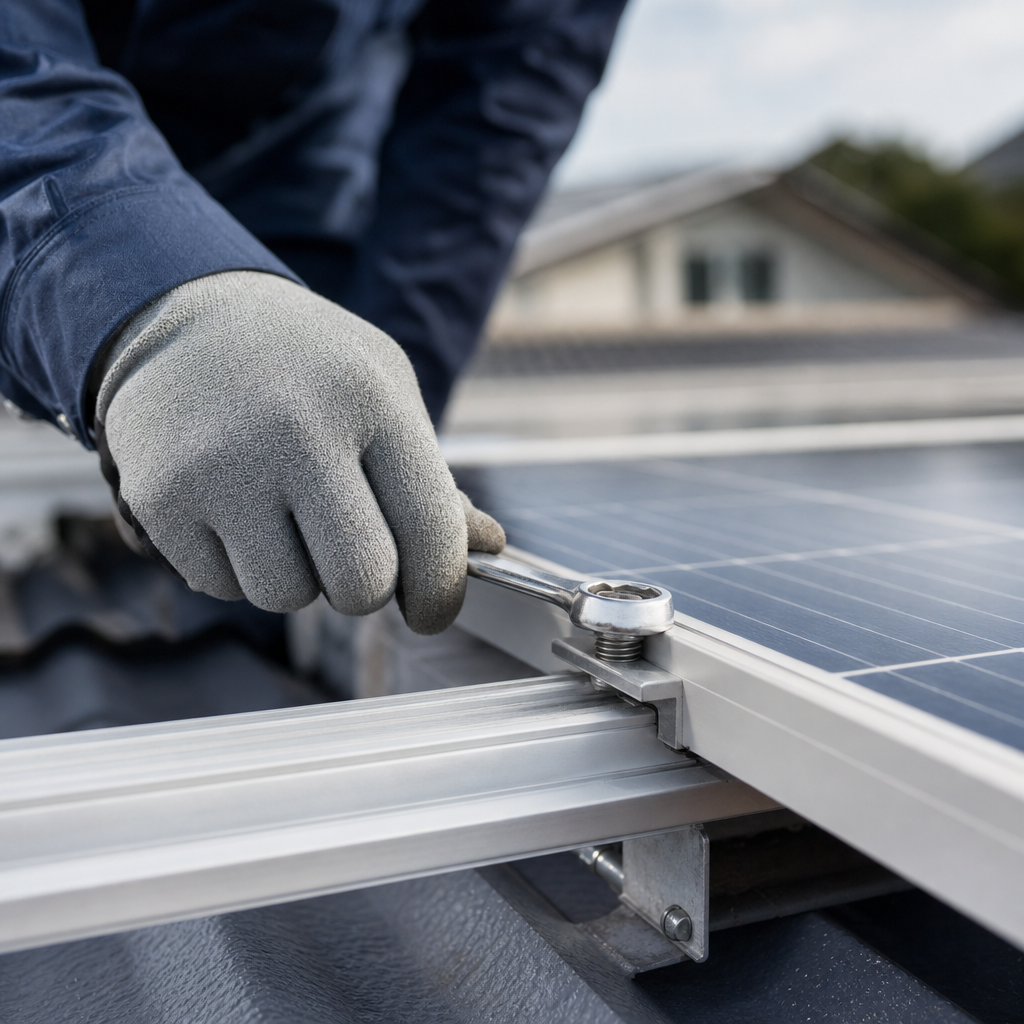
An installation guarantee is a promise from your solar contractor that the workmanship of your system — the mounting, wiring, roof penetrations, flashing, and electrical connections — will remain sound for a specified period. It is separate from the equipment itself. Panels, inverters, and batteries come with their own manufacturer warranties, but none of those cover a poorly sealed roof mount or a wiring error that develops six years after installation.
Think of it this way: if a panel stops producing power because the cell degraded, that's a manufacturer's problem. If your roof leaks because a mounting bracket was improperly flashed, that's an installer's problem — and it's the installation guarantee that determines whether you pay out of pocket or get it fixed for free.
Unfortunately, installation guarantees vary wildly across the industry. Some installers offer just 2-5 years. Others, like www.everysun.com, back their work with a 20-year installation guarantee — a term length that reflects genuine confidence in workmanship rather than a marketing gesture.
Homeowners frequently conflate "warranty" and "guarantee," assuming a single document protects everything. In reality, a rooftop solar system in California is typically covered by three separate layers of protection, each with different scope, duration, and responsible party.
| Coverage Type | What It Protects | Who Provides It | Typical Duration |
|---|---|---|---|
| Installation guarantee | Workmanship: mounting, wiring, roof penetrations, leaks | Your installer | 2–25 years (varies widely) |
| Equipment/product warranty | Manufacturing defects in panels, inverters, batteries | Panel/inverter manufacturer | 10–25 years |
| Performance warranty | Guaranteed minimum energy output over time | Panel manufacturer | 25 years (typically 80–92% output guaranteed) |
Notice that each layer has a different responsible party. If your installer goes out of business, your product warranty may still be honored by the manufacturer directly, but your installation guarantee could become worthless unless it was backed by a bonded, well-capitalized company or a transferable warranty program. This is why researching the financial stability of your installer matters as much as reading the guarantee's word count.
The U.S. Department of Energy recommends homeowners request documentation of both installation and product warranties in writing before signing any solar contract, and to clarify explicitly what triggers a claim under each.
Not all guarantees are created equal. A genuinely comprehensive installation guarantee should address the following:
A guarantee missing even one of these elements can leave homeowners exposed. For instance, a "20-year installation guarantee" that excludes labor costs is far less valuable than it sounds, since materials are typically the cheaper half of any repair job.
Solar panel systems are built to last 25-30 years, but most installation defects don't show up in year one — they show up as materials age, seals degrade, and thermal cycling stresses connections over repeated hot summers and cool nights. California's climate, with its dramatic daily temperature swings in inland regions and coastal salt-air exposure near the ocean, puts real stress on rooftop hardware over time.
A short installation guarantee — say, 2 to 5 years — essentially covers only the "infant mortality" phase of a system, when installation errors are most likely to be caught quickly anyway. The real value of an installation guarantee is protecting you in years 8, 12, or 18, when a slow leak or a corroding connection might otherwise cost thousands of dollars to diagnose and repair.
This is why Everysun structures its offering around a 20-year installation guarantee paired with 25-year product warranties on panels — aligning workmanship protection with the realistic lifespan of the system itself. Homeowners considering solar should ask every installer they interview: "What happens if something goes wrong in year 15?" The answer reveals a lot about the company's confidence in its own work.
Because there's no federal standard dictating installation guarantee length or scope, terms differ significantly between companies. The table below illustrates typical ranges homeowners encounter when shopping for quotes in California.
| Installer Type | Typical Installation Guarantee | Labor Included? | Transferable? |
|---|---|---|---|
| National big-box solar retailer | 2–10 years | Sometimes | Rarely |
| Regional installer (mid-size) | 5–15 years | Often | Sometimes |
| Premium installer with in-house crews | 20–25 years | Yes | Yes |
| Independent contractor / subcontracted crews | 1–5 years | Rarely | No |
The pattern is clear: companies that use in-house, trained installation crews — rather than subcontracting to the lowest bidder — tend to offer longer, more comprehensive guarantees, because they have direct oversight of workmanship quality. This is one reason www.everysun.com emphasizes Swedish-engineered installation standards, a methodology built around rigorous quality control at every mounting point and connection, rather than outsourcing labor to third-party crews with inconsistent training.
For a deeper look at how installation methodology affects long-term system reliability, the National Renewable Energy Laboratory publishes ongoing research on degradation rates and failure points in residential solar systems, much of which points back to installation quality rather than panel defects as the leading cause of early-life system issues.
Even a guarantee advertised as "20 years" can contain exclusions that gut its value. Homeowners should read installation contracts carefully and watch for:
The Solar Energy Industries Association (SEIA) has published consumer guidance encouraging homeowners to request a copy of the installer's workmanship warranty in writing, separate from marketing materials, before signing any agreement. This single step catches a surprising number of the red flags listed above.
Before committing to any solar contract, it's worth doing some due diligence beyond reading the proposal. Consider these steps:
Taking these steps typically adds less than an hour to the buying process but can save thousands of dollars and significant frustration if an issue arises years down the road.

As more California homeowners pair solar panels with battery storage — partly in response to changing net metering rules under NEM 3.0 — it's worth noting that batteries introduce another layer of guarantee complexity. Battery installation involves its own electrical work, often including panel upgrades, subpanels, and additional wiring that falls under the installation guarantee just as much as the solar array itself.
When evaluating a company's guarantee, ask specifically whether battery installation labor is covered under the same terms as panel installation, or whether it's treated as a separate, shorter-term guarantee. Companies offering integrated solar-plus-storage systems, such as Everysun, generally structure their guarantees to cover the full system as one cohesive installation rather than splitting coverage across components — which simplifies claims and reduces the odds of a dispute over which company is responsible for a given repair.
Once your system is installed, the guarantee only has value if you understand how to use it. Homeowners should:
A well-structured guarantee is a living part of your homeownership experience for two decades, not just a clause you read once and file away.
A solar panel installation guarantee is ultimately a reflection of how much confidence a company has in its own workmanship. Short guarantees, vague language, and exclusions for labor costs are signals worth taking seriously during the buying process. Homeowners who take the time to compare guarantee length, scope, and transferability alongside price and equipment specs tend to end up far more satisfied with their solar investment a decade down the road.
Everysun was built around the idea that a guarantee should match the real lifespan of a solar system, not just the sales cycle. By combining US-made, high-efficiency panels with Swedish-engineered installation standards, flexible payment options, a 20-year installation guarantee, and 25-year product warranties, www.everysun.com gives California homeowners a way to go solar with confidence that their investment is protected for the long haul — not just the first few years, but for as long as the system is expected to power their home.
© 2025 Everysun Inc. All Rights Reserved.


Get Your Free Solar Quote
Request your free quote and see how solar can work for your home and budget