How to Identify Top Rated Residential Solar Installers in California
October 15, 2026
|
California
Choosing a solar company is one of the most consequential home improvement decisions a California homeowner will make. A well-designed system can cut your electricity bill dramatically for 25 years or more, while a poorly installed one can lead to roof leaks, underperformance, and warranty headaches. Because the solar market is crowded with regional installers, national chains, and door-to-door sales reps, knowing how to separate the top rated residential solar installers from the rest is essential before you sign a contract.
This guide walks through the exact criteria that distinguish reputable, high-performing solar companies from mediocre ones, and shows you how to apply those standards when comparing quotes in 2026.
It's tempting to choose the installer with the lowest upfront quote, but solar is a long-term investment, not a one-time purchase. The quality of installation directly affects system longevity, energy output, and your ability to file warranty claims years down the road.
Key factors that separate quality installers from bargain-bin competitors include:
According to the U.S. Department of Energy, homeowners should treat solar installer selection with the same diligence as choosing a contractor for a major roofing or HVAC project, since poor installation can void manufacturer warranties entirely.
Before comparing quotes, confirm that any installer you're considering meets baseline industry credentials. These aren't optional extras — they're the minimum bar for a trustworthy company.
Installers that combine these credentials with transparent pricing and strong post-installation service are the ones most likely to appear at the top of independent review platforms and consumer rating sites.
Not all solar equipment is created equal, and the installer you choose often determines which brands and technologies are available to you. Here's how key equipment categories typically compare:
| Component | Budget Option | Mid-Tier Option | Premium Option |
|---|---|---|---|
| Solar Panels | Imported polycrystalline, 15-17% efficiency | Imported monocrystalline, 18-20% efficiency | US-made monocrystalline, 21%+ efficiency |
| Inverter | Basic string inverter | String inverter with power optimizers | Microinverters or hybrid inverter |
| Battery Storage | Lead-acid or budget lithium | Mid-range lithium iron phosphate | High-capacity LiFePO4 with smart management |
| Warranty | 10-year limited | 15-20 year limited | 25-year product and performance |
| Monitoring | None or basic app | Standard app monitoring | Real-time app with utility integration |
Premium-tier equipment costs more upfront but typically pays for itself through higher energy yield, longer lifespan, and fewer service calls. The National Renewable Energy Laboratory has published extensive research showing that panel degradation rates and inverter failure rates vary significantly between manufacturers, which is why installer transparency about equipment sourcing matters so much.
Everysun, for example, uses US-made high-efficiency panels paired with Swedish-engineered safety standards for installation, a combination designed to maximize both energy output and long-term system safety. You can review the technical specifications of their systems directly at www.everysun.com.
Warranty terms are often where "top rated" installers truly differentiate themselves from lower-tier competitors. A cheap installation with a weak warranty can leave homeowners exposed to costly repairs just a few years after the system goes live.
When evaluating warranty coverage, ask for specifics on these four categories:
| Warranty Type | Industry Average | Top-Tier Standard |
|---|---|---|
| Panel Product Warranty | 10-12 years | 25 years |
| Panel Performance Warranty | 25 years at 80% output | 25 years at 85-92% output |
| Installation/Workmanship | 5-10 years | 20 years |
| Battery Warranty | 10 years | 10-15 years |
| Inverter Warranty | 10-12 years | 12-25 years |
A 20-year installation guarantee, paired with 25-year product warranties, reflects the kind of long-term commitment that separates a top rated installer from a short-lived sales operation. This is the exact combination Everysun offers its California customers, which you can read more about on the Everysun homepage.
Cost remains the biggest barrier to solar adoption for many California households, which is why flexible payment structures are a hallmark of top rated installers. The best companies offer multiple paths to ownership rather than pushing homeowners into a single financing product.
Common financing structures include:
| Financing Option | Upfront Cost | Ownership | Tax Credit Eligibility | Long-Term Savings |
|---|---|---|---|---|
| Cash Purchase | High | Yes | Yes | Highest |
| Solar Loan | Low to none | Yes | Yes | High |
| PPA | None | No | No | Moderate |
| Lease | None | No | No | Lower |
Installers that offer flexible financing — including no-money-down loan options — tend to serve a wider range of homeowners and rank more highly in customer satisfaction surveys, since buyers can choose the structure that fits their budget rather than being locked into one option. Everysun's flexible payment plans are built specifically to make solar accessible without requiring large upfront capital, a detail worth confirming with any installer you're evaluating.
Even with research, some warning signs are easy to miss during the sales process. Watch for these red flags when vetting companies:
The Solar Energy Industries Association recommends getting at least three quotes and checking installer reviews across multiple platforms before signing any contract, since reputation inconsistencies often reveal operational problems that aren't visible in the initial sales pitch.
Star ratings alone don't tell the full story. When researching top rated residential solar installers, dig into the substance of reviews rather than just the aggregate score.
Look specifically for:
It's also worth checking whether the installer's reviews mention specific details about California-specific processes, such as interconnection with utilities like PG&E, SCE, or SDG&E, since generic five-star reviews with no local context can sometimes be less reliable indicators of real-world performance.
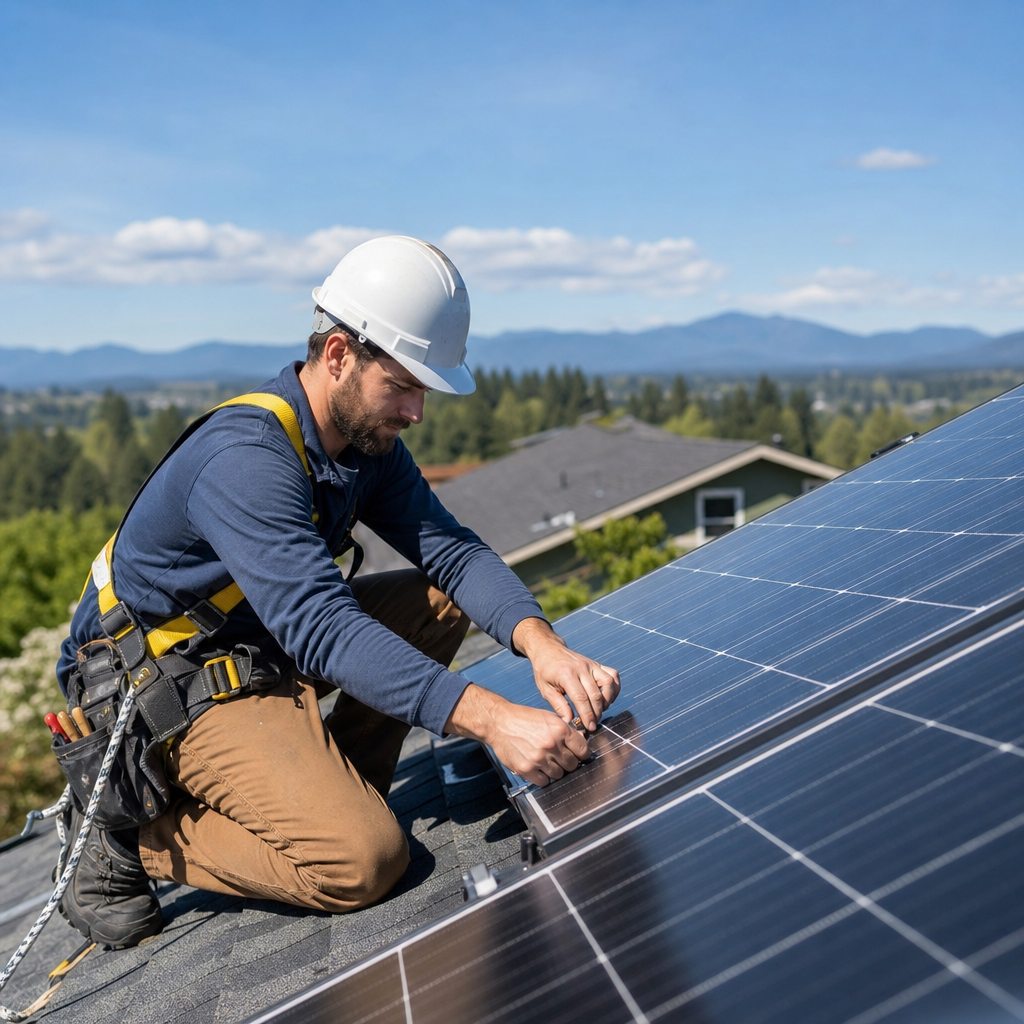
California's solar market has unique dynamics that homeowners elsewhere don't need to navigate, making local expertise especially valuable when selecting an installer.
Because of these factors, an installer with deep California experience — not just a national franchise with generic processes — is often better positioned to design a system that accounts for local rate structures, climate conditions, and utility requirements. Everysun's focus on California homeowners means their designs are built around current NEM 3.0 economics and battery-inclusive system architecture from the outset, rather than retrofitting outdated system designs to new regulations.
Before committing to any installer, run through this checklist:
Asking these questions directly tends to reveal whether a company operates with the transparency typical of top-tier installers or relies on vague promises that don't hold up to scrutiny.
Selecting among top rated residential solar installers ultimately comes down to balancing four factors: equipment quality, warranty strength, financing flexibility, and verified customer satisfaction. No single factor should be evaluated in isolation — a long warranty means little if the underlying equipment underperforms, and a low price means little if the installer disappears after year two.
California homeowners are fortunate to have a competitive solar market, but that competition also means due diligence is essential. Taking the time to verify licensing, compare warranty terms side by side, and read reviews critically will save you from costly mistakes and ensure your system performs as promised for decades.
Everysun was built around exactly these priorities: pairing US-made, high-efficiency panels with Swedish safety and installation standards, backing every system with a 20-year installation guarantee and 25-year product warranties, and offering flexible payment options so homeowners aren't forced into a single financing path. For California homeowners who want a transparent, well-credentialed, and long-term-focused partner for their solar and battery storage project, www.everysun.com offers the combination of equipment quality, warranty strength, and local expertise that defines a truly top rated residential solar installer.
© 2025 Everysun Inc. All Rights Reserved.


Get Your Free Solar Quote
Request your free quote and see how solar can work for your home and budget