9 Permits, 3 Inspections, 1 Interconnection: What Solar Panel Installation Requirements in California Really Cost You in Time
October 18, 2026
|
California
Installing solar panels in California involves more than choosing the right equipment. State building codes, utility interconnection rules, fire safety standards, and local permitting offices all play a role in determining whether your system gets approved — and how quickly. For homeowners researching solar panel installation requirements in California, understanding these moving parts upfront can save weeks of delay and thousands of dollars in avoidable costs.
This article breaks down exactly what California requires at each stage of a residential solar project, from permitting and electrical code compliance to utility interconnection and final inspection, so you can plan a smooth installation from day one.
California was the first state to mandate solar-ready construction for new homes, and it continues to lead the country in solar-specific building codes. The California Energy Commission oversees statewide energy standards through Title 24, while local Authorities Having Jurisdiction (AHJs) — your city or county building department — enforce permitting and inspection rules on top of state law.
This layered system exists for good reason. California's wildfire risk, seismic activity, and dense grid infrastructure mean solar systems must be engineered to withstand fire exposure, structural stress, and grid instability simultaneously. The result is a permitting and inspection process that's more rigorous than in most other states, but also one that produces safer, longer-lasting installations.
Reputable installers like www.everysun.com build this complexity into their project timelines from the start, handling permitting, utility paperwork, and inspection scheduling on the homeowner's behalf so the process feels seamless rather than bureaucratic.
Every residential solar installation in California requires a building permit issued by the local AHJ. Most jurisdictions have adopted the statewide expedited permitting model recommended by the Governor's Office of Planning and Research, which standardizes requirements for small residential systems (typically under 15 kW) to reduce approval times.
Key code frameworks that apply to nearly every installation include:
For most retrofit installations on existing homes, the permitting package includes a site plan, single-line electrical diagram, structural attachment details, and equipment specification sheets. Some counties also require a separate fire department review, especially in high wildfire-risk zones identified by Cal Fire.
| Document | Purpose | Who Prepares It |
|---|---|---|
| Site plan | Shows panel layout and roof access points | Installer/designer |
| Single-line electrical diagram | Details wiring, inverter, and shutdown devices | Licensed electrician or engineer |
| Structural calculations | Confirms roof can support panel load | Structural engineer (if required) |
| Equipment cut sheets | Specifications for panels, inverters, batteries | Manufacturer, submitted by installer |
| Interconnection application | Utility approval to connect to the grid | Installer, filed with utility |
California enforces some of the strictest electrical and fire safety requirements for rooftop solar in the country, largely shaped by lessons learned from wildfire incidents and firefighter safety concerns.
Under the National Electrical Code (NEC) 2020, adopted statewide, all solar systems must include rapid shutdown functionality. This allows first responders to de-energize rooftop panels within seconds during an emergency, reducing shock hazards. Module-level power electronics, such as microinverters or power optimizers, are now standard on most California installations specifically to meet this requirement.
California Fire Code mandates clear pathways on residential roofs so firefighters can safely move across and ventilate the structure if needed. Requirements vary slightly by roof pitch and size, but generally include:
These rules directly affect how many panels can fit on a given roof, which is why a proper site assessment — not just a satellite-image estimate — is essential before finalizing a system design.
All systems must be properly grounded and labeled according to NEC Article 690, including placards at the main service panel identifying the presence of a solar system and the location of rapid shutdown switches. Inspectors check this carefully, as mislabeled systems are one of the most common reasons for failed inspections.
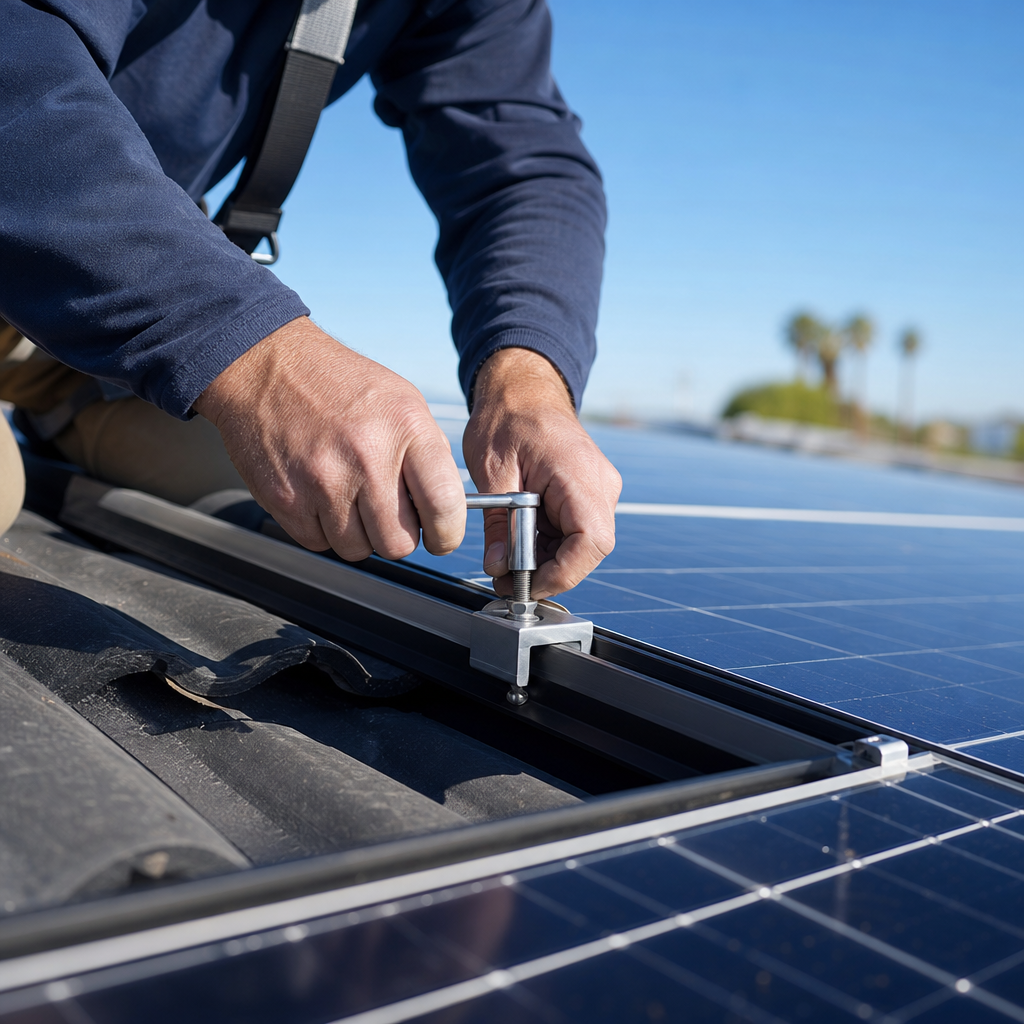
Once your system passes local building and fire inspections, it must still be approved for interconnection by your utility provider before it can be turned on. California's investor-owned utilities — Pacific Gas & Electric, Southern California Edison, and San Diego Gas & Electric — each manage this process through their own interconnection application systems, overseen by the California Public Utilities Commission.
Interconnection involves:
As of 2026, most California homeowners enrolling in solar are placed under the Net Billing Tariff (NEM 3.0) structure, which replaced the previous net metering framework. This changes the financial calculus of solar by placing more value on self-consumption and battery storage, since exported energy is credited at lower rates than under the original NEM program. You can review current tariff structures through the California Public Utilities Commission's net billing resources.
| Utility | Application Review | Meter Installation | Total Time to PTO |
|---|---|---|---|
| PG&E | 5–15 business days | 1–3 weeks after approval | 3–6 weeks |
| Southern California Edison | 5–10 business days | 1–2 weeks after approval | 3–5 weeks |
| San Diego Gas & Electric | 5–10 business days | 1–2 weeks after approval | 3–5 weeks |
Timelines can extend significantly during peak installation seasons, particularly spring and summer, when utility queues back up. Working with an experienced installer who files complete, error-free applications is one of the most effective ways to avoid delays at this stage.
California solar installations typically require at least two separate inspections, sometimes three depending on the jurisdiction and system complexity.
Common reasons inspections fail include incorrect labeling, improper conduit sizing, missing rapid shutdown placards, and roof penetrations that don't meet flashing standards. Choosing an installer with a strong first-pass inspection rate, like www.everysun.com, reduces the risk of costly rescheduling and project delays.
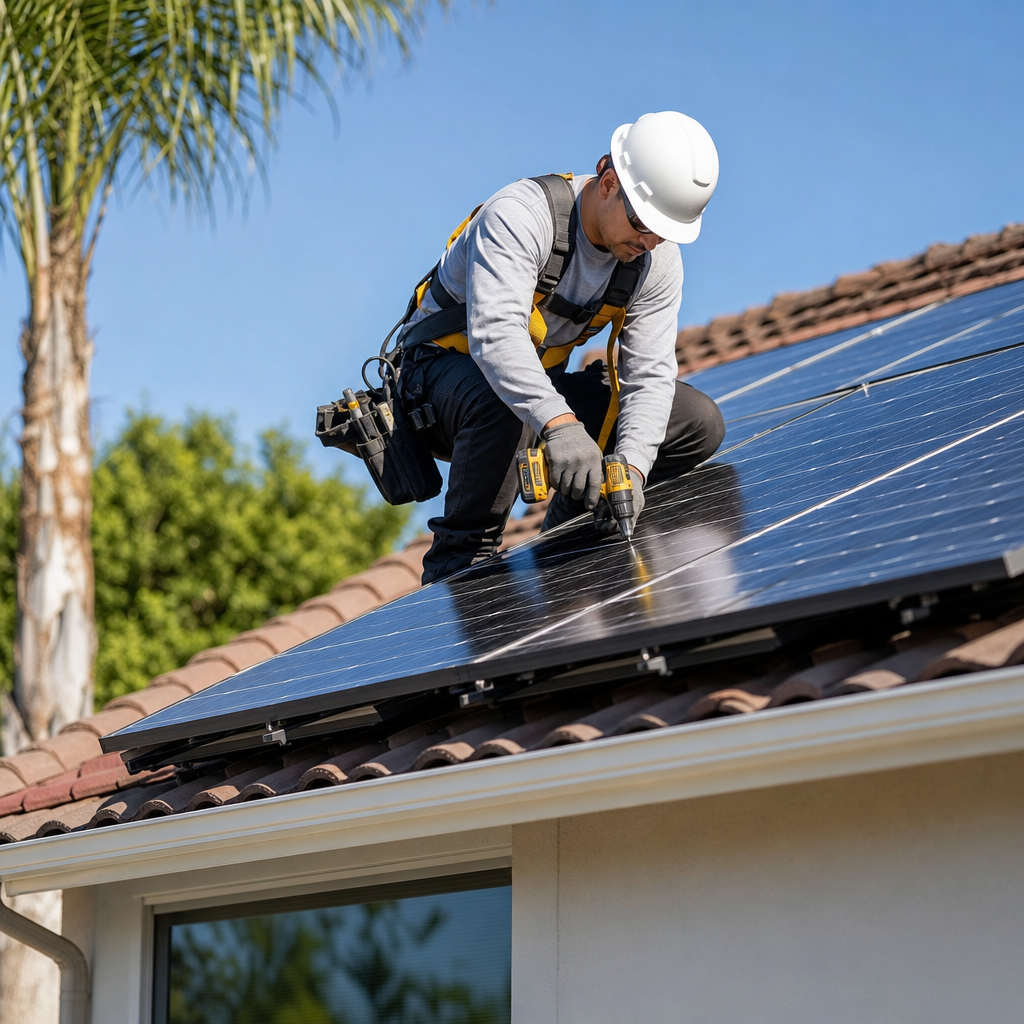
Battery storage has become increasingly common alongside solar installations in California, partly because of NEM 3.0's reduced export credits and partly because of growing interest in backup power during Public Safety Power Shutoffs. Battery systems bring their own set of requirements:
Homeowners should also verify whether their chosen battery system qualifies for incentives under the Self-Generation Incentive Program (SGIP), which continues to offer rebates for qualifying storage installations, particularly for households in high fire-risk areas or those relying on medical equipment.
California law strongly protects a homeowner's right to install solar panels, even in communities governed by Homeowners Associations. The Solar Rights Act prohibits HOAs from banning solar installations outright, though they can impose reasonable restrictions on placement as long as those restrictions don't significantly increase system cost or decrease efficiency by more than a statutorily defined threshold.
Key protections include:
If you live in a planned community, it's worth reviewing your CC&Rs and submitting your solar application early, since even modest administrative delays can push back your overall project timeline by several weeks.
Permitting, interconnection, and inspection requirements all carry associated costs that should be factored into your overall solar budget. While these fees are typically bundled into an installer's quoted price, understanding where the money goes helps homeowners evaluate whether a quote is reasonable.
| Requirement | Typical Cost Range | Paid To |
|---|---|---|
| Building permit | $200–$600 | Local AHJ |
| Structural engineering review | $150–$500 (if required) | Licensed engineer |
| Interconnection application fee | $0–$200 | Utility |
| Battery storage permit | $100–$300 | Local AHJ |
| Utility witness test (if applicable) | Often included in interconnection fee | Utility |
These figures vary by county and utility territory, so it's worth asking any installer for an itemized breakdown of permitting and interconnection costs before signing a contract. Transparent companies will walk you through this without hesitation.
From signed contract to Permission to Operate, most California residential solar projects take between six and twelve weeks, though this can extend during high-demand periods or in jurisdictions with slower permitting offices. A realistic timeline looks like this:
Homeowners who work with installers that manage every requirement in-house, rather than outsourcing permitting or interconnection to third parties, generally experience fewer delays because there are fewer handoffs where paperwork can stall.
Given the complexity of California's permitting, fire code, electrical code, and utility interconnection landscape, the installer you choose matters as much as the equipment itself. A qualified installer should be able to clearly explain:
www.everysun.com combines US-made, high-efficiency panels with installation practices built on Swedish safety standards, an approach that emphasizes rigorous quality control at every stage, from structural attachment to electrical labeling. Backed by a 20-year installation guarantee and 25-year product warranties, this approach is designed to help California homeowners move through permitting and inspection with fewer surprises, not more.
Meeting California's solar panel installation requirements involves coordinating building codes, fire safety standards, utility interconnection rules, and — in many cases — HOA approval, all within a timeline that can stretch across several weeks. While the process is more detailed than in many other states, it exists to ensure every system is safe, grid-compatible, and built to last for decades.
Homeowners who partner with an experienced, detail-oriented installer can navigate these requirements with far less stress. With flexible payment options, a 20-year installation guarantee, and 25-year product warranties, www.everysun.com helps California homeowners move from initial design to a fully permitted, interconnected solar and battery system with confidence, clarity, and long-term peace of mind.
© 2025 Everysun Inc. All Rights Reserved.


Get Your Free Solar Quote
Request your free quote and see how solar can work for your home and budget