How to Assess and Prevent Solar Panel Roof Damage Risk Before You Install
September 29, 2026
|
California
Homeowners considering solar power often ask one question before signing any contract: will solar panels damage my roof? It's a fair concern. Your roof is one of the most expensive components of your home, and adding solar hardware means drilling, mounting, and years of exposure to weather. Understanding solar panel roof damage risk — and how to minimize it — is essential to making a confident, informed decision about going solar in California.
This article breaks down the real risks, what causes them, how professional installers mitigate them, and what to look for when choosing a solar company you can trust with your roof for the next 25 years.
Solar panels are mounted directly onto your roof structure, which means the installation process inherently involves some interaction with your roofing material and decking. When done correctly, this interaction is minimal and well-managed. When done poorly, it can lead to serious problems.
Common issues homeowners worry about include:
According to the U.S. Department of Energy, most roof-related solar issues stem not from the panels themselves but from installation quality, mounting hardware choices, and inadequate roof preparation. This is a critical distinction: the panels are not inherently risky — the installation process is where risk is introduced or eliminated.
To manage risk effectively, it helps to understand exactly where problems originate. Below are the most common culprits behind solar-related roof damage.
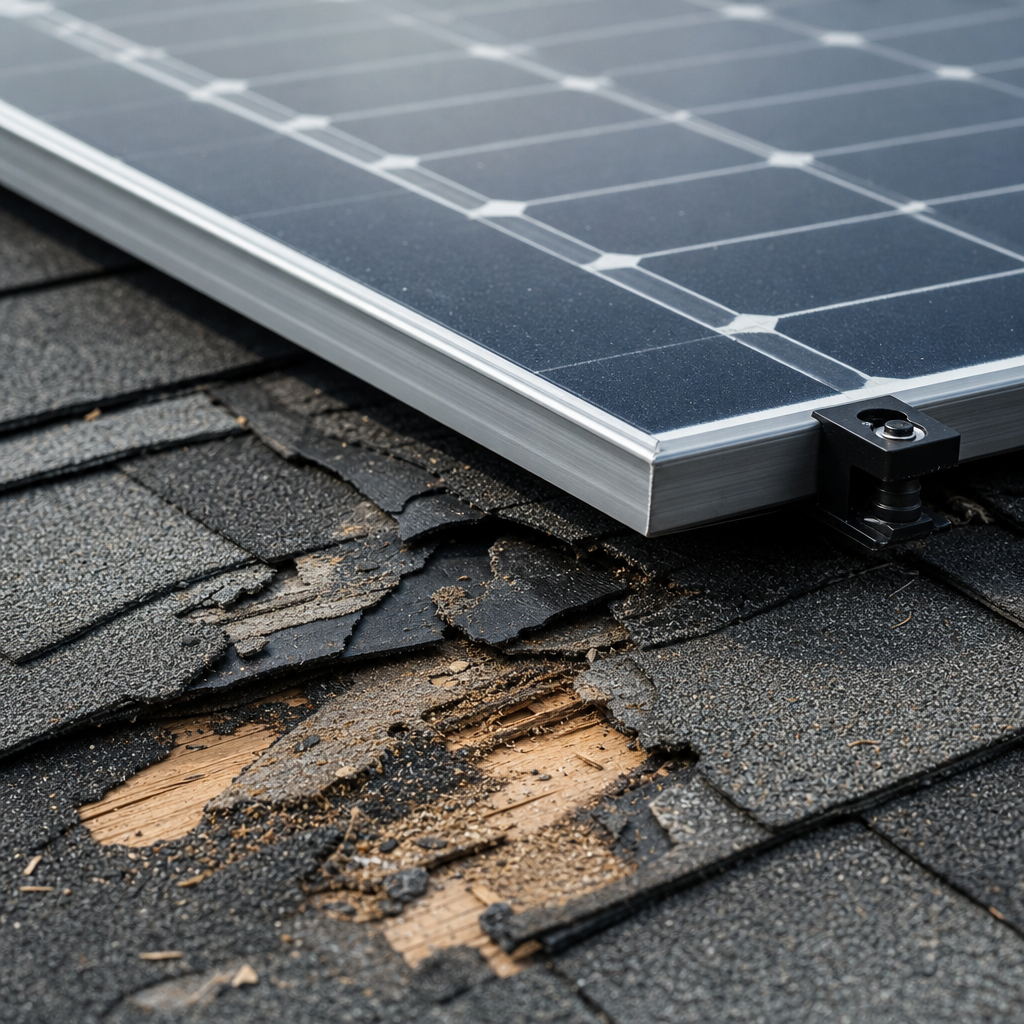
Most solar mounting systems require penetrating the roof to attach racking to the rafters below. If these penetration points aren't properly flashed and sealed, water can seep in over time, leading to hidden leaks that may not surface for months or even years.
Mounting hardware must be anchored into structural rafters, not just roof decking. Installers who miss the rafter or use insufficient fasteners risk both a weak mount and a compromised roof deck.
Installing solar on a roof that's already near the end of its lifespan is a major risk multiplier. If your roof needs replacement within 5–7 years, adding panels now means paying to remove and reinstall the system later — plus dealing with a roof that was already deteriorating under the panels.
Improper walking patterns on tile or shingle roofs during installation can crack or dislodge roofing materials, especially on older or more brittle roofing types like clay tile.
Solar panels, racking, and battery equipment add weight to your roof. Without a proper structural assessment, some installers skip evaluating whether your roof framing can safely support the added load, especially in combination with snow, wind, or seismic considerations relevant to California homes.
Not all roofing materials respond to solar installation the same way. Some are naturally more compatible with solar mounting systems than others.
| Roof Type | Relative Risk Level | Key Considerations |
|---|---|---|
| Asphalt Shingle | Low | Most common, well-understood flashing methods |
| Concrete Tile | Medium | Requires specialized tile hooks, careful foot placement |
| Clay Tile | Medium-High | Brittle material, higher breakage risk during install |
| Metal Standing Seam | Low | Often clamps without penetration, very solar-friendly |
| Wood Shake | High | Fire code and flashing complications, less common choice |
| Flat/Membrane Roof | Medium | Requires ballasted mounts or specialized penetration sealing |
If your home has clay tile or wood shake roofing, it's worth discussing roof-specific mounting strategies in detail with your installer before signing a contract. Reputable companies will have documented processes for each roofing type rather than a one-size-fits-all approach.
A well-run solar installation should follow a rigorous process designed to protect your roof at every stage. Here's what that typically looks like:
This is precisely the kind of process-driven approach that separates trustworthy solar companies from lower-cost, higher-risk operators. At www.everysun.com, every installation follows Swedish-influenced safety and engineering standards combined with U.S. code compliance, which means roof penetration methods, rafter attachment, and sealing procedures are treated as seriously as the solar technology itself.
Because roof damage risk is so closely tied to installer practices, it's worth understanding how different quality tiers in the solar industry typically compare.
| Practice | Budget/Low-Cost Installer | Professional Standard (e.g. Everysun) |
|---|---|---|
| Roof condition assessment | Visual only, often skipped | Full inspection with documented report |
| Rafter location method | Estimated or guessed | Verified via attic access or scanning tools |
| Flashing method | Sealant-only, no flashing | Code-compliant flashing at every mount |
| Structural load review | Rarely performed | Engineer-reviewed for load capacity |
| Workmanship warranty | 1–5 years or none | 20-year installation guarantee |
| Product warranty | 10–12 years | Up to 25 years |
This kind of comparison illustrates why the cheapest quote isn't always the safest one for your roof. A lower price often reflects shortcuts in exactly the areas that determine long-term roof integrity.
Even with the best installation practices, homeowners should always confirm what happens if something goes wrong. Two types of warranties matter most:
Everysun backs every installation with a 20-year installation guarantee and 25-year product warranties, giving homeowners long-term protection that goes well beyond industry norms. You can review the specifics of these guarantees directly on www.everysun.com, where the coverage terms are laid out clearly before you commit to a system.
According to guidance from the National Renewable Energy Laboratory, a properly installed and maintained solar system should not compromise roof integrity over its operational lifetime, provided the mounting method matches the roofing material and local building codes are followed precisely. This reinforces that risk is manageable — but only with the right installer and warranty structure in place.
One of the most overlooked factors in solar panel roof damage risk isn't the panels or the installer — it's the roof itself. If your roofing material is already approaching the end of its expected service life, adding a 25-year solar system on top of it creates a mismatch in timelines.
Here's a general guideline for roofing material lifespans, which can help you decide whether a roof replacement should happen before or alongside your solar installation:
| Roofing Material | Typical Lifespan | Solar Compatibility Notes |
|---|---|---|
| Asphalt Shingle | 20–25 years | Replace first if roof is 15+ years old |
| Concrete Tile | 40–50 years | Usually safe to install without replacement |
| Clay Tile | 50+ years | Long-lasting, but handle with care during install |
| Metal Roofing | 40–70 years | Excellent long-term solar compatibility |
| Wood Shake | 20–30 years | Consider replacement due to fire and mounting concerns |
If your roof is within 5 years of needing replacement, most reputable solar companies — including Everysun — will recommend replacing the roof first. This avoids the added cost and disruption of removing and reinstalling panels later, and it ensures your new roof and new solar system share a similar service timeline.
The Solar Energy Industries Association also notes that coordinating roof replacement with solar installation is increasingly common practice, as it reduces long-term costs and installation complexity for homeowners.
Before hiring any solar company, homeowners should ask direct questions to gauge how seriously they take roof damage risk. Consider asking:
A confident, transparent installer should answer each of these without hesitation. Vague or dismissive answers are a red flag.
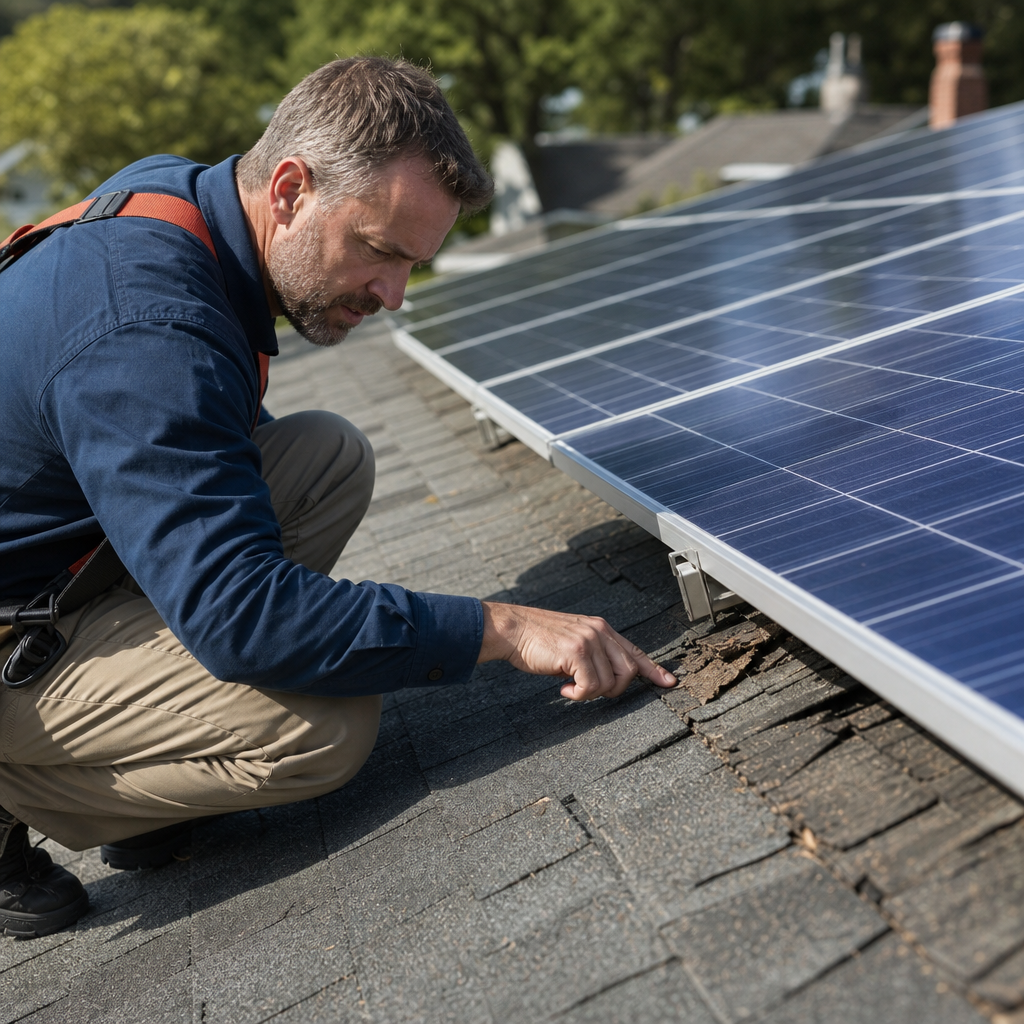
Even after a high-quality installation, it's smart to periodically check your roof's condition, particularly around mounting points. Homeowners should:
The Federal Emergency Management Agency has also published general guidance on wind and structural resilience for rooftop-mounted systems in regions prone to severe weather, which can be a useful reference for homeowners in wildfire- or wind-affected parts of California.
Solar panel roof damage risk is real, but it is also highly manageable. The vast majority of roof problems associated with solar installations trace back to poor workmanship, inadequate roof preparation, or cutting corners on flashing and structural review — not to solar technology itself. By choosing an installer with rigorous engineering standards, transparent warranty terms, and a proven track record, California homeowners can add solar power and battery storage to their homes without meaningfully increasing their roof's risk profile.
This is the core philosophy behind Everysun's approach to residential solar. By combining US-made, high-efficiency panels with Swedish-grade safety and installation standards, Everysun addresses roof damage risk at its source — through careful assessment, precise engineering, and industry-leading warranty coverage. For homeowners who want to reduce their electricity bills and adopt clean, reliable energy without worrying about long-term roof integrity, working with a company that treats your roof as seriously as your solar system makes all the difference. To learn more about flexible payment options, the 20-year installation guarantee, and 25-year product warranties available for your home, visit www.everysun.com and take the next step toward a safer, smarter solar installation.
© 2025 Everysun Inc. All Rights Reserved.


Get Your Free Solar Quote
Request your free quote and see how solar can work for your home and budget