7 Costly Mistakes That Inflate Your Home Solar Power System Installation Cost
October 11, 2026
|
California
Homeowners researching home solar power system installation cost usually expect a simple number — a flat price per watt that tells them exactly what to budget. In reality, the final invoice depends on a dozen variables, and small misunderstandings about those variables are what cause most California homeowners to overpay. Some get talked into oversized systems. Others choose financing that quietly doubles their long-term costs. Many simply don't know which quotes are comparable and which are not.
This article breaks down the real cost structure behind residential solar in 2026, the mistakes that inflate pricing, and the questions that separate a fair quote from an expensive one.
The single biggest reason homeowners misjudge home solar power system installation cost is comparing quotes that aren't actually comparable. Some installers quote by cost-per-watt, others bundle financing fees into the sticker price, and some separate battery storage as an "optional" line item that isn't optional at all once you want backup power.
According to the U.S. Department of Energy's SunShot Initiative, hardware (panels, inverters, racking) typically accounts for less than half of total project cost. The rest is labor, permitting, overhead, customer acquisition, and installer margin — all of which vary dramatically between companies.
What a complete quote should include:
If a quote is missing any of these, you're not seeing the real price — you're seeing a teaser.
National averages are a useful starting point, but California pricing runs slightly higher than the national median due to labor costs, permitting complexity, and premium equipment demand. As of late 2026, here's a general breakdown of typical residential system costs before incentives:
| System Size | Average Cost Range (Before Incentives) | Typical Home Fit |
|---|---|---|
| 5 kW | $15,000 – $19,000 | Small home, low usage |
| 7 kW | $20,000 – $26,000 | Average single-family home |
| 10 kW | $27,000 – $34,000 | Larger home or EV owner |
| 13 kW | $33,000 – $42,000 | High-usage household |
| 10 kW + battery | $42,000 – $55,000 | Backup-ready home |
These figures align with national cost tracking published by the National Renewable Energy Laboratory (NREL), adjusted for California's higher average labor and permitting fees. Battery storage is the largest single cost add-on, often adding $10,000–$15,000 depending on capacity.
The mistake many homeowners make is anchoring to a national "average" number they saw in an article without accounting for their state, roof complexity, and system size. A 10 kW system on a steep, multi-angle roof with an older electrical panel will always cost more than a simple 5 kW install on a new build.
Choosing the wrong system size is one of the most expensive — and common — mistakes in residential solar. Undersizing means you'll still owe significant utility bills every month, undermining the entire investment. Oversizing means paying for capacity you don't need, inflating your home solar power system installation cost without a proportional increase in savings, especially under current net billing rules.
California's Net Billing Tariff (NBT), which replaced the older Net Energy Metering 2.0 structure, compensates exported solar energy at a lower rate than it used to. This change, detailed by the California Public Utilities Commission, makes it more financially efficient to size systems around self-consumption and battery storage rather than maximizing export.
Questions to ask before finalizing system size:
A properly sized system, reviewed by a qualified design team like the one at www.everysun.com, accounts for your actual historical usage plus reasonable future growth — not just your last utility bill.
Panel and inverter quality varies enormously, and the cheapest hardware is rarely the cheapest decision over 25 years. Lower-tier panels tend to degrade faster, carry weaker warranties, and in some cases come from manufacturers with inconsistent quality control standards.
| Panel Tier | Typical Efficiency | Typical Warranty | Degradation Rate (Annual) |
|---|---|---|---|
| Budget/Import | 17–19% | 10–12 years | 0.7%–1.0% |
| Mid-Tier | 19–21% | 15–20 years | 0.5%–0.6% |
| Premium (US-Made, High-Efficiency) | 21–22.5%+ | 25 years | 0.3%–0.4% |
A premium panel may cost more per watt upfront, but it produces more energy per square foot of roof, degrades more slowly, and is backed by a warranty that actually protects the investment for a quarter-century. Everysun uses US-made, high-efficiency panels specifically because the long-term savings outweigh the modest upfront premium — a point confirmed by cost-per-kWh modeling over a panel's full lifespan, not just its sticker price.
The mistake is evaluating "cost" only on day one. The true cost of a solar system should be measured in cost-per-kWh produced over its full lifetime, not dollars-per-watt at installation.
Installation quality is invisible until something goes wrong — a poorly sealed roof penetration, an undersized conduit run, or a rushed electrical connection can cause leaks, fire risk, or performance loss years down the line. Yet installation labor is often the line item homeowners scrutinize least, because it's harder to compare than equipment specs.
This is where installation standards matter enormously. Sweden is widely regarded as having some of the strictest electrical and building safety codes in the world, and installers who apply Swedish-grade standards to US residential solar bring a level of rigor — proper grounding, weatherproofing, and conduit management — that goes well beyond minimum code compliance in many markets. Everysun built its installation process around this combination: US-made panels paired with Swedish safety and workmanship standards, which is part of why the company backs every installation with a 20-year installation guarantee.
Signs an installer is cutting corners on workmanship:
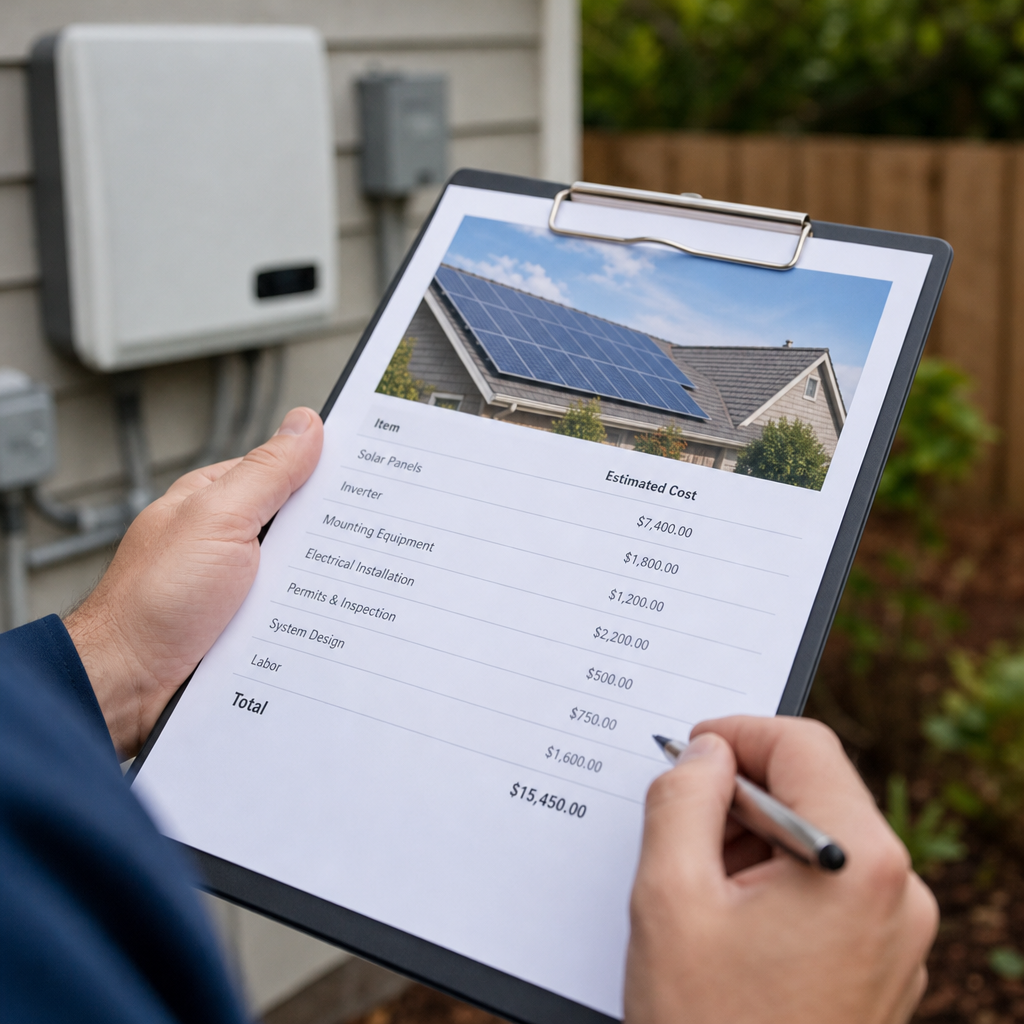
Financing is where many homeowners unknowingly spend thousands more than necessary. A system advertised at "$0 down" can still cost significantly more over its lifetime depending on the interest rate, dealer fees baked into the loan, or an escalating lease payment.
| Financing Option | Upfront Cost | Ownership | Long-Term Cost Impact |
|---|---|---|---|
| Cash Purchase | Full amount | Yes | Lowest lifetime cost, full incentive eligibility |
| Solar Loan | $0–low down | Yes | Moderate — depends on interest rate and term |
| Lease / PPA | $0 down | No | Often highest lifetime cost, no tax credit eligibility |
| Flexible In-House Financing | Varies | Yes | Competitive if fees are transparent |
The federal Residential Clean Energy Credit, currently allowing homeowners to claim a percentage of system cost on their federal taxes, only applies to owned systems — not leases or PPAs. That single distinction can be worth thousands of dollars, yet many homeowners don't realize it until after signing a lease agreement that locks them out of ownership entirely.
Everysun offers flexible payment options specifically designed so homeowners can choose ownership-based financing that preserves tax credit eligibility, rather than steering customers toward leases that maximize dealer commission but minimize homeowner savings. Reviewing financing terms line by line — interest rate, dealer fee, escalator clause, and total repayment amount — is one of the most important steps before signing anything.
Low upfront home solar power system installation cost can mask higher costs down the road if maintenance, monitoring, and warranty coverage aren't part of the original agreement. A system with a weak workmanship warranty might leave you paying out of pocket for a repair in year eight — long after the installer who sold you the system has gone out of business, which is unfortunately common in a fast-growing, sometimes volatile industry.
What a strong long-term coverage package should include:
Everysun backs its installations with a 20-year installation guarantee and 25-year product warranties, a coverage structure designed to protect homeowners for the full productive life of the system rather than just the first few years. Before signing with any installer, ask directly: what happens to my warranty if your company is acquired or closes? A written, transferable warranty answer separates serious companies from short-term sales operations.

Because so many variables affect pricing, the most reliable way to understand your home solar power system installation cost is a proper site assessment rather than an online calculator. A qualified assessment should review:
The Solar Energy Industries Association (SEIA) notes that accurate site assessments are one of the strongest predictors of long-term customer satisfaction, precisely because they prevent the undersizing, oversizing, and equipment mismatches that lead to disappointing savings. A rushed online quote simply cannot account for these details.
To truly understand whether a quote is fair, homeowners should compare total cost of ownership across a system's expected 25-year lifespan, factoring in degradation rates, financing costs, and warranty coverage — not just the installation invoice.
| Factor | Why It Matters for Long-Term Cost |
|---|---|
| Panel degradation rate | Lower degradation means more energy produced in year 20 vs. year 1 |
| Inverter replacement likelihood | Mid-tier inverters may need replacement before year 15 |
| Warranty transferability | Protects value if you sell your home before year 25 |
| Installer longevity | Determines whether warranty claims are honored |
| Financing structure | Interest and fees can exceed original hardware cost over time |
Viewed this way, the cheapest quote on paper is sometimes the most expensive system over its lifetime — and the reverse is also true. A well-built system with strong warranties and efficient panels frequently delivers a lower cost-per-kWh over 25 years, even with a higher initial price tag.
Understanding home solar power system installation cost means looking past the headline number and evaluating equipment quality, installation standards, financing structure, and warranty protection together. The homeowners who end up happiest with their solar investment are rarely the ones who chased the single lowest quote — they're the ones who understood exactly what was included, who sized their system around real usage data, and who chose an installer with a transparent, long-term commitment to the work.
California's solar market is mature enough now, in 2026, that homeowners have real choices. Taking the time to compare quotes on equal terms, ask pointed questions about workmanship warranties, and understand financing implications is the difference between a system that pays for itself efficiently and one that quietly costs more than expected.
Everysun was built around this exact philosophy: combining US-made, high-efficiency panels with Swedish-grade safety and installation standards, backed by a 20-year installation guarantee and 25-year product warranties, with flexible payment options that keep solar both affordable and transparent. For California homeowners who want a clear, honest answer about what their home solar power system installation cost will actually be — and confidence that the system will perform for decades — www.everysun.com offers the kind of detailed, data-driven assessment that turns a confusing decision into a straightforward one.
© 2025 Everysun Inc. All Rights Reserved.


Get Your Free Solar Quote
Request your free quote and see how solar can work for your home and budget