5 Questions to Ask Before Trusting a 25 Year Solar Panel Warranty
October 8, 2026
|
California
Solar panels are a 25-year-plus investment, but not every warranty backing that investment is created equal. For California homeowners comparing quotes, the phrase "25 year solar panel warranty" gets used loosely by installers and manufacturers alike, and the fine print often tells a very different story than the sales pitch. Understanding exactly what should be guaranteed — and for how long, under what conditions, and by whom — is the difference between a decade of worry-free power production and a costly surprise down the road.
This article breaks down the seven protections every strong 25-year warranty should include, how to evaluate the paperwork an installer hands you, and why the gap between a "product warranty" and a genuine performance and workmanship guarantee matters more than most homeowners realize.
The single biggest source of confusion in solar warranties is that the term "25-year warranty" can refer to three completely different things, often bundled together in marketing material but legally separate in the contract.
A manufacturer's 25-year product and performance warranty does nothing for you if the installer only backs their workmanship for 5 or 10 years. If a mounting bracket fails or a roof leak develops at the penetration points in year 12, a short workmanship window leaves you paying out of pocket for labor even though the panel itself is still "under warranty." This is why Everysun's 20-year installation guarantee is structured to close that gap, pairing long product coverage with an installation guarantee that far exceeds the industry standard of 5-10 years.
Solar panels degrade naturally over time due to UV exposure, thermal cycling, and micro-fractures in the cells. A credible performance warranty specifies, in writing, the minimum output you can expect year by year — not just a vague promise of "long-lasting power."
Industry-standard degradation for quality monocrystalline panels runs close to 0.3-0.5% per year. Over 25 years, that should still leave a panel producing roughly 85-90% of its original output. According to the National Renewable Energy Laboratory, degradation rates vary significantly by panel quality and manufacturing process, which is exactly why the warranty document — not the brochure — is what matters.
| Warranty Feature | Entry-Level Panel | Premium US-Made Panel |
|---|---|---|
| Year 1 guaranteed output | 98% | 99% |
| Year 10 guaranteed output | 91% | 95% |
| Year 25 guaranteed output | 80-83% | 88-90% |
| Annual degradation rate | ~0.7% | ~0.4% |
| Performance warranty length | 20-25 years | 25 years |
When comparing quotes, ask each installer for the actual degradation curve, not just the headline number. A panel that guarantees 90% output at year 25 will produce measurably more electricity — and more savings — over its lifetime than one guaranteeing 80%.
One of the most overlooked risks in solar warranties is counterparty risk — what happens if the panel manufacturer goes out of business, gets acquired, or stops honoring warranty claims. Solar has seen its share of manufacturer bankruptcies over the past decade, leaving homeowners with "valid" warranties that no one will actually fulfill.
This is where sourcing matters. Panels manufactured domestically by financially stable companies with long operating histories in the US market carry less of this risk than panels from manufacturers with thin balance sheets or limited US presence. The Solar Energy Industries Association has repeatedly flagged warranty enforceability as a key consumer protection issue in residential solar.
Questions to ask before signing:
A 25-year product warranty from a panel manufacturer in another state (or country) is only as useful as the local installer's willingness to help you file and manage that claim. Many homeowners don't realize that manufacturers typically require the original certified installer to diagnose the issue, pull the panel, and coordinate the replacement — work that an installer who has since closed shop or moved on cannot do.
This is why installation guarantees from a long-standing regional company carry real weight. Everysun backs every installation with a 20-year guarantee precisely because California homeowners need a local partner who will still be in business — and accountable — decades after the panels go on the roof, not just a manufacturer's call center.
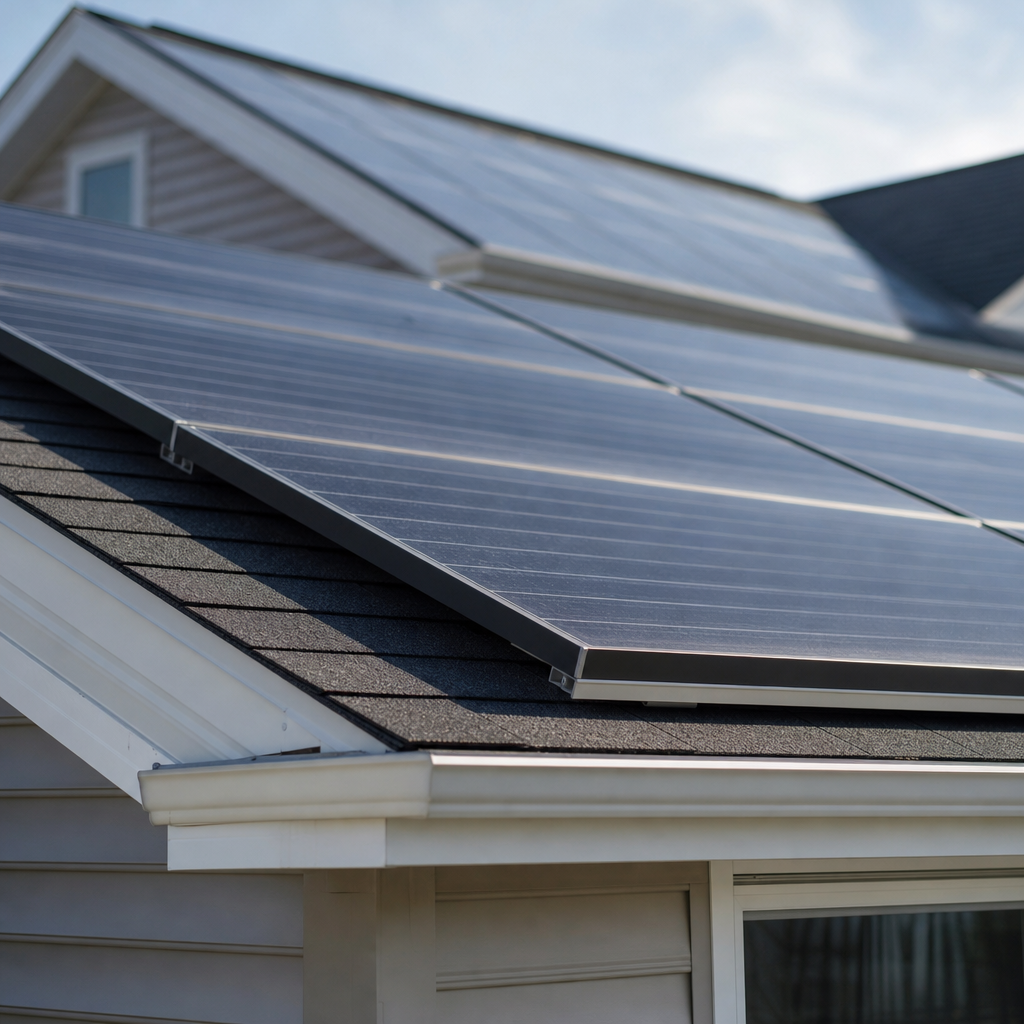
A 25-year panel warranty means little if the inverter or battery system fails at year 12 and only carries a 10-year warranty. Inverters and batteries are electromechanical components with shorter natural lifespans than the panels themselves, and mismatched warranty terms are one of the most common gaps homeowners discover only after a failure.
| Component | Typical Lifespan | Typical Warranty Length |
|---|---|---|
| Solar panels | 25-30+ years | 25 years |
| String inverter | 10-15 years | 10-12 years |
| Microinverter | 20-25 years | 20-25 years |
| Battery storage | 10-15 years | 10 years |
| Racking/mounting hardware | 25+ years | 20-25 years |
When reviewing a quote, ask specifically how the inverter and battery warranties line up against the panel warranty. A well-designed system — like those using microinverters paired with modern lithium battery chemistry — minimizes this mismatch, but it should always be spelled out in writing rather than assumed.
Most homeowners don't live in the same house for 25 years. A warranty that cannot transfer to a new owner can actually reduce your home's resale value, since buyers increasingly ask about remaining solar warranty coverage as part of due diligence. The US Department of Energy notes that transferable warranties are becoming a standard expectation in home sales involving solar, particularly in high-adoption states like California.
Before signing, confirm:
A fully transferable warranty package is a selling point you can use when it's time to list your home, and buyers' agents increasingly flag its absence as a red flag during inspection periods.
A warranty is only as good as the process behind it. Strong warranty programs specify:
Modern residential solar systems typically include app-based production monitoring, which means a legitimate degradation issue or component failure can often be caught and flagged for warranty review before it meaningfully affects your electric bill. Ask your installer to demonstrate this monitoring during the proposal stage, not after the system is already on your roof.

California's combination of intense UV exposure, wildfire smoke exposure, coastal salt air in some regions, and extreme heat in inland valleys puts additional stress on solar equipment compared to milder climates. That makes the underlying build quality — and the warranty terms that back it — especially important for California homeowners specifically, rather than relying on national averages.
California's net energy metering rules (now under the NEM 3.0 framework) have also shifted the economics of solar toward self-consumption and battery storage, which means your battery warranty terms matter just as much as your panel warranty terms for maximizing long-term savings. A system engineered and warrantied with California's climate and rate structure in mind will typically outperform a generic national installation package over the full 25-year term.
When evaluating competing quotes, it helps to put the actual warranty terms side by side rather than comparing sales pitches. Use a table like this to track what each installer is actually offering:
| Warranty Element | Installer A | Installer B | What to Look For |
|---|---|---|---|
| Product warranty length | 12 years | 25 years | 25 years minimum |
| Performance warranty (year 25 output) | Not specified | 88% | Written guarantee, not verbal |
| Workmanship/installation guarantee | 5 years | 20 years | 15-20+ years |
| Inverter warranty | 10 years | 20-25 years | Matches panel term where possible |
| Battery warranty | 10 years | 10 years | Industry standard |
| Transferable to new owner | Unclear | Yes, no fee | Fully transferable |
| Manufacturer financial backing | Unknown | US-based, audited | Verifiable and stable |
This kind of side-by-side comparison takes the guesswork out of "25-year warranty" claims and forces every installer to show their actual terms rather than lean on a marketing headline.
Not all 25-year warranties rest on equally solid engineering. Panels built to rigorous safety and quality standards — the kind historically associated with Scandinavian manufacturing and safety culture — tend to show lower real-world failure rates over decades of field data. Combining US-made, high-efficiency panels with installation practices drawn from Swedish safety standards is one way installers attempt to close the gap between a paper warranty and a panel that genuinely performs for 25 years.
This matters because a warranty is, in effect, a bet the manufacturer and installer are making on their own product. Companies confident in their build quality can afford to offer longer, more generous terms; companies cutting corners on materials typically can't. When you see a 25-year warranty paired with a strong workmanship guarantee from the same installer, it's generally a signal of genuine confidence rather than just competitive marketing.
Before committing to an installer, California homeowners should get clear, written answers to:
Any reputable installer should be able to answer all seven without hesitation, and should be willing to put the answers in writing as part of your proposal.
A 25-year solar panel warranty should mean exactly what it says: a quarter-century of dependable power production backed by enforceable guarantees on equipment, performance, and workmanship alike — not just a number printed on a brochure. California homeowners evaluating solar quotes should insist on seeing the actual warranty documents, comparing inverter and battery terms alongside the panel warranty, and confirming that the installer offering the warranty will realistically still be around to honor it decades from now.
Everysun was built around this exact principle, combining high-efficiency US-made panels, Swedish-grade safety and installation standards, and a 20-year installation guarantee with flexible payment options that make long-term, warrantied solar genuinely accessible for California homeowners. Rather than chasing the lowest upfront price, homeowners who prioritize transparent, well-matched warranty coverage set themselves up for 25 years of lower electricity bills, dependable backup power, and a system that protects their investment as reliably as it protects the planet.
© 2025 Everysun Inc. All Rights Reserved.


Get Your Free Solar Quote
Request your free quote and see how solar can work for your home and budget