Simple Solar Panel Maintenance Tips to Keep Your System Running Efficiently
September 27, 2026
|
California
Solar panel systems are engineered to run for decades with minimal fuss, but "minimal" doesn't mean "zero." A little routine attention keeps your panels producing at peak efficiency, protects your investment, and helps you catch small issues before they become expensive ones. For California homeowners who rely on solar to cut electricity bills and ride out grid instability with battery backup, understanding proper maintenance is just as important as choosing the right installer in the first place.
This guide walks through the practical, real-world steps homeowners can take to keep their solar panel system performing well for the life of its warranty — and beyond.
Solar panels have no moving parts, which is part of why they're so reliable. But they're still exposed to dust, pollen, bird activity, wind-blown debris, and California's intense seasonal sun. Left unchecked, these factors can silently reduce output by 10-25% over time, according to research from the National Renewable Energy Laboratory (NREL). That's a meaningful chunk of the savings you expected when you went solar.
Maintenance isn't just about cleaning glass. It includes:
Homeowners who stay on top of these basics typically see their systems perform closer to the manufacturer's rated output for the full 25-year lifespan, rather than experiencing a slow, unnoticed decline.
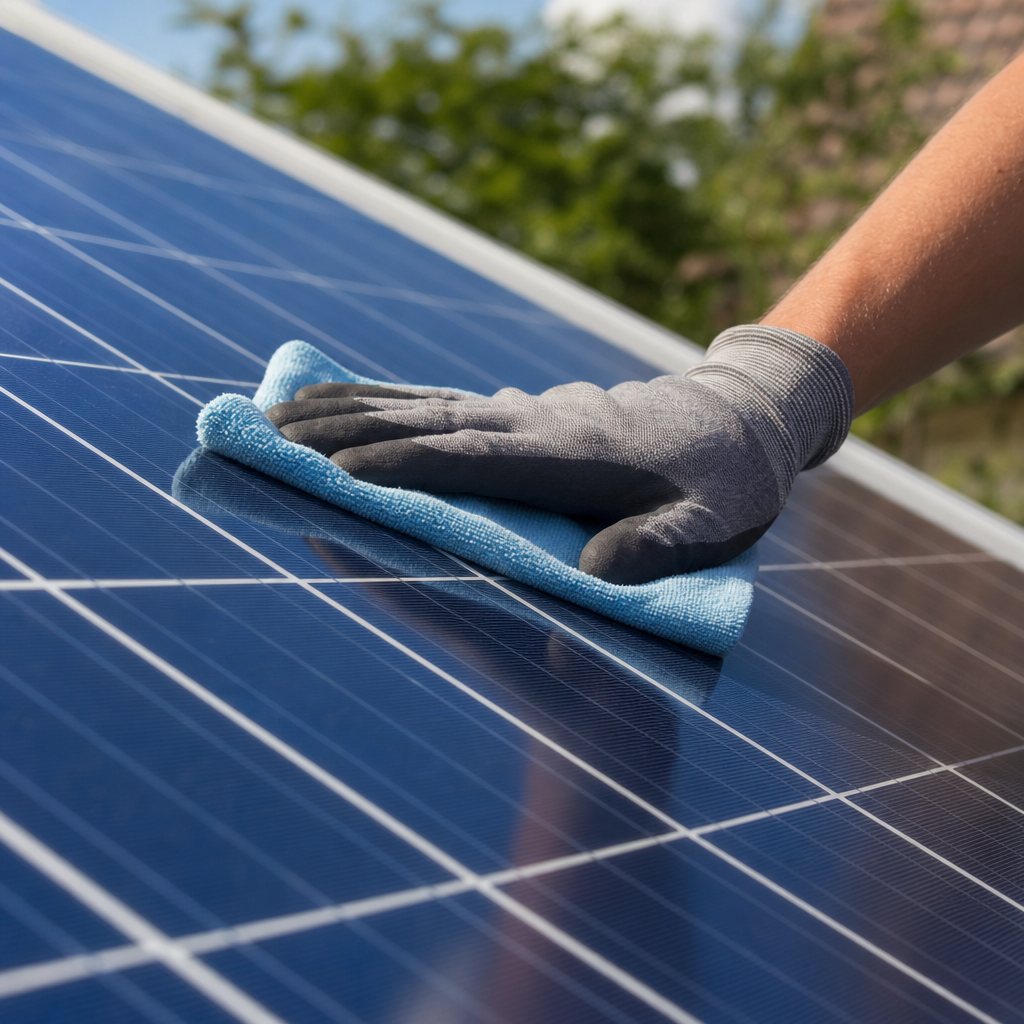
Dust and grime buildup is the most common — and most fixable — cause of reduced solar output. California's dry climate, agricultural regions, and wildfire smoke seasons all contribute to a layer of particulate matter settling on panel surfaces.
General cleaning guidelines:
Homeowners in coastal areas with more rainfall may need less frequent manual cleaning, since rain does a decent job of rinsing panels naturally. Homeowners in California's Central Valley or desert regions, where dust accumulates faster and rain is scarcer, should plan on more frequent attention.
| Region Type | Recommended Cleaning Frequency | Main Contaminant |
|---|---|---|
| Coastal California | Every 4-6 months | Salt air, light dust |
| Central Valley / Agricultural | Every 2-3 months | Dust, pollen, ag residue |
| Desert / Inland Empire | Every 2 months | Dust, sand |
| Wildfire-prone regions (seasonal) | After each smoke event | Ash, particulate matter |
If you're not comfortable getting on your roof, professional cleaning services or your original installer can typically handle this safely — which matters, since a fall from a roof is a far bigger risk than a slightly dusty panel.
Nearly every modern residential solar system, including installations from www.everysun.com, comes with a monitoring app or dashboard that tracks real-time and historical energy production. This is one of the most underused maintenance tools homeowners have.
What to check regularly:
A sudden, unexplained 20% drop in production from one string of panels often points to a wiring issue, a failed optimizer, or shading from new tree growth — not a system-wide problem. Catching this early through your app, rather than waiting for a much larger bill, is the single easiest way to protect your system's return on investment.
The U.S. Department of Energy's Solar Energy Technologies Office notes that consistent performance monitoring is one of the most effective low-cost strategies for maintaining system efficiency over its operational life.
Beyond the panels themselves, several physical components deserve a periodic visual check, ideally twice a year — once in spring after winter storms, and once in fall before rainy season returns.
Homeowner-level checks (from the ground or a safe vantage point):
Leave to a licensed professional:
Attempting electrical work on a solar system without proper training isn't just risky — it can also void your warranty. Reputable installers, including Everysun, build inspection visits into their long-term service relationships specifically so homeowners don't have to take on this risk themselves.
Trees grow. That's obvious, but it's also one of the most overlooked maintenance issues in residential solar. A tree that cast no shadow on your panels at installation may, five years later, block a meaningful portion of your array during peak afternoon sun.
Steps to manage shading over time:
Even partial shading on a single panel can disproportionately reduce output for an entire string in systems using traditional string inverters, since electricity flows in series. Systems using microinverters or power optimizers — a specification worth discussing with your installer — are far more resilient to this issue, which is why Everysun designs many of its systems with panel-level optimization built in.
For homeowners who've paired their solar panels with battery storage, a bit of additional care goes a long way. Lithium-ion battery systems, the standard in most modern residential setups, are relatively low-maintenance compared to older lead-acid technology, but they still benefit from attention.
Battery maintenance best practices:
According to guidance from the California Energy Commission, properly maintained residential battery systems can retain 70-80% of their original capacity after a full decade of daily cycling — a strong argument for taking basic care seriously rather than treating the battery as a "set and forget" appliance.
Because California's climate varies so dramatically by region — from coastal fog to Central Valley heat to mountain snow — a seasonal approach to maintenance makes practical sense.
| Season | Key Maintenance Tasks |
|---|---|
| Spring | Rinse panels after pollen season; inspect for winter storm damage; trim vegetation |
| Summer | Monitor performance during peak sun; check inverter cooling and ventilation |
| Fall | Clear leaves and debris; schedule professional inspection before rainy season |
| Winter | Check for standing water or debris after storms; monitor snow in higher elevations |
Following a seasonal rhythm like this turns maintenance into a simple, predictable habit rather than a reactive chore you only think about when your electric bill looks off.
Many homeowners want to know where the line is between tasks they can safely handle themselves and tasks that require a licensed technician. As a general rule:
Safe for most homeowners:
Best left to professionals:
Companies with strong installation standards, like Everysun's combination of US-made panel technology and Swedish safety protocols, typically offer maintenance plans or scheduled check-ups as part of their service relationship. This matters because a 20-year installation guarantee and 25-year product warranty are only as valuable as the maintenance records and professional support behind them. If you're unsure whether an issue is covered, www.everysun.com can help homeowners understand what's included under their specific installation guarantee before assuming a repair is out-of-pocket.
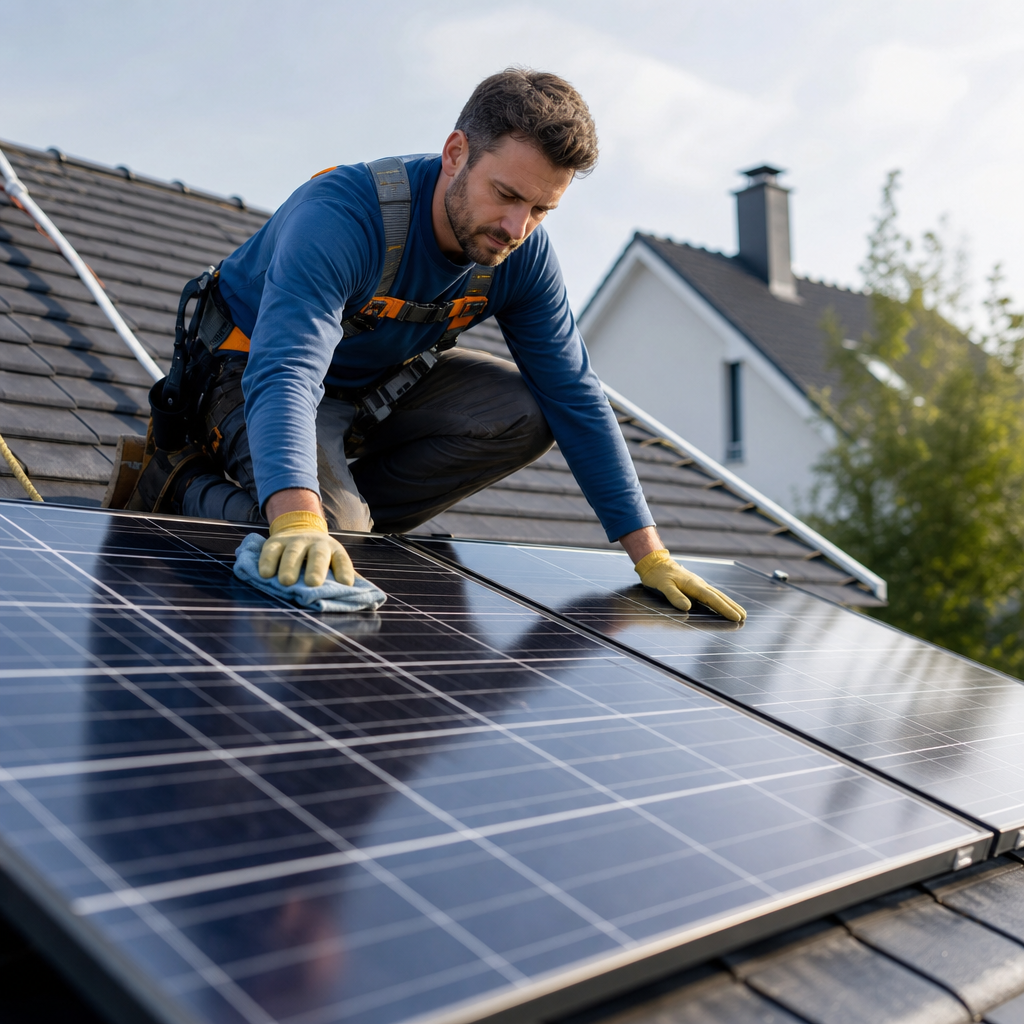
Even well-intentioned homeowners sometimes make choices that reduce their system's long-term performance. Avoid these common pitfalls:
Each of these is avoidable with a modest amount of planning, and most cost far less to prevent than to fix after the fact. The Solar Energy Industries Association (SEIA) has published consumer resources emphasizing that proactive maintenance is consistently cheaper than reactive repair across the residential solar industry.
It's worth stepping back to consider why maintenance matters financially, not just technically. A properly maintained system:
Given that a residential solar and battery system represents a meaningful investment, treating maintenance as a minor annual expense — rather than an afterthought — protects that investment far more effectively than assuming "no moving parts" means "no attention needed."
One of the most practical steps a California homeowner can take isn't a maintenance task at all — it's choosing an installer who stands behind their work for the long haul. A 20-year installation guarantee and 25-year product warranty are only meaningful if the company backing them is still around, responsive, and genuinely helpful when questions come up years down the line.
This is where the installation standard matters as much as the panels themselves. Everysun's approach — combining high-efficiency, US-made panels with the rigorous safety and workmanship standards common in Swedish solar installation practices — is designed specifically so homeowners aren't left guessing about mounting integrity, wiring quality, or long-term support. Flexible payment options also mean homeowners aren't forced to choose between affordability and quality workmanship at the point of installation, which pays dividends when maintenance questions arise later.
Solar panel maintenance doesn't need to be complicated, time-consuming, or expensive. A seasonal rinse, a bit of vegetation management, regular attention to your monitoring app, and periodic professional inspections are enough to keep most residential systems performing near their rated capacity for decades. The bigger risk isn't neglecting any single task — it's assuming solar panels require no attention at all, and then discovering years later that shading, grime, or a small wiring issue quietly cut into the savings you expected.
For California homeowners who want that peace of mind built in from day one, working with an installer that prioritizes long-term performance — not just the day of installation — makes all the difference. www.everysun.com designs and installs residential solar and battery systems with exactly this philosophy: high-efficiency, US-made panels, Swedish-grade safety standards, and warranty protection that actually holds up over time. Combined with the simple maintenance habits outlined here, that's how California homeowners keep their solar investment paying off for the full 25 years and beyond.
© 2025 Everysun Inc. All Rights Reserved.


Get Your Free Solar Quote
Request your free quote and see how solar can work for your home and budget