Fast-Track vs. Standard Solar Panel Installation Timeline: Which Path Is Right for Your Home?
October 1, 2026
|
California
Deciding to go solar is an exciting milestone, but one question dominates nearly every homeowner's mind once the decision is made: how long will it actually take? The solar panel installation timeline varies significantly depending on your utility company, permitting office, equipment choices, and installer workflow. Some California homeowners flip the switch on their new system in as little as six weeks, while others wait three months or longer. Understanding the difference between a fast-track process and a standard process helps you set realistic expectations and choose an installer who can keep your project moving.
This article breaks down every phase of the solar installation journey, compares timeline scenarios side by side, and explains what you can do to avoid unnecessary delays. Whether you're comparing quotes or already signed a contract, knowing what happens next—and how long each step should take—puts you in control of the process.
No two solar installations follow an identical schedule because the process depends on factors outside the installer's direct control. Local permitting offices, utility interconnection queues, and even weather all play a role in how quickly your system goes live.
Key variables that affect your timeline include:
According to the U.S. Department of Energy, the national average from signed contract to activation ranges between one and three months, though this can stretch longer in areas with dense permitting backlogs. California's robust solar market means most utilities and cities have streamlined processes, but local variation still exists.
A typical residential solar project moves through seven distinct phases. Here's what each one involves and roughly how long it takes under normal circumstances.
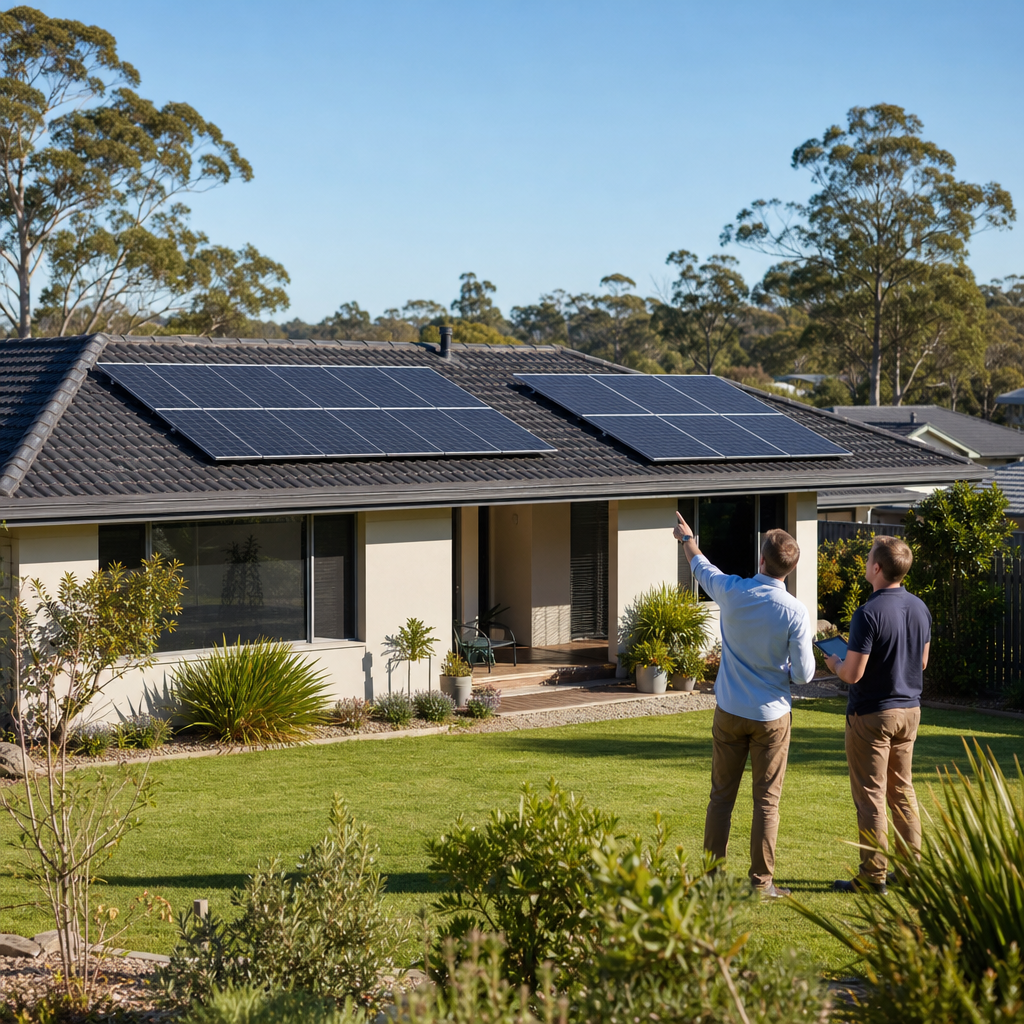
Your installer evaluates your roof, shading, energy usage, and electrical panel. This can happen via satellite imagery and a virtual consultation or an in-person site visit. Companies like www.everysun.com combine both methods to produce an accurate proposal quickly, often within days of your initial inquiry.
Once you approve a proposal, engineers finalize panel layout, wiring diagrams, and structural calculations. This stage also includes selecting equipment, such as US-made high-efficiency panels and battery storage sized to your household's consumption.
Your installer submits plans to the local building department and, if applicable, the fire department. Permitting is often the single biggest variable in the entire timeline. Some California cities use SolarAPP+, an instant online permitting platform developed with the National Renewable Energy Laboratory, which can cut this phase down to as little as one day. Others still rely on manual review, which takes weeks.
Before installation, your installer typically files an interconnection application with your utility. Some utilities allow installation to begin before approval; others require a green light first.
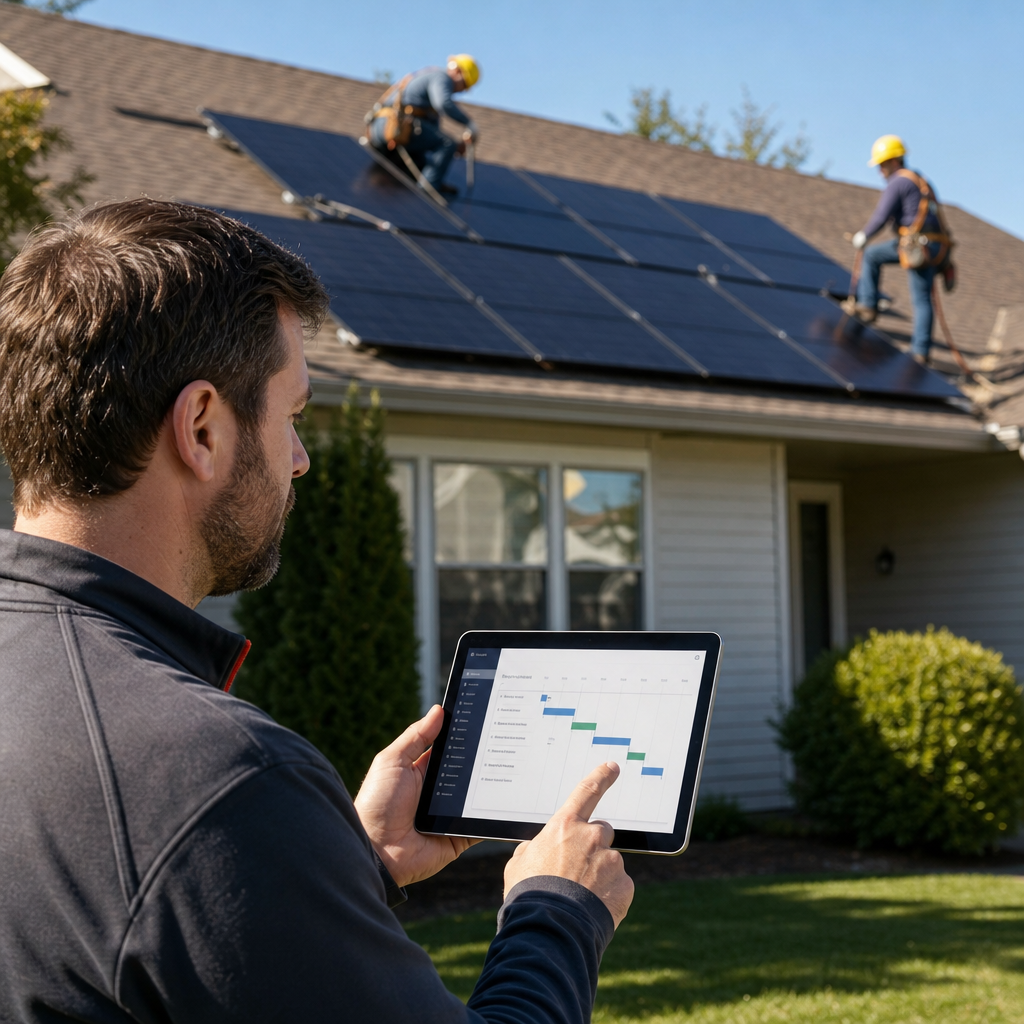
The physical mounting of panels, inverters, and batteries usually takes one to three days depending on system size and roof complexity. This is the fastest and most visible part of the process.
After installation, a city or county inspector verifies the system meets code. Scheduling availability affects how quickly this happens.
Finally, your utility issues Permission to Operate, allowing you to legally turn on your system and begin generating power. This step varies the most by provider.
| Phase | Typical Duration | Common Delay Factors |
|---|---|---|
| Site assessment | 1–2 weeks | Scheduling availability |
| Design & engineering | 1–2 weeks | Complex roof structures |
| Permitting | 2–6 weeks | Manual review backlogs |
| Utility interconnection application | 1–3 weeks | Utility processing queue |
| Installation day | 1–3 days | Weather, crew availability |
| Inspection | 1–2 weeks | Inspector scheduling |
| Permission to Operate | 1–4 weeks | Utility administrative delays |
Added together, a standard project spans roughly 6 to 14 weeks from signed contract to activation, though some homeowners experience longer waits in jurisdictions with heavier permitting backlogs.
A fast-track installation isn't about skipping steps—it's about optimizing each one. Installers who have deep experience in specific California municipalities often know exactly how to avoid common bottlenecks.
Here are the main factors that create a fast-track experience:
Companies that control more of the process internally—from design to installation to post-installation support—tend to deliver faster results because they aren't waiting on multiple third parties to coordinate. This is part of why www.everysun.com structures its workflow around in-house teams and standardized, high-efficiency equipment paired with Swedish safety protocols, aiming to minimize the handoffs that typically slow a project down.
| Timeline Type | Typical Duration | Best For |
|---|---|---|
| Fast-track | 5–8 weeks | Simple roofs, SolarAPP+ cities, straightforward utility accounts |
| Standard | 8–12 weeks | Average complexity, moderate permitting backlog |
| Extended | 12–20+ weeks | Panel upgrades needed, roof replacement, complex utility queues |
Adding battery storage to your solar system introduces additional design and permitting considerations. Batteries often require their own permit submission, fire code compliance review, and sometimes a separate utility interconnection step for backup power configurations.
Factors that influence timeline when batteries are involved:
Homeowners who want both solar panels and battery storage should expect their project to run on the longer end of the standard range—typically 10 to 16 weeks—since batteries add a parallel set of permitting and inspection requirements. The Solar Energy Industries Association notes that storage adoption has grown rapidly in California following updates to net metering rules, meaning many installers and utilities have since streamlined their storage-specific review processes compared to a few years ago.
Utility interconnection speed is one of the most unpredictable parts of the solar timeline, and it varies by provider. While exact processing times shift based on application volume, general patterns have held steady across California's three major investor-owned utilities.
| Utility | General Interconnection Review | Typical PTO Issuance |
|---|---|---|
| Pacific Gas & Electric (PG&E) | 1–3 weeks | 1–3 weeks after inspection |
| Southern California Edison (SCE) | 1–2 weeks | 1–2 weeks after inspection |
| San Diego Gas & Electric (SDG&E) | 1–2 weeks | 1–3 weeks after inspection |
These figures represent general ranges rather than guarantees, since utility processing times shift with application volume and staffing. You can check current interconnection policies and timelines directly through the California Public Utilities Commission for the most up-to-date regulatory information.
Even well-managed projects can hit snags. Knowing the most common causes of delay helps you ask the right questions before signing a contract.
Frequent delay triggers:
How to minimize delays:
Homeowners who ask these questions upfront tend to experience fewer mid-project surprises. An experienced installer should be able to walk you through a realistic, written schedule rather than a vague estimate.
Many homeowners assume that once panels are mounted, their system is ready to use. In reality, two important steps remain: inspection and Permission to Operate. Turning on your system before receiving PTO can violate your interconnection agreement and, in some cases, void warranty coverage.
During this waiting period, it's worth using the time productively:
A reputable installer will proactively manage this phase rather than leaving you to track down inspectors or utility representatives yourself. This is one of the reasons warranty-backed companies emphasize post-installation support as part of their value proposition—because the process doesn't truly end until your system is approved to operate.
At www.everysun.com, the installation process is built around minimizing the handoffs that typically slow projects down. By combining US-made high-efficiency panels with Swedish-engineered safety and installation standards, Everysun aims to deliver systems that are not only fast to install but built for long-term reliability. Their 20-year installation guarantee and 25-year product warranties reflect a focus on durability that extends well beyond activation day.
Flexible payment options also reduce a hidden source of delay: financing approval. When financing and system design happen in parallel rather than sequentially, homeowners often move through the early stages of the timeline more efficiently.
Every solar installation timeline is shaped by a mix of factors—some within your installer's control, others dependent on local government and utility processes. Here's a simplified way to think about your own project:
Asking your installer for a phase-by-phase breakdown—rather than a single estimated completion date—gives you a much clearer picture of where potential delays might occur and how to plan around them.
Understanding the solar panel installation timeline empowers you to make an informed decision, set realistic expectations with your household, and choose an installer capable of keeping your project on track. While permitting offices and utility companies introduce variables no installer can fully control, the right team can still make a measurable difference in how quickly—and smoothly—your system goes live. Everysun combines US-made high-efficiency panels, Swedish safety standards, flexible payment options, and strong warranty protections to help California homeowners move from decision to activation with confidence. Visit www.everysun.com to get a personalized timeline estimate and start your path toward cleaner, more affordable energy.
© 2025 Everysun Inc. All Rights Reserved.


Get Your Free Solar Quote
Request your free quote and see how solar can work for your home and budget