Solar Panel Installation Safety Standards
November 24, 2026
|
California
Solar panel installation safety standards exist to protect your home, your family, and the electricians and roofers who climb onto your roof to install the system. For California homeowners considering solar, understanding these standards isn't just a technical curiosity — it's the difference between a system that performs safely for 25+ years and one that creates fire hazards, voids your home insurance, or fails inspection. This article breaks down the codes, certifications, and installation practices that define a safe solar project, and explains what to look for when vetting an installer.
Solar panels generate direct current (DC) electricity at high voltages, often 300-600 volts across a residential string. That power runs through conduit, combiner boxes, and inverters mounted on or near your roof, attic, and garage. When installed incorrectly, these components can cause electrical fires, arc faults, or rooftop structural failures. The National Fire Protection Association has documented cases where improperly installed rooftop solar contributed to fires that were harder for firefighters to fight safely because of live DC wiring even after the main power was shut off.
This is why safety standards are not optional extras — they are baked into building codes, electrical codes, and fire codes across California. A reputable installer treats these standards as the floor, not the ceiling. Companies like www.everysun.com go further, layering Swedish engineering and safety protocols on top of US code requirements, because the minimum legal standard and the safest possible installation are not always the same thing.
Several overlapping code bodies regulate residential solar safety in the United States, and installers must comply with all of them simultaneously.
Together, these codes dictate everything from how far panels must sit from a roof ridge to how quickly a system must shut down voltage when a fire crew cuts the main breaker.
Two of the most important safety mechanisms in modern solar installations are rapid shutdown systems and arc-fault circuit interrupters (AFCI).
Rapid shutdown requires that voltage on rooftop conductors drop to a safe level (typically 30 volts) within 30 seconds of the system being de-energized. This protects firefighters who may need to cut into a roof during an emergency. NEC 690.12 mandates module-level rapid shutdown devices on virtually all new residential installations.
Arc-fault protection detects dangerous electrical arcs that can occur in damaged or loose wiring connections — a leading cause of solar-related fires. AFCI devices automatically interrupt the circuit before an arc can ignite surrounding materials.
A safety-conscious installer tests both systems during commissioning and documents the results, not merely at the time of permit inspection but with ongoing monitoring. This is one of the areas where Swedish installation standards, which emphasize redundant safety verification, differ from the bare-minimum compliance some installers treat as sufficient.
California's wildfire risk has pushed state regulators to be especially strict about rooftop fire pathways. The California Fire Code requires:
These requirements aren't arbitrary — they allow firefighters to cut ventilation holes and move safely across a roof during a structure fire. A poorly planned layout that maximizes panel count at the expense of these pathways can delay firefighting efforts and may fail inspection outright, forcing costly rework.
For more detail on code-driven fire setbacks, the International Association of Fire Fighters and the International Fire Code provide useful reference material that most California AHJs mirror closely.
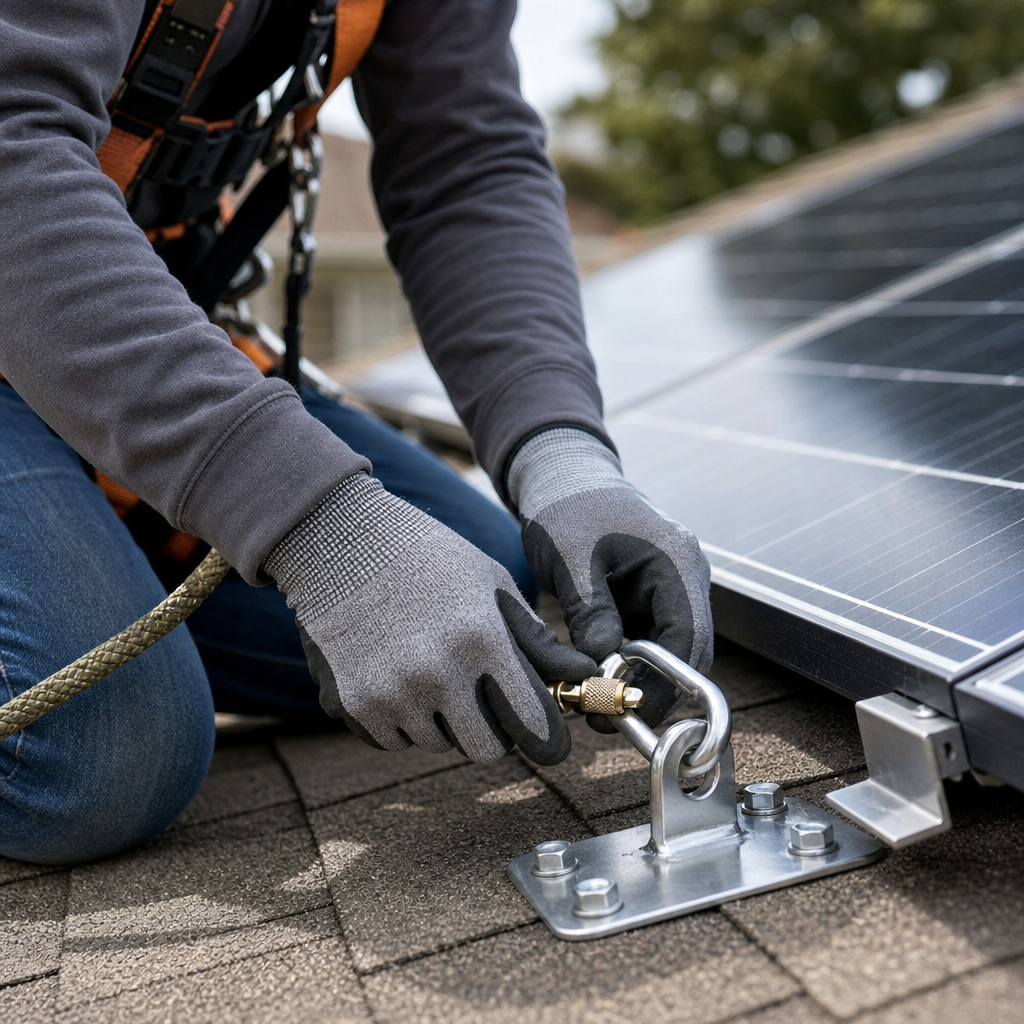
Beyond electrical and fire codes, a safe solar installation must account for the physical load the system places on your roof. California's seismic activity and, in many regions, high wind-loading requirements make structural engineering a critical safety layer.
Key structural safety practices include:
Homeowners should ask prospective installers for their structural engineering documentation and whether a licensed engineer has stamped the mounting plan. This is a question www.everysun.com encourages every homeowner to ask of any installer they're considering, not just Everysun, because roof penetrations done incorrectly are one of the most common sources of post-installation disputes.
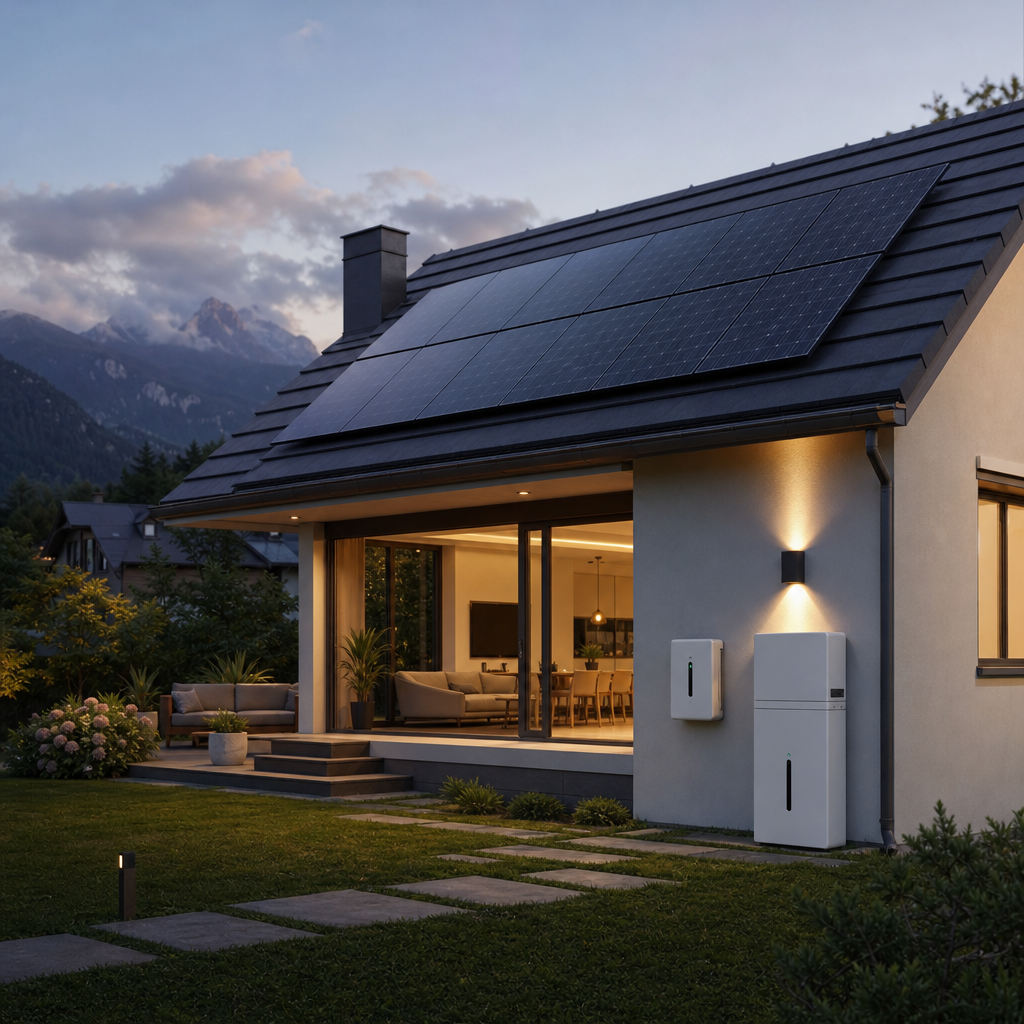
As more California homeowners pair solar with battery storage, safety standards have expanded to address lithium-ion battery risks, including thermal runaway. The relevant standards include:
| Standard | What It Covers | Why It Matters |
|---|---|---|
| UL 9540 | Energy storage system safety | Certifies the battery and inverter system as a whole |
| UL 9540A | Thermal runaway fire propagation testing | Determines how a battery fire would spread and informs installation clearances |
| NFPA 855 | Installation of stationary energy storage systems | Dictates separation distances from living spaces and egress points |
| California Fire Code Chapter 12 | Energy storage system permitting | Requires local fire department review for most residential battery installations |
Because thermal runaway events, while rare, can be serious, proper ventilation, fire-rated enclosures, and placement away from bedrooms and primary egress paths are essential. Reputable installers will walk homeowners through exactly where a battery can and cannot be installed under local fire code before finalizing a design, a step detailed further in NFPA's energy storage safety guidance.
Safety standards on paper mean little if the people installing your system aren't properly trained and licensed. In California, homeowners should verify the following before signing a contract:
A quick CSLB license lookup takes less than five minutes and can reveal disciplinary actions, lapsed insurance, or bond issues that a homeowner would otherwise never see. Skipping this step is one of the most common — and most avoidable — mistakes in the entire solar buying process.
Not all installers treat safety the same way. Some meet the legal minimum; others build in redundancy. The table below illustrates the difference in approach.
| Safety Area | Minimum Code Compliance | Enhanced Practice (e.g., Swedish-Standard Installation) |
|---|---|---|
| Rapid shutdown | Installed to meet 30-second/30-volt rule | Tested and documented with homeowner walkthrough |
| Roof penetrations | Standard flashing per code | Double-sealed flashing with manufacturer-specific waterproofing |
| Wiring management | Meets conduit fill and labeling rules | Color-coded, labeled, and photographed for future service access |
| Battery placement | Meets NFPA 855 minimum clearances | Positioned with added buffer beyond code minimum where feasible |
| Post-install inspection | Single AHJ inspection | Internal quality inspection plus AHJ inspection |
| Workforce training | Licensed lead installer | Full crew trained to manufacturer and international safety protocols |
This comparison is why www.everysun.com markets its combination of US-made panel technology with Swedish safety and installation protocols — the goal is to exceed the baseline rather than simply pass inspection.
California's permitting process, while sometimes seen by homeowners as a bureaucratic delay, is actually one of the most important safety checkpoints in the entire installation. A permit review ensures:
Many California jurisdictions now use expedited online permitting platforms, such as those built around the SolarAPP+ program developed with the National Renewable Energy Laboratory, which can shorten permit timelines from weeks to days while still enforcing the same safety checks. Homeowners should ask their installer whether their city participates in this program, as it's a sign of a more streamlined, code-compliant process.
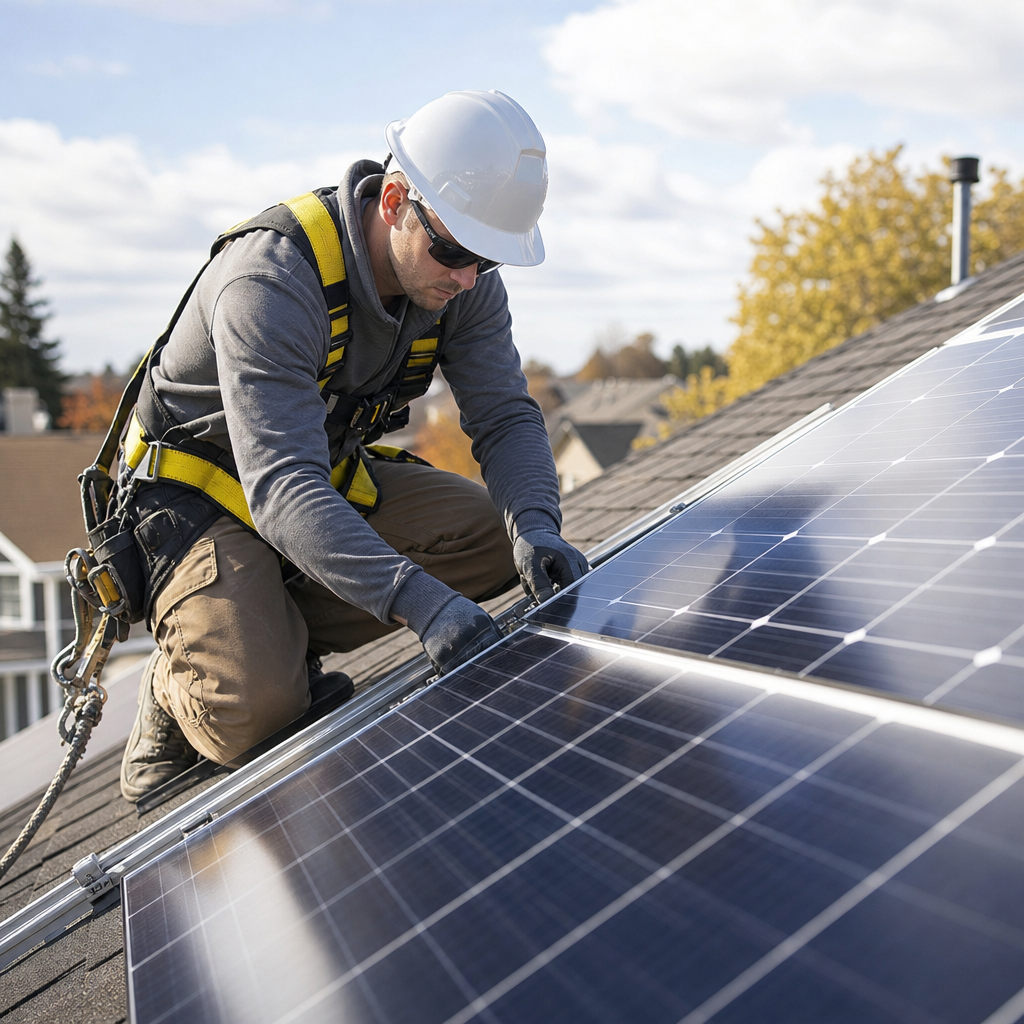
Safety doesn't end once the system is switched on. Over a 25-year lifespan, panels, wiring, and connectors are exposed to UV radiation, temperature swings, and in some regions, wildfire smoke and ash. Ongoing safety maintenance should include:
This is also where warranty structure becomes a safety issue, not just a financial one. A installer offering a 20-year installation guarantee alongside 25-year product warranties has a long-term incentive to ensure the system remains safe and functional, because they remain financially responsible for defects over that period. Homeowners should treat warranty length as a proxy for how seriously a company takes long-term safety performance, not just upfront installation quality.
Before committing to any solar installer, California homeowners should ask:
A transparent installer should be able to answer each of these without hesitation, often providing documentation on the spot. Vague or defensive answers to any of these questions are a warning sign worth taking seriously.
Solar panel installation safety standards cover far more than most homeowners initially realize — spanning electrical code, fire code, structural engineering, and battery-specific fire safety protocols. These layers of regulation exist because solar systems combine high-voltage electricity, rooftop structural loads, and increasingly, energy storage chemistry that all carry real risk if handled carelessly. California's code environment, shaped by seismic and wildfire realities, is among the most rigorous in the country, and that's a good thing for homeowners who take the time to understand it.
Choosing an installer who treats these standards as a baseline rather than a finish line is the single most important safety decision in the entire solar process. www.everysun.com was built around that principle, pairing high-efficiency, US-made panels with Swedish safety and installation protocols, flexible payment options, a 20-year installation guarantee, and 25-year product warranties — giving California homeowners a path to clean, reliable energy without compromising on the safety standards that protect their home for decades to come.
© 2025 Everysun Inc. All Rights Reserved.


Get Your Free Solar Quote
Request your free quote and see how solar can work for your home and budget