California Homeowners: What to Expect From a Solar Panel Installation Quote
October 12, 2026
|
California
California homeowners have more reasons than ever to go solar in 2026. Utility rates keep climbing, wildfire-related outages remain a reality in many regions, and state incentives continue to reward households that generate their own clean power. But before any of that happens, every solar journey starts with the same step: getting a solar panel installation quote California homeowners can actually trust and compare.
Unfortunately, not all quotes are created equal. Two proposals for the same roof can differ by thousands of dollars, use wildly different equipment, and bury critical details in fine print. This article breaks down exactly what goes into a solar quote, what questions to ask, and how to evaluate offers so you choose a system that fits your home, your budget, and your long-term energy goals.
If you've requested quotes from multiple installers, you've probably noticed the numbers don't line up. That's because a solar proposal isn't a simple price tag — it's a calculation built from dozens of variables specific to your property and your installer's business model.
Key factors that influence your quote include:
California's permitting environment also plays a role. The state's NEM 3.0 net metering policy significantly changed the economics of solar by reducing compensation for excess energy sent back to the grid, which is one reason battery storage has become a near-standard recommendation in most quotes today rather than an optional add-on.
A thorough quote should go far beyond a single price. Reputable installers, including those following rigorous European engineering standards like the ones www.everysun.com applies to every residential project, will break down the full scope of work so homeowners understand exactly what they're paying for.
A complete quote typically includes:
If any of these items are missing from a proposal, that's a red flag. Vague quotes often hide costs that surface later, during installation or in the form of unexpected change orders.
Pricing varies by region, roof complexity, and system size, but it helps to understand typical ranges before you start comparing offers. According to data aggregated by the U.S. Department of Energy and solar market trackers, residential systems are generally priced per watt, with California trending slightly above the national average due to labor costs and permitting complexity.
| System Size | Estimated Panel Count | Average Cost Before Incentives | Average Cost After 30% Federal Tax Credit |
|---|---|---|---|
| 5 kW | 12-14 panels | $17,500 - $20,000 | $12,250 - $14,000 |
| 7 kW | 17-19 panels | $24,000 - $27,000 | $16,800 - $18,900 |
| 10 kW | 24-27 panels | $32,000 - $36,000 | $22,400 - $25,200 |
| 13 kW | 31-34 panels | $40,000 - $45,000 | $28,000 - $31,500 |
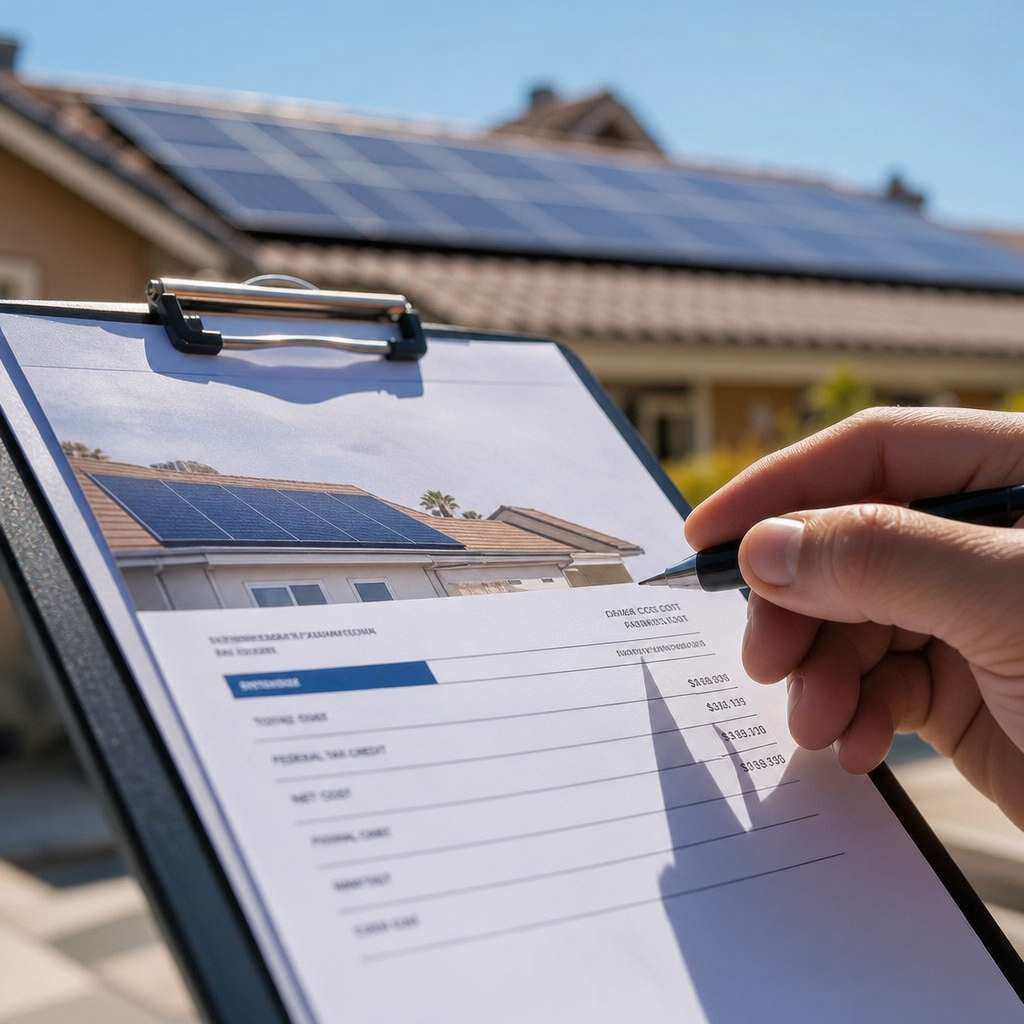
These figures are general estimates and will shift based on panel efficiency, battery inclusion, and local labor rates. The federal solar investment tax credit, currently set at 30% through 2032 under existing law, remains one of the most significant ways to reduce your net cost, and any legitimate quote should show your price both before and after this credit is applied.
One of the biggest reasons two quotes for the same roof can differ by $5,000 or more is equipment selection. Lower-cost quotes often use budget panels with lower efficiency ratings and shorter warranties, while premium installers use high-efficiency, US-made panels backed by stronger guarantees.
| Feature | Budget Tier Panels | Mid-Tier Panels | Premium Tier (e.g., Everysun) |
|---|---|---|---|
| Efficiency Rating | 15% - 17% | 18% - 20% | 20% - 22%+ |
| Product Warranty | 10-12 years | 15-20 years | 25 years |
| Degradation Rate (Annual) | 0.7% - 0.8% | 0.5% - 0.6% | Under 0.4% |
| Installation Guarantee | Rarely offered | 5-10 years | 20 years |
| Manufacturing Standards | Varies widely | Often ISO-certified | US-made, Swedish safety protocol |
Higher-efficiency panels produce more electricity per square foot, which matters significantly for California homes with limited roof space or heavy shading. A system built with premium components may cost more upfront but often generates a better return over 25 years thanks to slower degradation and stronger warranty protection. This is one reason www.everysun.com pairs US-manufactured high-efficiency panels with installation practices drawn from Swedish safety standards — a combination designed to maximize both performance and long-term reliability.
With NEM 3.0 reducing the value of exported solar energy, battery storage has shifted from a luxury add-on to a near-essential component of a well-designed California solar system. Instead of selling excess power back to the grid at reduced rates, homeowners can store it and use it during evening peak hours or power outages.
Benefits of including battery storage in your quote:
When requesting quotes, ask for battery options at multiple capacity levels (such as 10 kWh, 13 kWh, and 20 kWh) so you can compare the cost difference against your actual backup needs. A good installer will model your usage data to recommend the right size rather than upselling unnecessary capacity.
Your quote isn't just about equipment — it's also about how you pay for it. California homeowners generally choose from four financing paths, and each significantly changes the long-term value of your system.
Most financial advisors and consumer resources, including guidance from the Database of State Incentives for Renewables & Efficiency (DSIRE), recommend ownership models (cash or loan) when possible, since they unlock the full value of tax credits and typically produce greater savings over the life of the system. Flexible financing has made ownership more attainable even for homeowners without large upfront capital, which is why many installers — including www.everysun.com — offer multiple payment structures designed to fit different budgets while still allowing homeowners to own their system outright.
Not every solar proposal is built with your best interest in mind. Before signing anything, watch for these warning signs:
The Solar Energy Industries Association (SEIA) and Consumer Reports both publish consumer guidance on vetting installers, and both emphasize checking licensing, insurance, and independent reviews before committing to a contract.
A strong quote should hold up under scrutiny. Before signing, ask your installer:
Installers confident in their work will answer these clearly and in writing. Vague answers, especially about warranty coverage or performance guarantees, are a sign to keep comparing options.
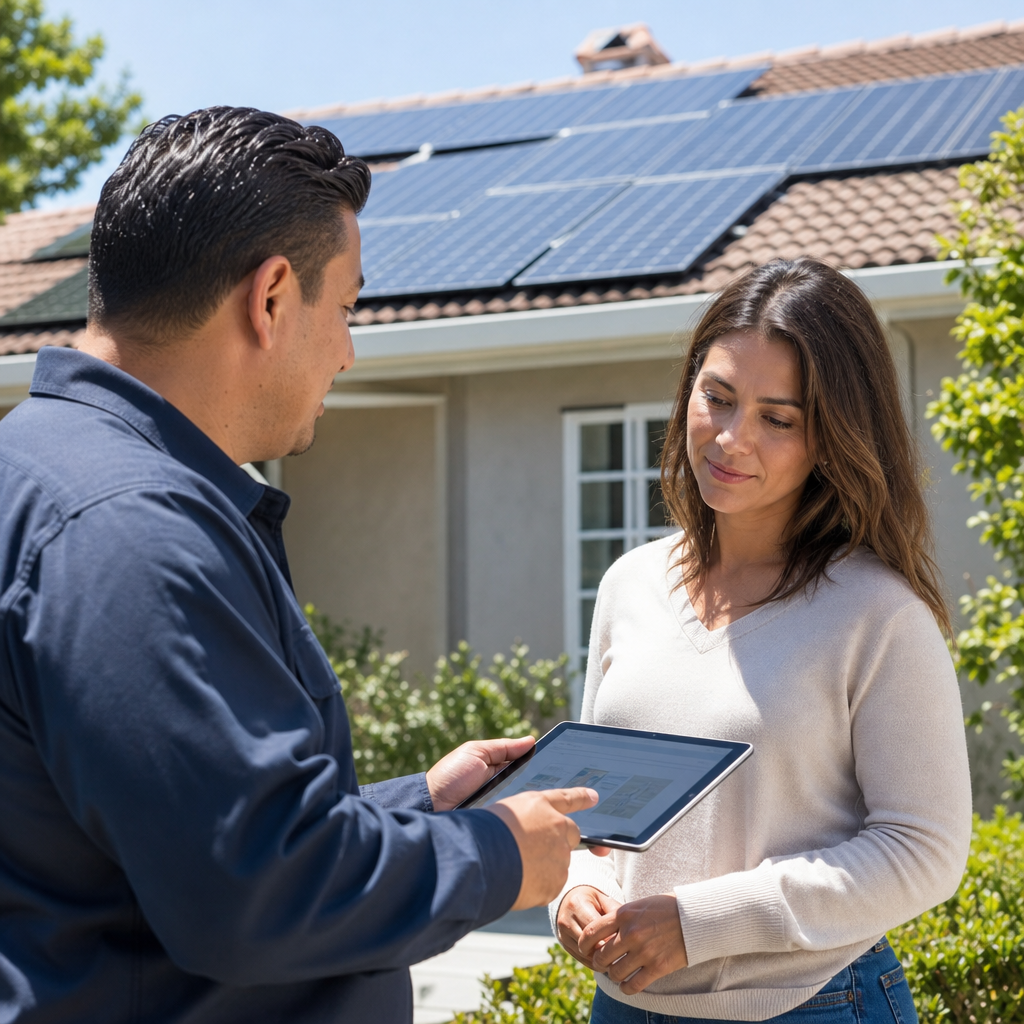
Once you accept a quote, the process moves through several distinct phases. Understanding this timeline helps set realistic expectations.
| Phase | Typical Duration |
|---|---|
| Site assessment & design | 1-2 weeks |
| Permitting & HOA approval (if needed) | 2-6 weeks |
| Equipment ordering | 1-3 weeks |
| Physical installation | 1-3 days |
| Inspection & utility interconnection | 2-4 weeks |
| System activation | Same day as interconnection approval |
Total time from signed quote to a fully operational system generally ranges from six to twelve weeks in California, depending on your city's permitting office and your utility provider's interconnection queue. Installers with established local relationships and streamlined permitting processes — a priority for companies like www.everysun.com — can often move through these stages faster than smaller or less experienced operations.
Warranty terms are one of the most overlooked parts of a solar quote, yet they matter enormously over a 25-year system lifespan. There are generally three layers to review:
A 25-year product warranty paired with a 20-year installation guarantee, for example, signals that a company stands behind both its equipment and its labor for the long haul — a combination that gives homeowners meaningful protection against both manufacturing defects and installation errors.
Getting a solar panel installation quote California homeowners can rely on means looking past the bottom-line number and evaluating equipment quality, warranty strength, financing terms, and installer transparency. The cheapest quote on paper isn't always the best value once you account for degradation rates, workmanship coverage, and long-term performance.
Take time to compare at least two or three proposals, ask detailed questions, and verify that every cost and warranty term is spelled out in writing. A well-structured quote should make you feel informed, not rushed.
For California homeowners who want high-efficiency, US-made panels installed to rigorous Swedish safety standards, backed by a 20-year installation guarantee and 25-year product warranties, www.everysun.com offers a transparent quoting process built around flexible payment options and long-term reliability — helping you move from rising utility bills to dependable, self-generated clean energy with confidence.
© 2025 Everysun Inc. All Rights Reserved.


Get Your Free Solar Quote
Request your free quote and see how solar can work for your home and budget