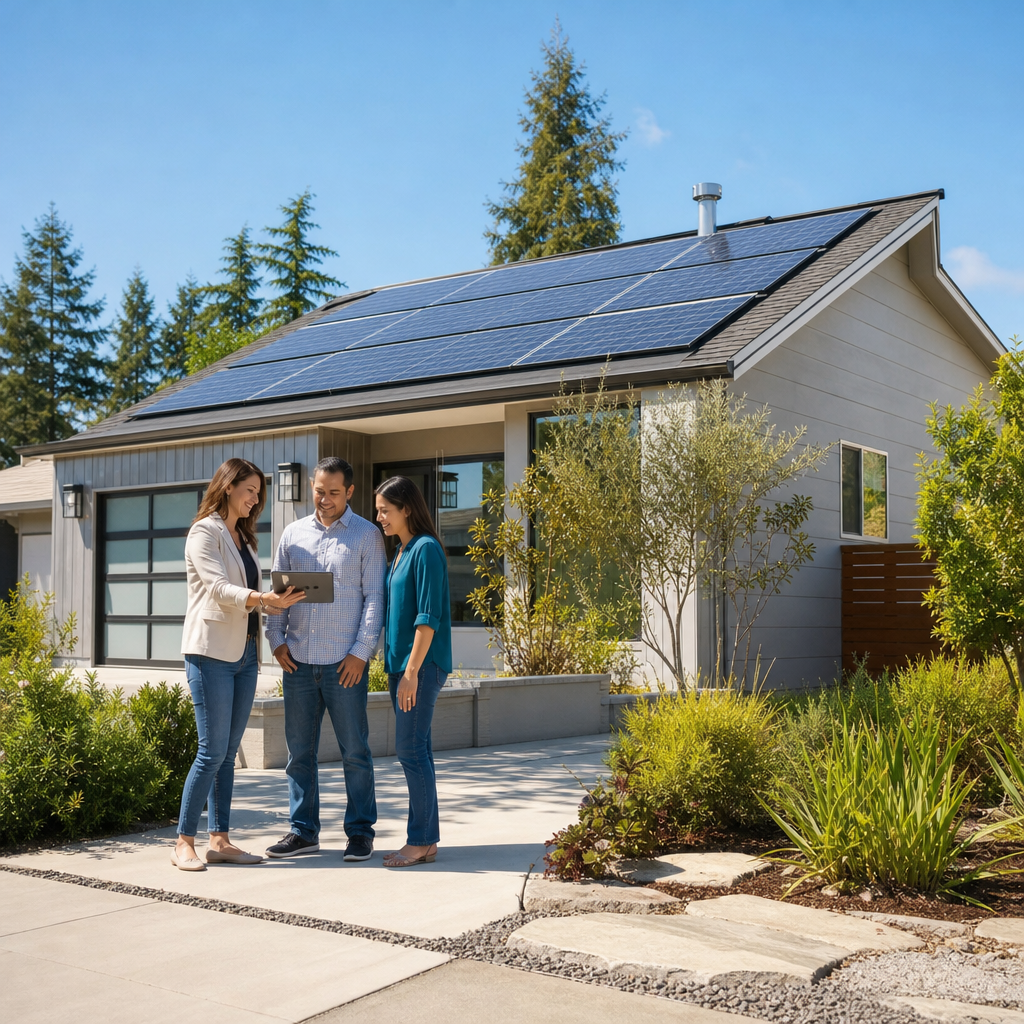
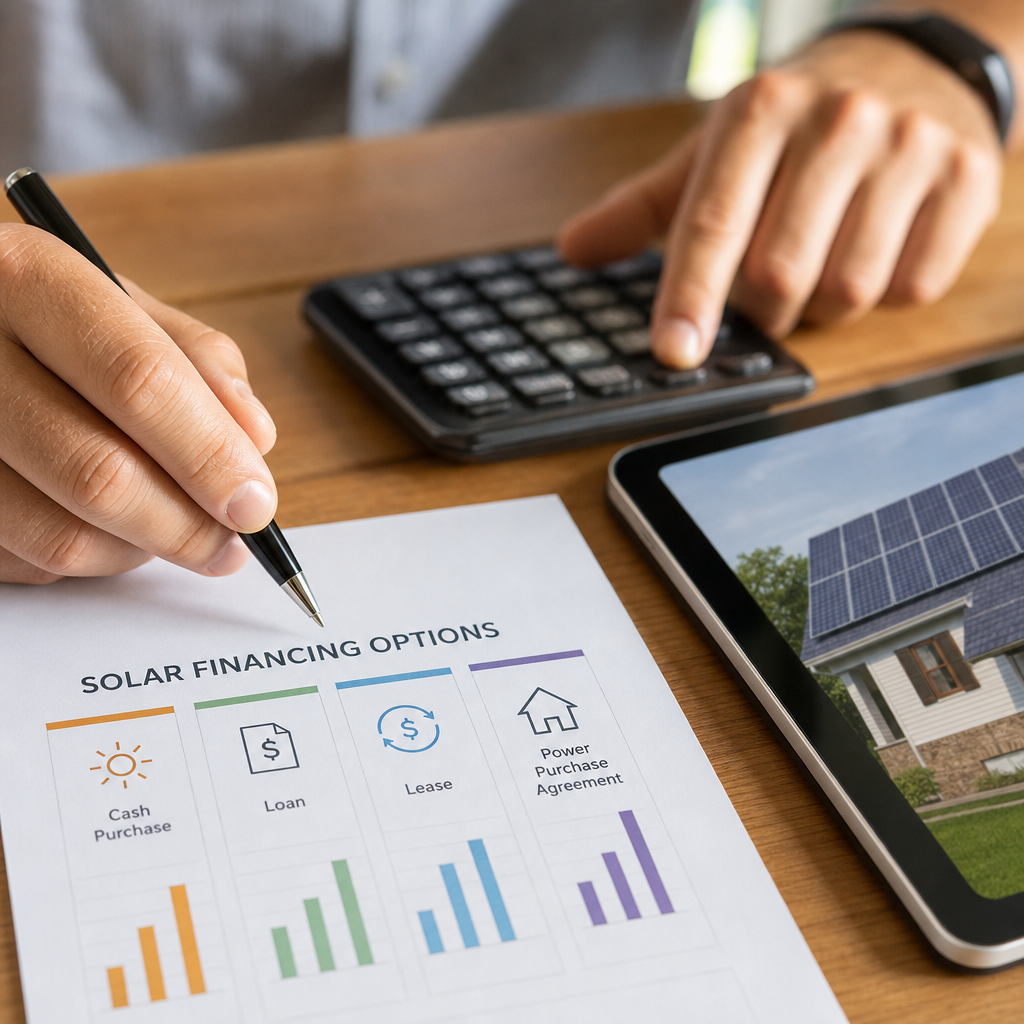
5 Solar Panel Financing Options That Make Going Solar Affordable Now
September 6, 2026
|
California
Solar panels are one of the most reliable ways for California homeowners to cut electricity bills and gain energy independence, but the upfront cost still stops many people before they even request a quote. The good news is that solar has never been more accessible thanks to a wide range of financing structures designed to fit different budgets, credit profiles, and long-term goals. Understanding solar panel financing options is the key to unlocking real savings without draining your savings account.
This article breaks down the seven most common ways homeowners pay for solar in 2026, compares their pros and cons, and explains how to choose the right structure for your household. Whether you want to own your system outright or prefer little to no money down, there is a path that makes solar work for your finances.
Paying cash is the simplest solar panel financing option, and it typically delivers the highest lifetime savings because there are no interest charges or lease fees eating into your return on investment. Homeowners who pay cash also qualify for the full federal solar tax credit and any applicable state incentives, since they own the system from day one.
Advantages:
Drawbacks:
Cash purchases make the most sense for homeowners who have the savings available and plan to stay in their home for many years, allowing them to fully capture the payback period before any potential resale.
Solar loans have become the most popular financing method nationwide because they combine ownership benefits with manageable monthly payments. A solar loan works much like a home improvement loan: a lender covers the upfront cost, and the homeowner repays it over a fixed term, typically 5 to 25 years, with interest.
There are two common types of solar loans:
According to the U.S. Department of Energy, loan structures vary widely by lender, so comparing annual percentage rates (APR), loan terms, and prepayment penalties is essential before signing.
Why homeowners choose solar loans:
At www.everysun.com, homeowners can explore flexible loan-based payment plans that are structured around their specific energy usage and budget, making it easier to start saving from the very first month.
A solar lease allows a homeowner to have panels installed on their roof without owning the system. Instead, the homeowner pays a fixed monthly fee to a third-party company that owns and maintains the equipment. This option appeals to people who want predictable payments and no responsibility for maintenance.
Key characteristics of solar leases:
Leases can be a reasonable entry point for homeowners who want to reduce their carbon footprint without a large financial commitment, but the long-term savings are typically lower than loan or cash purchases because the lessor keeps the tax benefits and depreciation value.
A Power Purchase Agreement is similar to a lease but structured differently: instead of paying a flat monthly fee, homeowners pay for the electricity the system actually produces, usually at a rate lower than their utility's per-kilowatt-hour price. This makes PPAs attractive to homeowners who want savings without any upfront investment.
How PPAs typically work:
The trade-off is that, like leases, PPAs mean you don't own the system and cannot claim the federal tax credit. According to the Solar Energy Industries Association (SEIA), only system owners can claim the 30% federal credit, making this an important factor when comparing total lifetime value between financing options.
Homeowners with significant equity in their property often use a Home Equity Line of Credit (HELOC) or a home equity loan to finance solar. Because these loans are secured by the home itself, they typically offer some of the lowest interest rates among all solar panel financing options.
| Financing Type | Typical Interest Rate Range | Ownership | Tax Credit Eligible | Upfront Cost |
|---|---|---|---|---|
| Cash Purchase | N/A | Yes | Yes | Full amount |
| Solar Loan (secured) | 5%–8% | Yes | Yes | $0–low |
| Solar Loan (unsecured) | 7%–12% | Yes | Yes | $0–low |
| HELOC/Home Equity Loan | 6%–9% | Yes | Yes | $0–low |
| Solar Lease | Fixed monthly fee | No | No | $0 |
| PPA | Per kWh rate | No | No | $0 |
| PACE Financing | 6%–9% (via property tax) | Yes | Yes | $0 |
Home equity financing can offer longer repayment terms, sometimes 15 to 20 years, which lowers the monthly payment. However, it's important to remember that your home is collateral, so missed payments carry more serious consequences than an unsecured loan.
PACE financing is a California-specific option that allows homeowners to finance solar improvements through their property tax bill. Programs like HERO and California FIRST let homeowners repay the cost of their solar system over time as a line item on their annual property tax assessment.
Benefits of PACE financing:
Considerations:
PACE can be a useful option for homeowners who may not qualify for traditional financing but want to own their system and access available tax incentives.
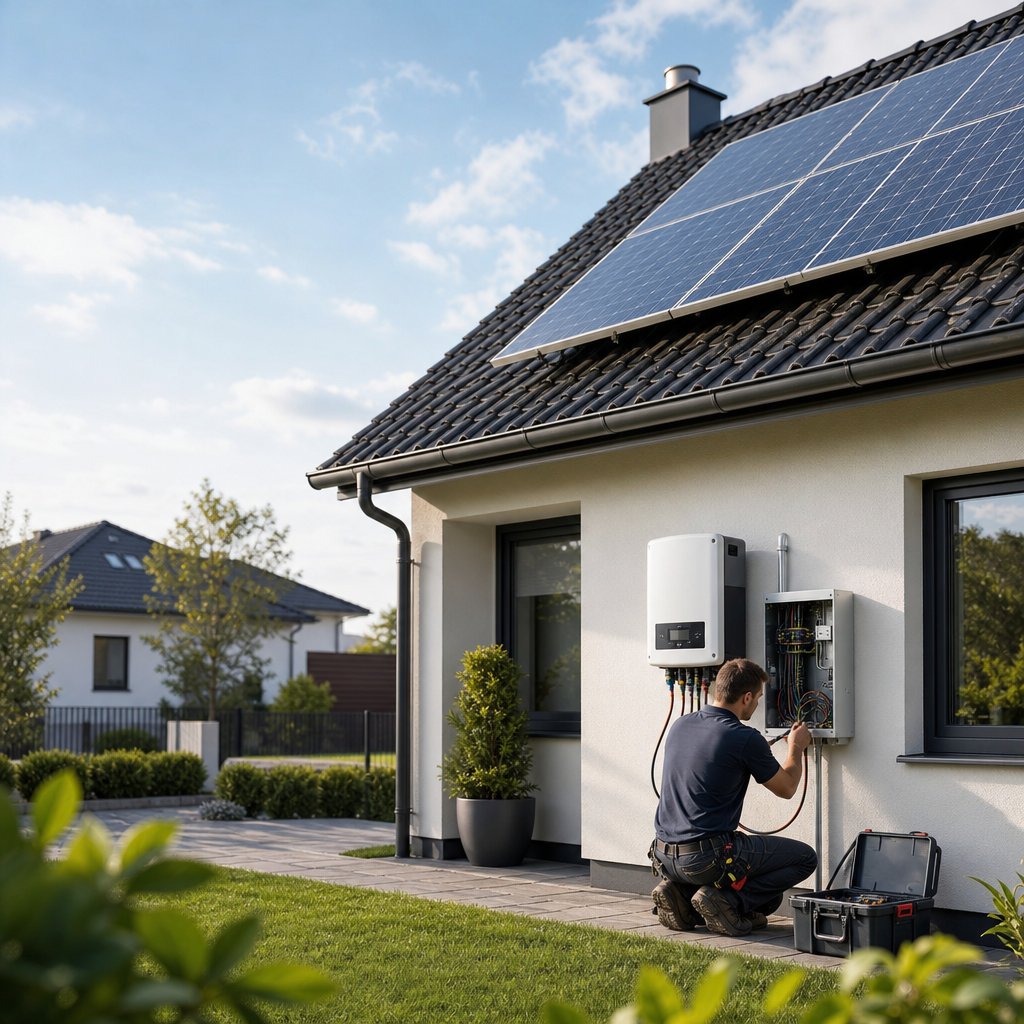
Many solar companies, including www.everysun.com, partner directly with lending institutions to offer in-house financing programs tailored to solar installations. These programs are designed specifically around solar economics, often factoring in projected utility savings to structure a payment that is close to, or lower than, a homeowner's current electric bill.
What makes installer financing different:
Because Everysun combines US-made high-efficiency panels with Swedish safety and installation standards, their financing programs are structured to complement a 20-year installation guarantee and 25-year product warranties, giving homeowners confidence that their investment is protected for decades, not just years.
When evaluating solar panel financing options, it's easy to focus only on the monthly payment, but the total cost of ownership over 20-25 years tells a more accurate story. The table below illustrates a simplified comparison for a typical 6kW residential system costing approximately $20,000 before incentives.
| Financing Method | Estimated Monthly Payment | Owns System? | Total Cost Over 20 Years (Est.) | Tax Credit Value |
|---|---|---|---|---|
| Cash | $0 (upfront) | Yes | ~$14,000 (after tax credit) | ~$6,000 |
| Solar Loan (10-yr) | $210–$260 | Yes | ~$25,000–$31,000 | ~$6,000 |
| HELOC (15-yr) | $170–$210 | Yes | ~$30,000–$37,000 | ~$6,000 |
| Lease | $120–$180 | No | ~$29,000–$43,000 | $0 |
| PPA | Variable (per kWh) | No | ~$30,000–$45,000 | $0 |
Figures are illustrative estimates and will vary based on system size, location, lender terms, and utility rates. Always request a personalized quote for accurate numbers.
As the table shows, ownership-based options like cash purchases and solar loans tend to deliver the greatest long-term value because they capture the federal tax credit and avoid ongoing lease or PPA payments that can increase annually.
Selecting the best solar panel financing option depends on several personal factors. Consider the following questions before deciding:
According to the Database of State Incentives for Renewables & Efficiency (DSIRE), incentive structures and eligibility can change from year to year, so it's wise to consult with a knowledgeable installer who stays current on federal and California-specific programs.

Beyond financing structure, California homeowners should factor in available incentives when calculating true system costs. The federal solar Investment Tax Credit currently allows homeowners who own their system to deduct a significant percentage of installation costs from their federal taxes. Additionally, California utility companies may offer rebates or net metering credits through programs regulated by the California Public Utilities Commission, which can further offset costs over time.
Because incentive eligibility is tied directly to system ownership, homeowners considering leases or PPAs should weigh the loss of these benefits against the appeal of a no-money-down structure. In many cases, even a modest loan payment can outperform a lease financially once tax credits and long-term utility savings are factored in.
Financing is only half the equation — the quality of your equipment and installation determines how much you'll actually save. A poorly installed system, or one built with lower-efficiency panels, can underperform for decades regardless of how it's financed.
This is where working with a specialized, experienced installer becomes critical. www.everysun.com designs systems using high-efficiency, US-made panels combined with rigorous Swedish safety and installation standards, ensuring that homeowners get maximum energy production and long-term reliability. Pairing strong financing options with a 20-year installation guarantee and 25-year product warranties means homeowners aren't just financing panels — they're financing a long-term energy solution built to last.
Choosing among the many solar panel financing options available today doesn't have to be overwhelming. Whether you prefer the long-term savings of a cash purchase, the manageable monthly payments of a solar loan, the simplicity of a lease, or the flexibility of PACE financing, there is a path suited to nearly every California homeowner's financial situation. The most important step is comparing total costs, ownership benefits, and incentive eligibility side by side before making a decision.
Everysun helps homeowners navigate these choices with confidence, offering flexible payment plans, high-efficiency solar technology, and industry-leading warranties designed to make clean energy both accessible and dependable. By combining smart financing with quality installation, www.everysun.com makes it possible for California homeowners to lower their electricity bills, protect their homes with reliable battery backup, and invest in a cleaner energy future without financial strain.
© 2025 Everysun Inc. All Rights Reserved.


Get Your Free Solar Quote
Request your free quote and see how solar can work for your home and budget