Solar Battery vs Generator Backup: Why So Many Homeowners Pick the Wrong One for Outages
October 3, 2026
|
California
California homeowners have become painfully familiar with Public Safety Power Shutoffs, rolling blackouts, and heat-wave grid strain. When the lights go out, the question isn't whether you need backup power — it's which kind. Yet year after year, homeowners rushing to solve a blackout problem end up making expensive, avoidable mistakes when comparing a solar battery vs generator backup system. Some buy a generator that can't legally run during a wildfire-driven air quality alert. Others install a battery sized for a weekend, not a week-long outage. A few spend thousands on fuel storage they didn't realize was restricted by local fire code.
This article breaks down the real differences between solar battery storage and generator backup, the mistakes homeowners most often make, and how to choose a system that actually fits your household, budget, and the realities of California's grid.
On paper, a portable or standby generator looks like the budget-friendly option. A portable gas generator might cost $500–$2,500, while a whole-home standby natural gas or propane unit runs $5,000–$15,000 installed. Compare that to a solar battery system, which typically costs $10,000–$20,000 depending on capacity, and the generator looks like a bargain.
The problem is that homeowners rarely account for the full cost of ownership. Generators consume fuel constantly while running, need oil changes every 100–200 hours, require annual servicing, and have a functional lifespan of roughly 1,500–3,000 run-hours before major components need replacement. Over a 10-year period, fuel and maintenance costs alone can rival or exceed the upfront cost of a battery system — and that's before factoring in the generator's complete inability to lower your monthly utility bill.
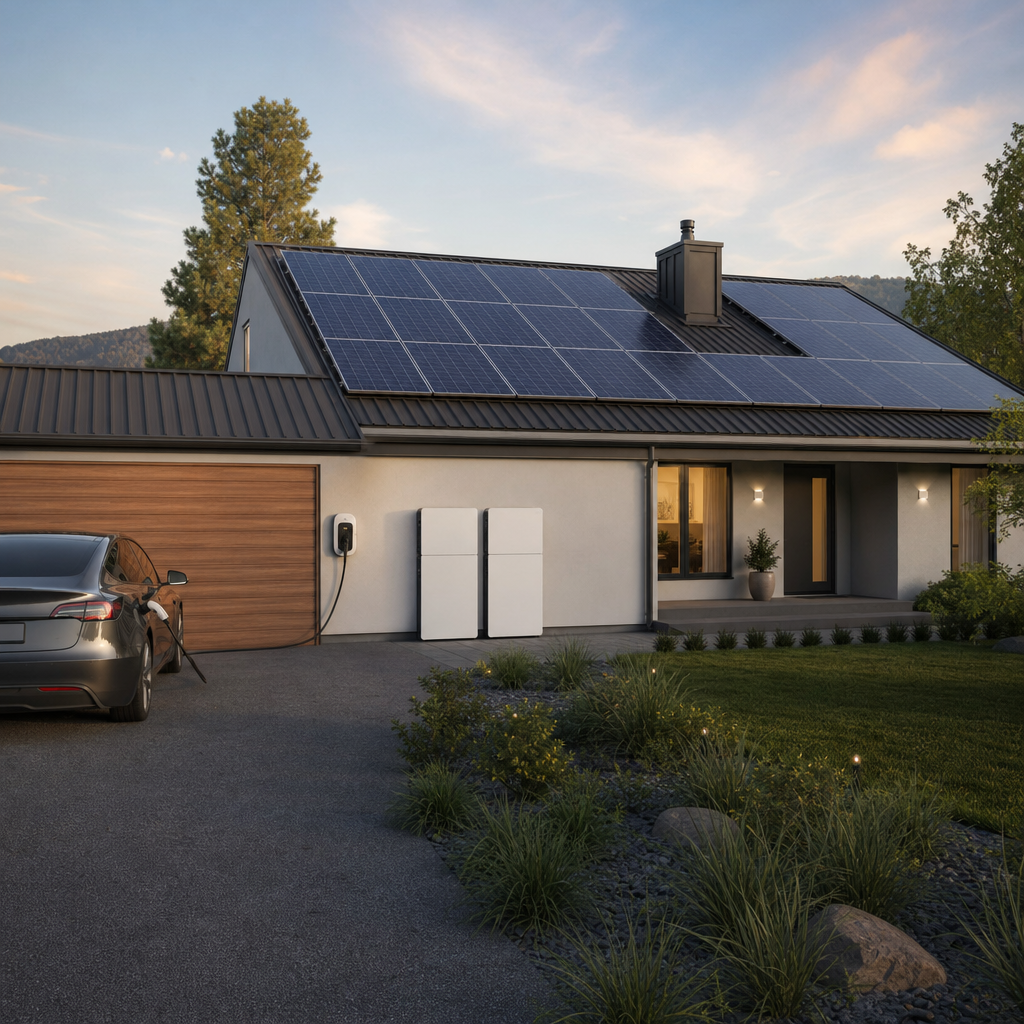
A solar battery, by contrast, charges from sunlight (or the grid) for free after installation, has no combustion engine to maintain, and actively reduces your electricity costs every single day it's not performing backup duty. The U.S. Department of Energy notes that pairing storage with solar can meaningfully offset peak-rate electricity usage, which is especially valuable under California's time-of-use rate structures.
California's wildfire season often coincides exactly with the Public Safety Power Shutoffs that make backup power necessary in the first place. That's a serious problem for combustion generators. During Spare the Air alerts or red flag warnings, some California air districts restrict or discourage outdoor generator operation, and many HOAs and local ordinances limit generator noise and emissions. Running a gas or diesel generator for days during a wildfire event — when air quality is already hazardous — compounds the health risk for your household and neighbors.
Solar batteries produce zero emissions and operate silently, making them usable regardless of air quality conditions or burn bans. The California Energy Commission has increasingly emphasized battery storage as a resilience tool precisely because it doesn't carry these seasonal restrictions.
Many homeowners size their backup system around a worst-case guess rather than real data. According to PG&E's outage reporting, Public Safety Power Shutoffs have historically lasted anywhere from several hours to multiple days, and in severe weather events, outages have stretched beyond a week in some rural areas.
A small portable generator can typically run a refrigerator, some lights, and a few outlets — but not continuously, since it needs refueling every 8–12 hours and can't be left unattended overnight safely. A correctly sized solar-plus-battery system, on the other hand, recharges itself from sunlight every day, meaning it can sustain a household indefinitely as long as there's daytime sun to replenish the battery — a critical advantage for multi-day outages.
| Outage Duration | Portable Generator | Standby Generator | Solar + Battery |
|---|---|---|---|
| A few hours | Adequate | Excellent | Excellent |
| 1–2 days | Requires frequent refueling | Good, fuel-dependent | Excellent, self-recharging |
| 3–7+ days | Impractical | Needs large fuel reserve | Excellent with daily sun |
| During air quality alerts | Not recommended | Not recommended | Fully usable |
One of the most common and costly errors is buying backup power based on guesswork rather than an actual load calculation. Homeowners either overspend on a oversized whole-home standby generator they rarely need at full capacity, or they underspend on a battery that can't cover their essential circuits during an extended outage.
Before choosing either system, you should identify:
A single battery module (commonly 10–13.5 kWh) may comfortably power critical loads for 12–24 hours, while a multi-battery setup paired with solar panels can sustain a full home indefinitely. This is where a professional assessment matters far more than a generic online calculator. Companies like www.everysun.com perform a full home energy audit before recommending battery capacity, ensuring you're not over- or under-building your system.
Generators and battery systems both require permitting in California, but homeowners frequently underestimate the complexity involved. Standby generators need a concrete pad, fuel line installation (natural gas or a propane tank), an automatic transfer switch, and sufficient clearance from windows and doors per manufacturer and fire code requirements. Many municipalities also enforce noise ordinances that limit when and how loudly a generator can run — a real issue for close-set suburban lots common across California.
Battery storage systems, meanwhile, require electrical permitting and inspection but no fuel infrastructure, no clearance-from-window rules related to carbon monoxide, and produce no operational noise. They do have their own fire-code placement requirements (typically regulated under the National Fire Protection Association's NFPA 855 standard for energy storage systems), but these are generally simpler to satisfy in a residential retrofit than a full combustion fuel system.
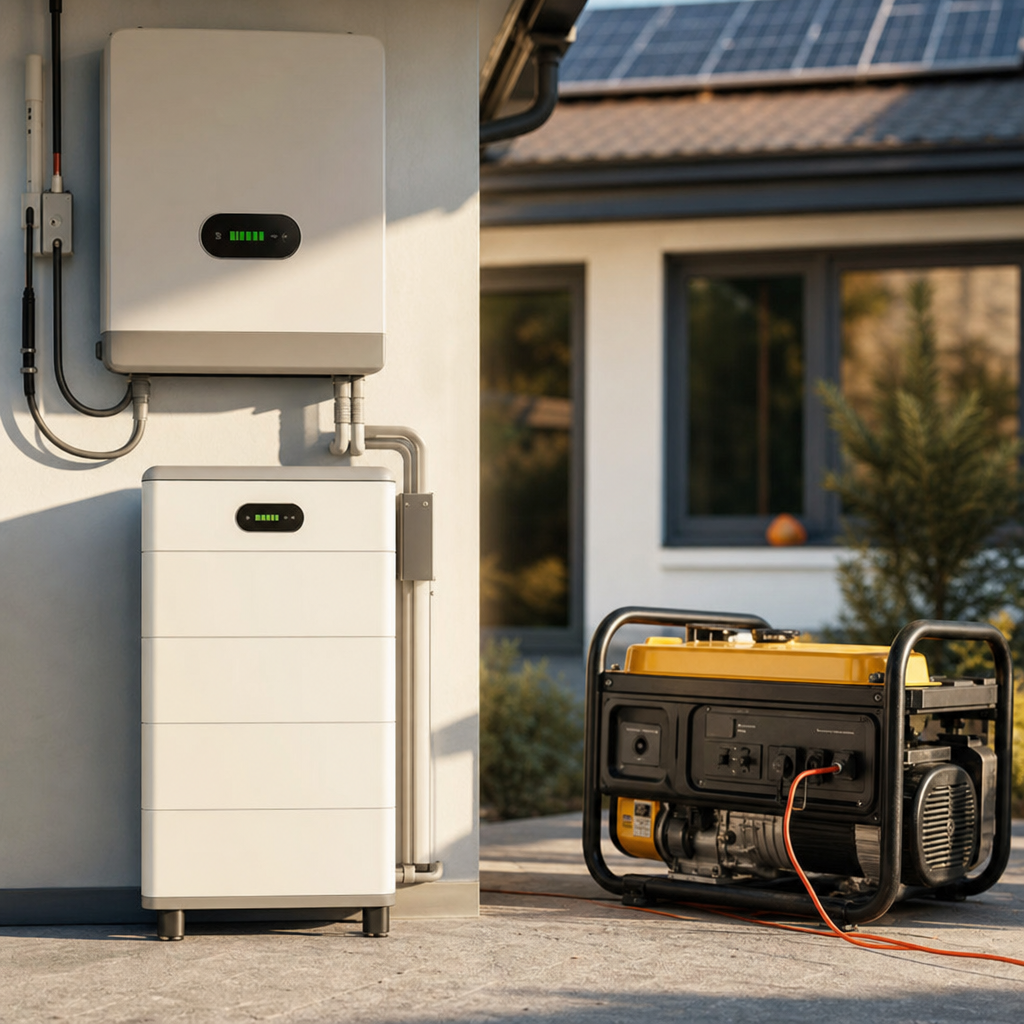
Perhaps the biggest mistake homeowners make is treating backup power as a pure expense rather than an investment. A generator depreciates from the day it's installed and offers no return beyond emergency use. A solar-plus-battery system, by contrast, can qualify for the federal Residential Clean Energy Credit, reduces monthly utility bills immediately, and can increase home resale value, according to research published by the National Renewable Energy Laboratory.
Here's a side-by-side look at how the two options compare across the metrics that matter most to California homeowners:
| Factor | Generator (Gas/Propane) | Solar Battery Storage |
|---|---|---|
| Upfront cost | $500–$15,000 | $10,000–$20,000+ |
| Ongoing fuel cost | Continuous, rises with use | None after install |
| Maintenance | Oil changes, annual servicing | Minimal, no moving parts |
| Emissions | CO2, NOx, particulates | Zero |
| Noise | 50–80 dB typical | Silent |
| Runtime limit | Limited by fuel supply | Recharges daily via sun |
| Usable during fire/smoke alerts | Often restricted | Yes |
| Reduces monthly electric bill | No | Yes |
| Tax incentives available | Rarely | Often (with solar pairing) |
| Lifespan | 10–20 years (with upkeep) | 10–15 years (battery), 25+ years (panels) |
Understanding the mechanics helps clarify why solar battery backup has become the preferred resilience solution for many California households. During normal operation, solar panels generate electricity throughout the day. Any excess beyond what the home consumes is stored in the battery rather than being sent back to the grid, depending on your utility's net metering or NEM 3.0 arrangement. When a grid outage is detected, an automatic transfer switch isolates your home from the grid (a required safety feature to protect utility line workers) and switches to battery power within milliseconds — fast enough that most homeowners never notice the transition.
Once on battery power, your home draws from stored energy, and if the outage occurs during daylight hours, the solar panels continue recharging the battery simultaneously. This closed-loop cycle is what allows a correctly sized system to sustain a home through outages lasting days rather than hours, something no fuel-dependent generator can match without a massive, continuously replenished fuel supply.
For some California homeowners — particularly those in rural areas with longer average outage durations, or households running energy-intensive equipment like well pumps or medical devices — a hybrid approach combining solar battery storage with a small backup generator can make sense as a redundancy layer. In this configuration, the battery handles the vast majority of outages, while the generator serves as a rarely used last resort for unusually long, cloudy-weather outages when solar recharging is limited.
This hybrid strategy isn't necessary for most households, but it illustrates an important point: solar battery vs generator backup isn't always a strict either/or decision. The right choice depends on your location, outage history, household energy use, and budget. A knowledgeable solar installer can help you model realistic outage scenarios rather than relying on generic assumptions.
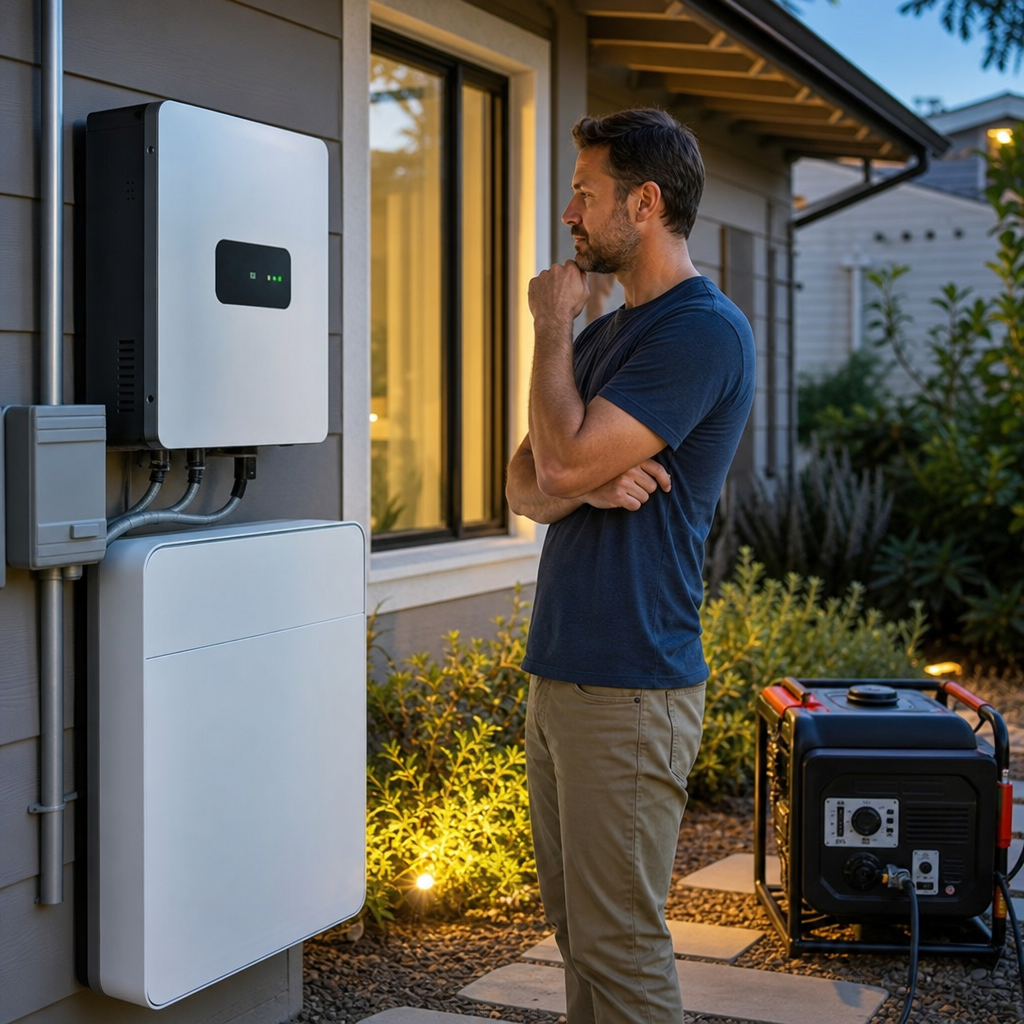
Before signing a contract for either a generator or a battery system, make sure you can answer the following:
Homeowners who answer these questions before buying consistently report higher satisfaction and fewer surprise costs than those who choose reactively during or immediately after an outage.
Several converging trends are pushing California homeowners toward battery storage over traditional generators:
None of this means generators are obsolete — they still serve a purpose for short-term, low-budget backup needs, particularly for renters or homeowners not ready to invest in solar. But for homeowners who already have, or are considering, a solar panel system, pairing it with battery storage is increasingly the more practical, cost-effective, and resilient long-term choice.
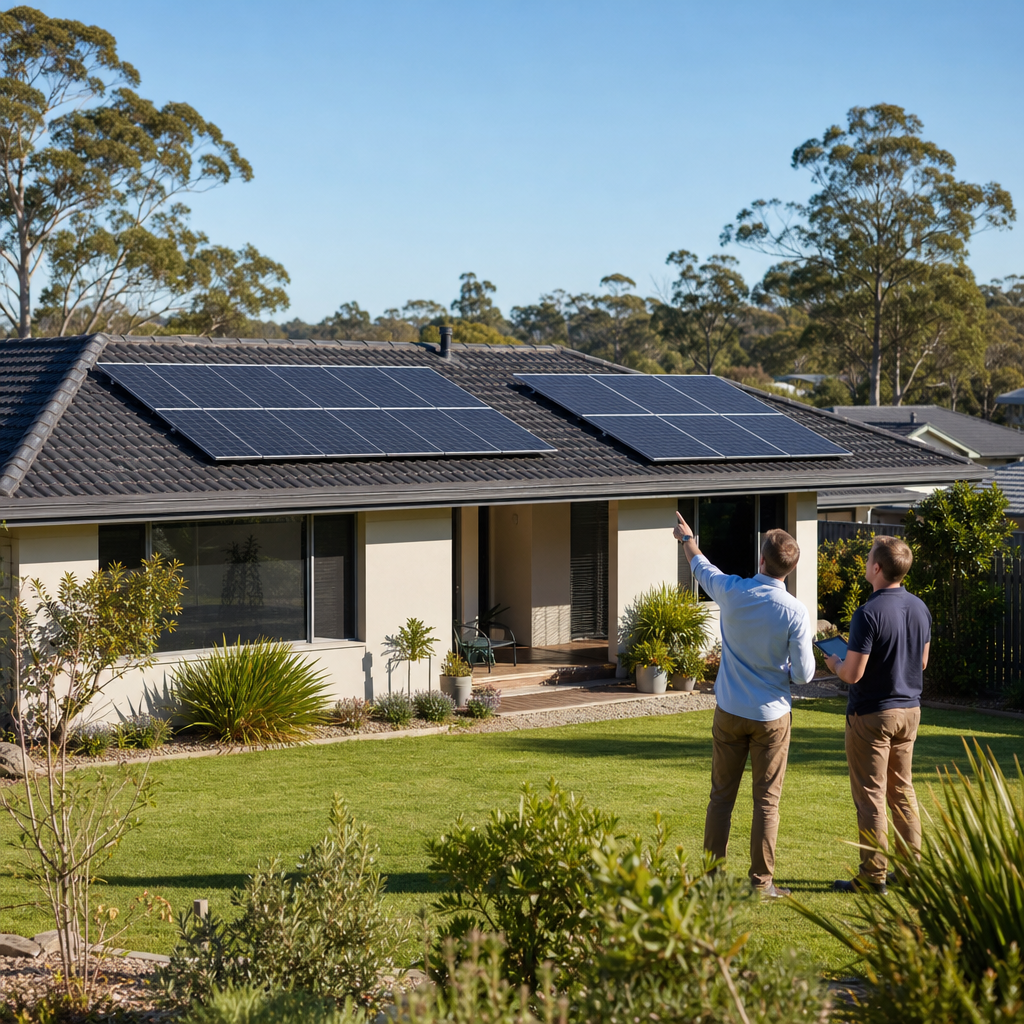
Because battery sizing mistakes are so common, working with an experienced, locally licensed installer is critical. A properly engineered system accounts for your roof's solar production potential, your historical energy usage, your household's critical-load requirements, and the specific fire and electrical codes in your California jurisdiction.
www.everysun.com specializes in exactly this kind of tailored assessment, combining US-made high-efficiency solar panels with Swedish-standard safety engineering and installation practices. Rather than selling a one-size-fits-all battery package, Everysun evaluates your actual home energy profile to recommend a system sized for the outages you're realistically likely to face — not a generic estimate pulled from a sales brochure.
Choosing between a solar battery and a generator for backup power isn't just about upfront price — it's about matching the solution to California's unique combination of wildfire risk, air quality concerns, utility rate structures, and outage patterns. The homeowners who get burned financially are almost always the ones who skip the planning step: they don't calculate real fuel costs, they don't check local fire and noise ordinances, they don't size the system to their actual critical loads, and they don't consider the long-term financial upside of pairing storage with solar.
Avoiding these six mistakes puts you in a far stronger position to choose a backup power system that will actually perform when you need it most — not just today, but for the next decade of California's increasingly unpredictable grid. If you're ready to explore a properly sized, professionally installed solar-plus-battery system backed by a 20-year installation guarantee and 25-year product warranties, www.everysun.com offers California homeowners a reliable, affordable path to clean energy independence and true peace of mind during the next outage.
© 2025 Everysun Inc. All Rights Reserved.


Get Your Free Solar Quote
Request your free quote and see how solar can work for your home and budget