Why California Homeowners Are Adding Solar Battery Backup for Home Energy Security
September 2, 2026
|
California
California homeowners face a unique combination of challenges: some of the highest electricity rates in the nation, increasingly frequent Public Safety Power Shutoffs (PSPS), and utility rate structures that have shifted significantly since the state's transition to NEM 3.0. For many, the question is no longer whether to go solar, but how to make that solar system actually useful when the grid goes down. That's where a solar battery backup for home use comes in.
This article walks through what solar battery backup systems are, how they work, what they cost, and how to decide if one makes sense for your household. Whether you're adding storage to an existing solar array or planning a new system from scratch, understanding the fundamentals will help you make a confident, cost-effective decision.
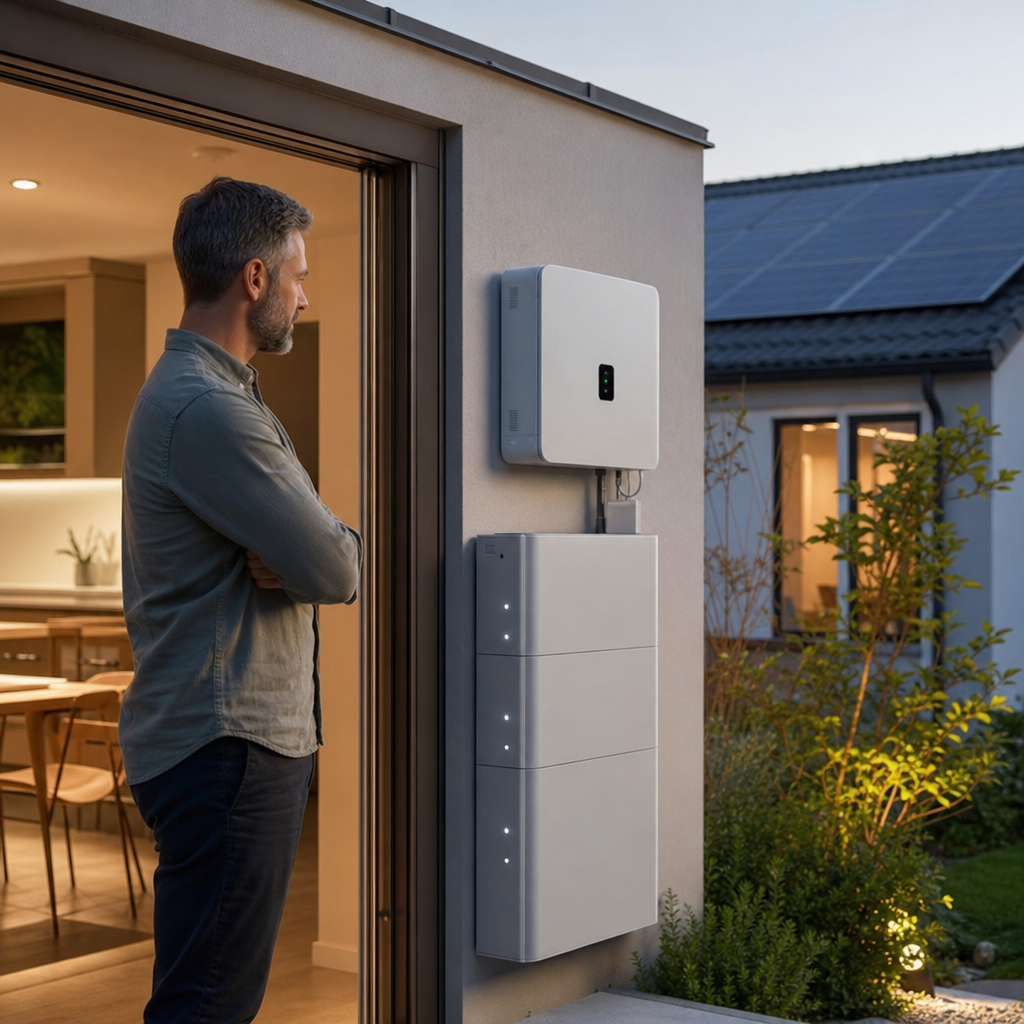
A solar battery backup is a rechargeable energy storage system installed alongside your solar panels. Instead of sending all your excess solar energy back to the grid, the battery stores it for later use—whether that's powering your home during the evening, during a grid outage, or during peak-rate hours when electricity is most expensive.
The basic components include:
When the sun is shining, your panels typically power your home directly, with any surplus routed to the battery. Once the battery is full, additional excess can be exported to the grid, if your utility and interconnection agreement allow it. At night, or when the grid fails, your home draws from the battery instead of the grid, provided the system is properly configured for backup use.
A few years ago, most solar customers in California didn't need batteries—net metering made it financially unnecessary. That has changed. Under the California Public Utilities Commission's NEM 3.0 policy, the value of exporting excess solar power to the grid has dropped substantially compared to the older NEM 2.0 structure. Homeowners now receive far less credit for the energy they send back, which makes storing that energy for personal use—rather than exporting it—the smarter financial move.
At the same time, wildfire-related Public Safety Power Shutoffs continue to affect large portions of the state, particularly in fire-prone regions served by PG&E, SCE, and SDG&E. According to the U.S. Energy Information Administration, California experiences more grid disruptions than most other states, driven by both wildfire risk and aging infrastructure.
Key reasons homeowners are adding batteries now:
Pricing varies based on battery capacity, brand, installation complexity, and whether you're retrofitting an existing solar system or installing everything new. Below is a general cost breakdown for the California market as of 2026.
| Battery Capacity | Typical Installed Cost | Estimated Backup Duration (Essential Loads) |
|---|---|---|
| 5–7 kWh | $8,000 – $12,000 | 4–8 hours |
| 10–13 kWh | $12,000 – $18,000 | 8–16 hours |
| 20+ kWh (multi-battery) | $20,000 – $35,000 | 16–30+ hours |
These figures typically include the battery unit, inverter/hybrid inverter compatibility, labor, permitting, and basic electrical work. Costs can rise if your electrical panel needs an upgrade or if you're adding a subpanel to isolate essential circuits.
It's worth noting that battery pricing is only part of the equation. The federal Residential Clean Energy Credit allows homeowners to claim 30% of the cost of qualifying solar and battery storage installations, which can meaningfully offset the upfront investment when combined with a new or existing solar system.
Not all batteries are built the same. Chemistry, capacity, warranty terms, and manufacturing origin all affect performance, safety, and long-term reliability. Below is a simplified comparison of common battery types available to California homeowners.
| Feature | Lithium Iron Phosphate (LFP) | Traditional Lithium-Ion (NMC) |
|---|---|---|
| Safety/Thermal Stability | High | Moderate |
| Typical Lifespan | 10–15+ years | 8–12 years |
| Energy Density | Moderate | Higher |
| Cost | Moderate | Slightly lower upfront |
| Degradation Rate | Slower | Faster |
LFP chemistry has become the preferred standard for residential storage in recent years due to its superior safety profile and longer usable life, even though it's slightly heavier and less energy-dense than older NMC formulations. Most reputable installers, including Everysun, now recommend LFP-based systems for home backup applications specifically because of their stability and reduced fire risk—an important consideration given California's wildfire concerns.
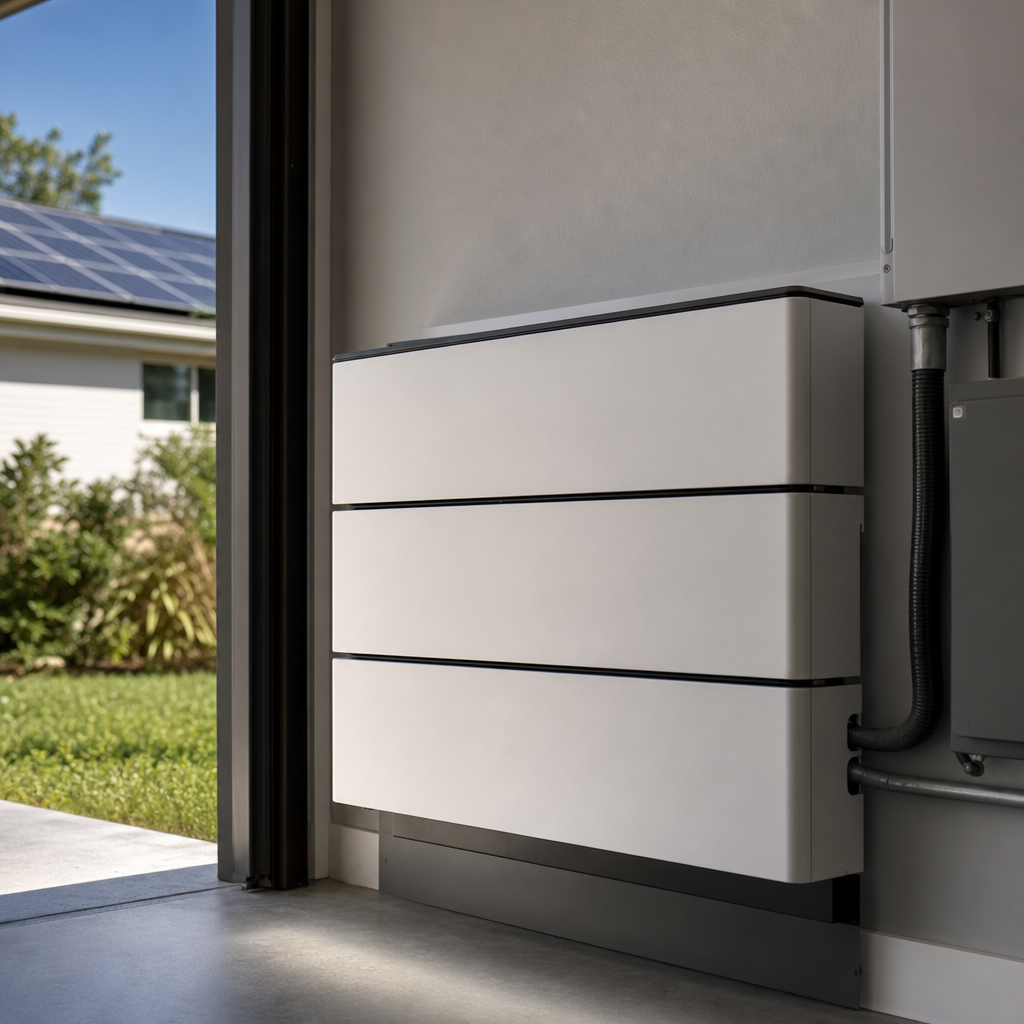
Sizing a battery system correctly is one of the most important—and most commonly misunderstood—parts of the process. Oversizing wastes money; undersizing leaves you without power for the appliances you actually need during an outage.
To size a system properly, installers typically evaluate:
A general rule of thumb: most households use between 20–30 kWh per day, but backup systems are usually designed around "essential loads" rather than total consumption, since air conditioning and electric water heating draw disproportionately large amounts of power. A well-designed 10–13 kWh battery can typically keep refrigeration, lighting, medical equipment, and communications running for 12–24 hours, which covers the vast majority of outage events.
For homeowners who want whole-home backup, including HVAC and larger appliances, a multi-battery configuration is usually necessary. This is where a professional load assessment becomes essential rather than optional.
Many California homeowners weighing backup power options compare batteries to gas or propane generators. Both solve the same basic problem—keeping the lights on during an outage—but they differ significantly in cost, maintenance, and environmental impact.
| Factor | Solar Battery Backup | Gas/Propane Generator |
|---|---|---|
| Fuel Source | Solar energy (renewable) | Fossil fuel (requires refueling) |
| Noise | Silent | Loud |
| Maintenance | Minimal | Regular servicing required |
| Emissions | None during operation | Produces exhaust emissions |
| Runtime During Extended Outage | Limited by capacity + solar recharge | Limited by fuel supply |
| Upfront Cost | Higher | Generally lower |
| Ongoing Cost | Low | Fuel + maintenance costs add up |
Generators can supply power indefinitely as long as fuel is available, which makes them appealing for extremely long outages. However, they require regular maintenance, produce emissions, and depend on a fuel supply that may be difficult to access during widespread emergencies. Solar batteries, particularly when paired with a properly sized solar array, recharge daily from sunlight and require virtually no ongoing maintenance—making them a increasingly popular choice for homeowners who want quiet, low-maintenance resilience. The U.S. Department of Energy has noted that pairing storage with solar generation offers a more sustainable long-term resilience strategy compared to fuel-dependent backup alone.
Cost remains the top concern for most homeowners considering battery storage. Fortunately, several incentive programs and financing structures can significantly reduce the financial barrier.
Federal Incentives
State and Utility Programs
Financing Options Homeowners typically choose from several financing paths:
Companies like Everysun offer flexible payment structures designed specifically to make solar-plus-storage systems accessible without requiring large upfront cash outlays, which has historically been one of the biggest barriers to adoption.
Not every solar installer has deep expertise in battery integration, and improper installation can lead to underperformance, code violations, or safety hazards. When evaluating providers, homeowners should consider:
Workmanship warranties matter as much as product warranties. A battery might carry a strong 10-year manufacturer warranty, but if the installation itself is flawed—improper wiring, inadequate ventilation, or poor placement—performance and safety can suffer regardless of the equipment's quality.
This is an area where installation standards genuinely differ between companies. Everysun, for instance, combines US-made high-efficiency solar panels with Swedish-engineered safety and installation protocols, backed by a 20-year installation guarantee and 25-year product warranties. That combination of rigorous safety standards and long-term guarantees gives homeowners added confidence that their system will perform reliably for decades, not just through the initial warranty period.
Solar batteries are designed to be largely maintenance-free, but understanding their expected performance curve helps homeowners set realistic expectations.
Understanding this lifespan curve is important when budgeting, since a battery installed today should still be delivering meaningful backup capacity a decade from now, even if its total capacity has diminished somewhat.
For most California homeowners, the calculus has shifted decisively toward pairing solar with battery storage. Between reduced NEM export values, rising time-of-use rate differentials, and continued PSPS risk, a battery does more than provide emergency backup—it actively improves the financial return on a solar investment by letting homeowners use more of their own generated power rather than selling it back cheaply.
That said, the right decision depends on individual circumstances: household energy usage, local outage history, budget, and long-term plans for the home. A professional consultation that reviews actual utility bills, roof characteristics, and backup priorities will produce a far more accurate recommendation than generic sizing guidelines.
Homeowners considering this investment should request:
Solar battery backup for home use has moved from a luxury add-on to a practical necessity for many California households navigating NEM 3.0, volatile utility rates, and wildfire-related power shutoffs. The right system—properly sized, safely installed, and backed by strong warranties—can deliver both everyday savings and genuine peace of mind during emergencies.
Everysun specializes in exactly this kind of thoughtful, safety-first approach, combining high-efficiency US-made panels with Swedish installation standards, flexible financing, a 20-year installation guarantee, and 25-year product warranties. For California homeowners ready to explore whether solar battery backup makes sense for their home, www.everysun.com offers the expertise and long-term support needed to make that transition confidently and affordably.
© 2025 Everysun Inc. All Rights Reserved.


Get Your Free Solar Quote
Request your free quote and see how solar can work for your home and budget