7 Reasons That Answer Whether Solar Is Worth It in California
September 14, 2026
|
California
California homeowners ask one question more than any other before signing a solar contract: is solar worth it in California? With electricity rates among the highest in the nation, shifting net metering rules, and a wide range of installation costs, the answer isn't the same for every household. This article breaks down the real numbers — costs, savings, incentives, and payback periods — so you can make an informed decision for your own home in 2026.
California utility rates are a major driver of solar adoption. According to the U.S. Energy Information Administration, California residential electricity prices are consistently 40-50% higher than the national average, and utilities like PG&E, SCE, and SDG&E have raised rates repeatedly over the past several years.
Several factors push California's rates upward:
For homeowners running air conditioning through hot Central Valley or Inland Empire summers, or families with growing energy needs from EVs and electric appliances, these rate structures can mean electric bills of $300-$500 per month. Solar panels let you generate your own electricity and avoid a large share of these charges, which is why so many households are exploring whether solar makes financial sense for their specific situation.
Solar system costs vary based on system size, panel quality, roof complexity, and whether you add battery storage. As of 2026, a typical residential solar installation in California ranges from $15,000 to $30,000 before incentives, depending on system size and equipment tier.
| System Size | Average Cost (Before Incentives) | Estimated Annual Savings |
|---|---|---|
| 4 kW | $12,000 - $16,000 | $900 - $1,300 |
| 6 kW | $17,000 - $22,000 | $1,400 - $1,900 |
| 8 kW | $22,000 - $28,000 | $1,900 - $2,500 |
| 10 kW + battery | $30,000 - $40,000 | $2,600 - $3,400 |
These figures are estimates and will vary by utility territory, roof orientation, shading, and local labor costs. Companies like Everysun provide free, customized quotes that account for your actual roof, usage history, and utility rate plan rather than relying on generic averages.
It's worth noting that cost per watt has declined over the past decade even as panel efficiency has increased, largely due to manufacturing improvements and increased competition among installers. Still, the upfront investment remains significant, which is why financing structure matters as much as the sticker price.
Incentives play a major role in determining whether solar is worth it in California. The most significant is the federal solar Investment Tax Credit (ITC), which allows homeowners to deduct a substantial percentage of their system cost from federal taxes owed. Details and eligibility requirements are outlined by the U.S. Department of Energy.
Beyond the federal credit, California offers additional programs:
The shift from the original Net Energy Metering (NEM 2.0) to the newer Net Billing Tariff has changed the economics of solar significantly. Under the current framework, exported energy is worth less than it once was, which has made battery storage a much more central part of a smart solar strategy — storing your excess daytime production for evening use rather than exporting it at a low rate. The California Public Utilities Commission publishes updated details on current net billing rules.
Payback period — the time it takes for energy savings to equal your upfront investment — is one of the clearest ways to evaluate whether solar is worth it. Most California homeowners see payback periods between 6 and 10 years, though this varies with system size, financing, and local sun exposure.
| Factor | Impact on Payback Period |
|---|---|
| High utility rates (PG&E territory) | Shorter payback (faster savings accumulation) |
| Cash purchase vs. loan | Cash purchases typically pay back faster |
| Battery storage added | Slightly longer payback, but more resilience and TOU savings |
| Shaded or complex roof | Longer payback due to reduced production |
| High daytime energy usage | Shorter payback due to direct self-consumption |
Since most California solar panel systems carry 25-year warranties and are expected to produce reliable power for 25-30 years, a 6-10 year payback period means homeowners can expect 15-20+ years of substantially reduced or eliminated electric bills after the system pays for itself.
To put the decision in concrete terms, here's a comparison of staying fully grid-dependent versus installing a solar-plus-battery system over a 20-year horizon, using average assumptions for a mid-size California home.
| Category | Stay on Grid Only | Solar + Battery System |
|---|---|---|
| Estimated 20-year electricity cost | $70,000 - $90,000 | $20,000 - $35,000 (including system cost) |
| Protection from rate increases | None | Significant, especially with battery |
| Backup power during outages | None | Yes, with battery storage |
| Home resale value impact | Neutral | Positive, per multiple market studies |
| Environmental impact | Higher carbon footprint | Reduced carbon footprint |
This comparison assumes average annual utility rate increases consistent with the past decade's trends, which independent trackers such as the EIA's electricity data show have generally outpaced inflation in California. Homeowners who lock in solar production today are effectively insulating a portion of their energy costs from these future increases.
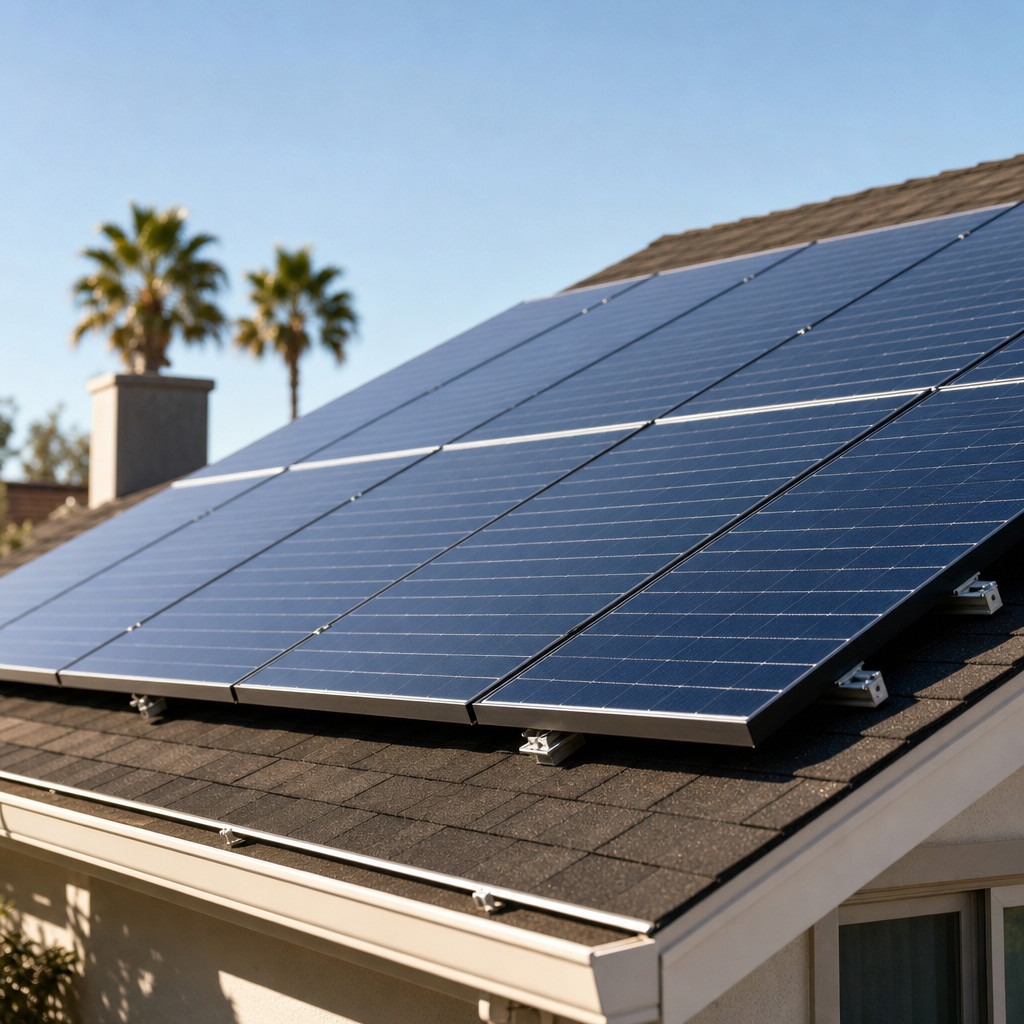
Under the current Net Billing Tariff structure, battery storage has become nearly essential for maximizing solar savings in California. Instead of exporting excess solar production to the grid at reduced compensation rates, a battery allows you to store that energy and use it during expensive evening peak hours — often between 4 PM and 9 PM, when TOU rates are highest.
Key benefits of pairing solar with battery storage:
Everysun designs battery-integrated systems specifically around California's net billing rules, helping homeowners maximize the percentage of solar energy they use directly rather than exporting it. This approach reflects the broader industry shift documented by organizations like the Solar Energy Industries Association, which has tracked rising battery attachment rates nationally as compensation structures evolve.
While state-level averages are useful, the real answer to "is solar worth it in California" depends on factors specific to your property. Consider the following before making a decision:
This last point is where installer selection becomes as important as the technology itself. Everysun combines US-made, high-efficiency panels with Swedish-engineered safety and installation standards, backed by a 20-year installation guarantee and 25-year product warranties — protections designed to ensure the long-term math of your solar investment holds up, not just the initial projection.
Even with strong fundamentals, some homeowners end up disappointed with their solar investment. The most frequent causes include:
Avoiding these pitfalls is often the difference between a system that pays for itself in seven years and one that barely breaks even over its lifespan.
Before committing, homeowners should request a personalized production and savings estimate based on their actual roof, shading, and utility rate plan — not a generic online calculator. A credible installer will provide:
This level of detail separates a reliable investment decision from guesswork, and it's a standard part of the consultation process offered by established, well-reviewed installers.
For most California homeowners facing high utility rates, rising TOU pricing, and frequent grid reliability concerns, solar remains a financially sound investment — particularly when paired with battery storage under the current Net Billing Tariff structure. Typical payback periods of 6 to 10 years, combined with 20-25 years of reduced electricity costs afterward, make the long-term economics compelling for households that use enough electricity to justify the upfront cost.
That said, the value of solar is not identical for every home. Roof condition, orientation, usage patterns, and installer quality all shape the real-world outcome. Homeowners who take the time to get a personalized assessment — rather than relying on statewide averages — are best positioned to determine whether solar truly pencils out for their household.
Everysun helps California homeowners answer this question with confidence, offering US-made high-efficiency panels, Swedish safety and installation standards, flexible payment options, a 20-year installation guarantee, and 25-year product warranties. Visit www.everysun.com to get a personalized solar and battery storage assessment and find out exactly what solar could save you.
© 2025 Everysun Inc. All Rights Reserved.


Get Your Free Solar Quote
Request your free quote and see how solar can work for your home and budget