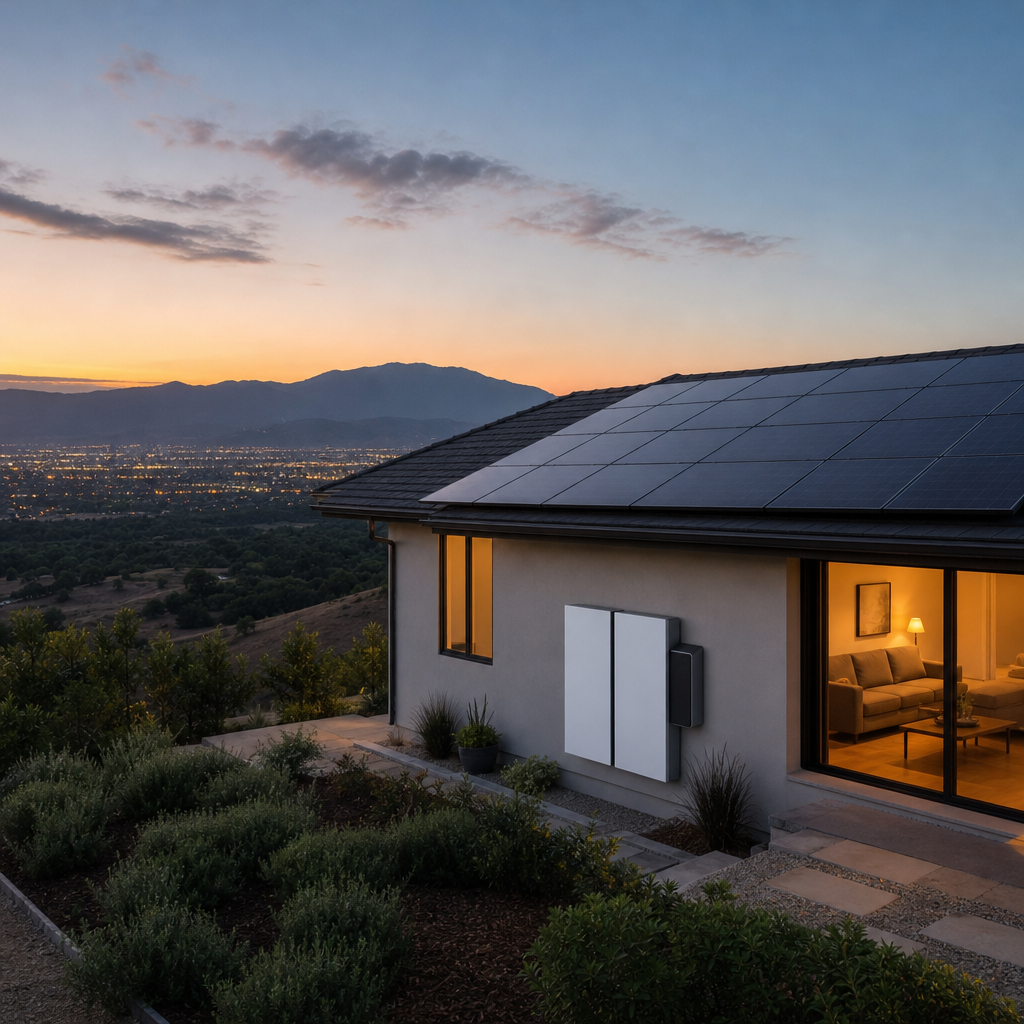
Is It Better to Buy or Lease Solar Panels in California
November 16, 2026
|
California
Deciding whether to buy or lease solar panels is one of the most consequential choices a California homeowner will make when going solar. Both paths can lower your electricity bills, but they differ enormously in long-term savings, ownership rights, tax benefits, and what happens when you sell your home. This article breaks down the real financial and practical differences so you can choose the option that fits your goals.
When you buy solar panels — whether with cash or a solar loan — you own the system outright. You're entitled to the federal solar tax credit, any applicable state or utility incentives, and the full value of the electricity your panels produce. The system becomes part of your home's assets, and once it's paid off, your electricity is essentially free aside from minor maintenance.
When you lease solar panels, a third-party company owns the system and installs it on your roof. You pay a fixed monthly fee for the right to use the electricity it generates, similar to renting equipment. You don't own the hardware, you typically can't claim the federal tax credit, and the savings tend to be more modest and predictable.
A close cousin of leasing is the Power Purchase Agreement (PPA), where instead of a flat lease payment, you pay a per-kilowatt-hour rate for the solar electricity produced — usually lower than your utility rate, but one that often escalates annually.
Before deciding, it helps to see the three primary paths side-by-side. The table below summarizes the key differences between a cash purchase, a solar loan, and a lease/PPA.
| Feature | Cash Purchase | Solar Loan | Lease/PPA |
|---|---|---|---|
| Ownership | You own the system | You own the system | Third party owns it |
| Upfront cost | High (full price) | Low to none | Low to none |
| Federal tax credit (30%) | Yes | Yes | No (goes to the leasing company) |
| Monthly payment | None after install | Fixed loan payment | Fixed lease or variable PPA rate |
| Long-term savings | Highest | High | Moderate |
| Adds home value | Yes, typically | Yes, typically | Often neutral or negative |
| Maintenance responsibility | Homeowner (under warranty) | Homeowner (under warranty) | Leasing company |
| Ease of home sale | Straightforward | Straightforward | Can complicate sale (lease transfer required) |
| Contract length | None | 10–25 years | Usually 20–25 years |
As the table shows, ownership through cash or a loan consistently delivers better long-term value, while leasing trades some of that upside for simplicity and zero upfront investment.
Buying tends to be the stronger financial choice over the life of a solar system, which typically runs 25 to 30 years. Here's why:
Companies like www.everysun.com are built around this ownership model, pairing US-made high-efficiency panels with flexible financing so homeowners can buy their systems without a large upfront cash outlay, while still capturing the tax credit and long-term equity benefits.
Leasing isn't without merit, and for certain homeowners it remains a reasonable choice:
That said, leasing's savings are usually modest — often in the range of 10–15% off your utility bill — compared to 40–70% in lifetime savings many owners realize, according to figures commonly cited by the Solar Energy Industries Association.
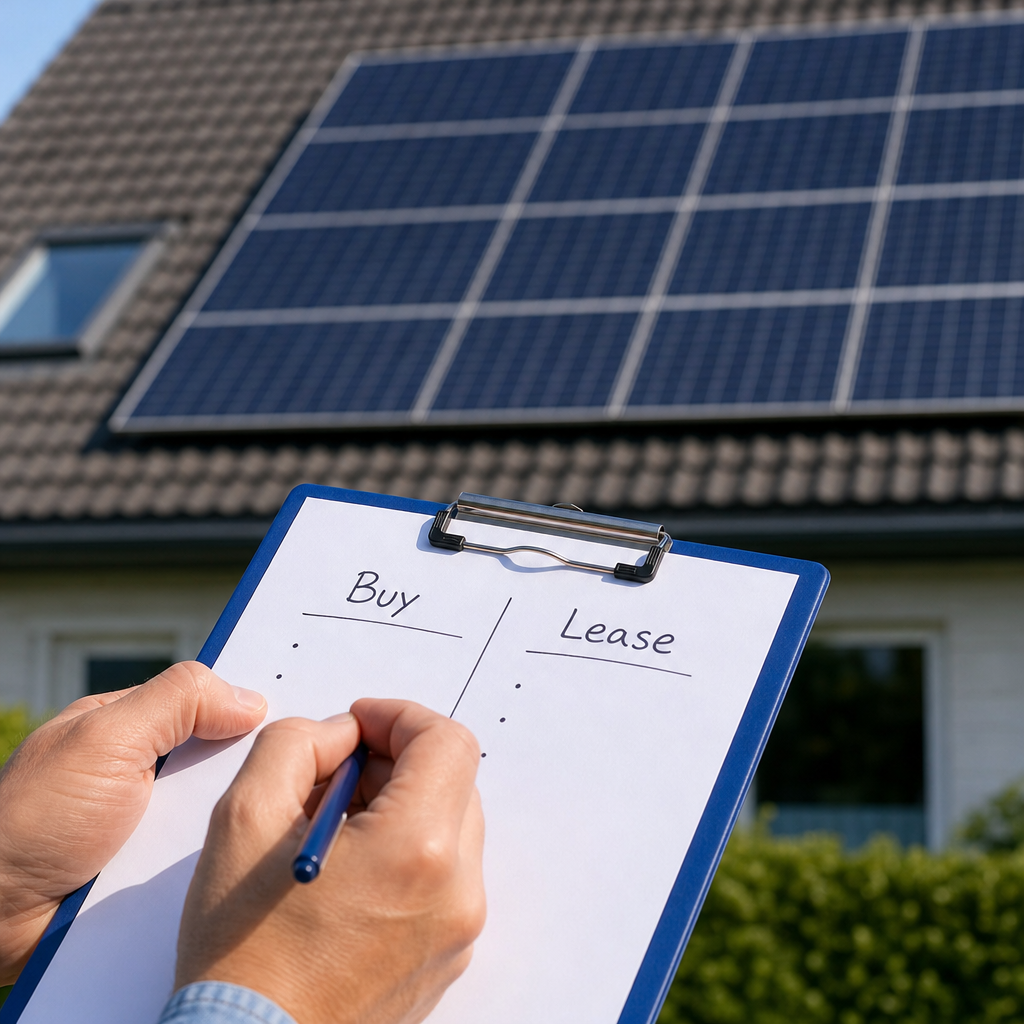
To understand the real financial gap, consider a simplified 20-year comparison for an average California home with a 7 kW system. These are illustrative figures based on typical market pricing and utility rate trends; actual numbers vary by home, system size, and utility provider.
| Cost Category | Cash/Loan Purchase | Lease/PPA |
|---|---|---|
| Upfront cost | $0–$21,000 (before incentives) | $0 |
| Federal tax credit value | ~$6,300 | $0 (retained by lessor) |
| Estimated monthly payment | $120–$180 (loan) or $0 (cash) | $130–$170 (escalating) |
| 20-year total cost | $25,000–$36,000 | $35,000–$48,000 |
| Estimated 20-year utility savings | $45,000–$60,000 | $25,000–$35,000 |
| Net 20-year benefit | $20,000–$30,000+ | $5,000–$10,000 |
| System ownership at year 20 | Yes | No (unless buyout exercised) |
Even accounting for loan interest, buyers typically come out significantly ahead because they keep 100% of the energy value their system produces and benefit from incentives leasing companies retain. For a deeper look at how incentive programs affect these numbers, the California Public Utilities Commission publishes updated guidance on net metering rules, which also affect how much credit homeowners receive for excess solar production.
Every household's situation is different. Consider these factors before committing to either path:
Your credit and cash position A strong credit score typically unlocks $0-down solar loans with competitive rates, making ownership accessible without a large cash payment. If your credit is limited, a lease may seem more attainable, though it's worth exploring loan programs designed for a range of credit profiles before defaulting to a lease.
How long you plan to stay in your home If you intend to stay 10+ years, buying almost always wins financially. If you might sell within 2–3 years, weigh the resale complications of a lease against the smaller upfront commitment.
Your appetite for maintenance Owned systems typically come with strong manufacturer and workmanship warranties — for example, www.everysun.com backs installations with a 20-year installation guarantee and 25-year product warranties, which significantly reduces the maintenance concerns that often push homeowners toward leasing.
Your interest in battery storage Owning your solar system makes it far easier to add battery storage later, qualify for storage-specific incentives, and integrate with home energy management systems. Leased systems can complicate storage additions because the leasing company controls the equipment and contract terms.
Local utility rate structures California's time-of-use rates and net billing structures (such as NEM 3.0) affect how much value solar exports generate. Owners captured under favorable billing structures often see better paybacks than lessees, whose savings are built into a third-party contract rather than tied directly to their specific utility credits.
It's worth clearing up a few misconceptions that often steer homeowners in the wrong direction:
Whether you're leaning toward buying or leasing, ask these questions before signing anything:
Bringing this list to any consultation — including one with www.everysun.com — helps ensure you're comparing offers on equal footing rather than being swayed by a low monthly number alone.
For most California homeowners who plan to stay in their home for the medium-to-long term and who have reasonable access to financing, buying solar panels is the financially stronger choice. Ownership unlocks the federal tax credit, builds home equity, and ultimately delivers far greater lifetime savings than a lease or PPA. Leasing still serves a purpose for homeowners prioritizing zero upfront cost and hands-off maintenance, or those uncertain about their long-term plans for the property.
The best approach is to run the numbers for your specific home: your roof size, local utility rates, available incentives, and financing options all shape the outcome. A reputable local installer can model both scenarios transparently rather than pushing a single product.
Choosing between buying and leasing solar panels ultimately comes down to how you value upfront simplicity versus long-term ownership and savings. For most California homeowners aiming to reduce electricity bills permanently and build real equity in their property, ownership remains the stronger long-term strategy — especially when paired with flexible financing that removes the large upfront barrier. www.everysun.com helps homeowners across California make that transition with US-made high-efficiency panels, Swedish-grade installation standards, and financing options designed to make ownership realistic and affordable, backed by a 20-year installation guarantee and 25-year product warranties for lasting peace of mind.
© 2025 Everysun Inc. All Rights Reserved.


Get Your Free Solar Quote
Request your free quote and see how solar can work for your home and budget