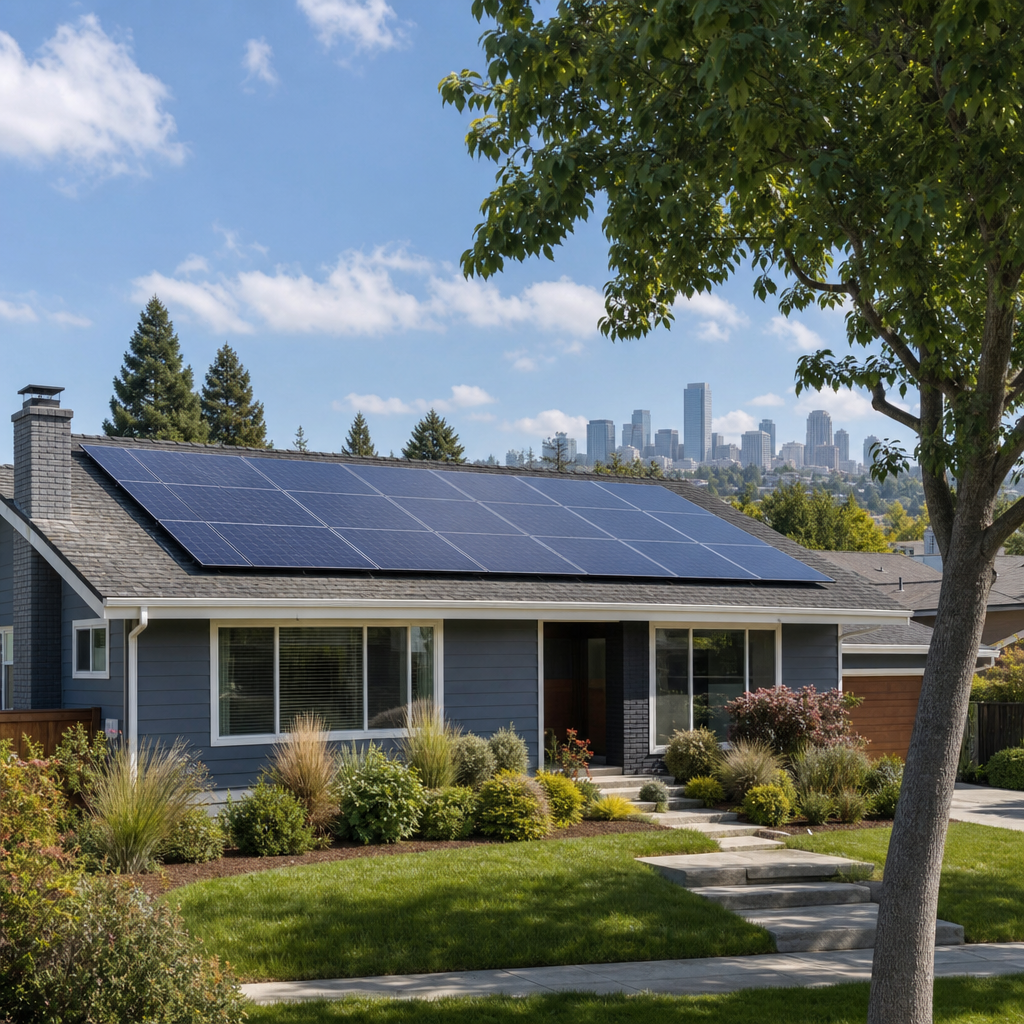
Solar Panels and Your Electric Bill: How Much Will You Actually Save Each Month?
September 12, 2026
|
California
Electricity rates in California have climbed steadily for the past decade, and many homeowners open their monthly bill only to wonder how much higher it can go. Solar panels are the most reliable way to break that cycle, but the savings vary widely depending on your usage, utility rate plan, system size, and whether you add battery storage. This article breaks down real numbers, comparison tables, and the variables that determine exactly how much you can expect to save.
On average, California homeowners who install solar panels save between $1,000 and $2,000 per year on electricity costs, with many high-usage households saving significantly more. Over a 25-year system lifespan, that adds up to $25,000–$50,000 or more in avoided utility costs, depending on your utility provider and how much electricity you use.
The reason savings are so substantial in California comes down to two factors: some of the highest electricity rates in the country, and some of the best sunlight resources in the nation. According to the U.S. Energy Information Administration, California's average residential electricity rate is now well above the national average, making solar payback periods shorter here than in most other states.
Here's a general snapshot of what typical savings look like based on system size:
| System Size | Average Annual Production | Estimated Annual Savings | 25-Year Savings Estimate |
|---|---|---|---|
| 4 kW | 6,000–7,000 kWh | $900–$1,300 | $22,000–$32,000 |
| 6 kW | 9,000–10,500 kWh | $1,400–$1,900 | $35,000–$47,000 |
| 8 kW | 12,000–14,000 kWh | $1,900–$2,600 | $47,000–$65,000 |
| 10 kW | 15,000–17,500 kWh | $2,400–$3,200 | $60,000–$80,000 |
These figures assume average California sun exposure and utility rates, and they can shift based on your roof orientation, shading, and local climate zone.
No two homes save the exact same amount from solar, because savings depend on a combination of personal and environmental factors. Understanding these variables helps you set realistic expectations before you invest.
Companies like www.everysun.com evaluate all of these variables during a site assessment, using satellite and on-site data to model your specific savings potential before you commit to a system.
California's shift to the Net Billing Tariff, commonly called NEM 3.0, changed how solar owners are compensated for excess electricity sent back to the grid. Under the previous NEM 2.0 structure, exported solar power was credited at close to the retail electricity rate. Under NEM 3.0, export credits are tied to the "avoided cost" of electricity, which is often 75% lower than retail rates, especially during midday hours when solar production peaks.
This shift has made battery storage a much bigger part of the savings equation. Instead of exporting excess solar power for a small credit, homeowners can store it in a battery and use it during expensive evening peak hours, when utility rates are highest. According to the California Public Utilities Commission, this design intentionally encourages battery adoption to help balance the grid.
Here's how the two net metering structures compare:
| Feature | NEM 2.0 (Legacy) | NEM 3.0 (Net Billing Tariff) |
|---|---|---|
| Export credit rate | Close to retail rate | Avoided-cost rate (lower) |
| Battery storage value | Optional, moderate benefit | Highly recommended, major benefit |
| Typical payback period | 5–7 years | 7–10 years without battery, 6–8 with battery |
| Best strategy | Maximize export | Maximize self-consumption |
For homeowners installing solar today, pairing panels with a battery system is often the difference between modest savings and maximizing your return under current rules.
To make the numbers more concrete, here are three example scenarios based on typical California household profiles. These are illustrative estimates, not guarantees, since actual savings depend on your specific utility, usage, and system design.
Scenario 1: Small household, moderate usage A two-person household using about 500 kWh per month with a $180 average electric bill installs a 4 kW system. With good sun exposure, they can expect to offset 80–90% of their usage, dropping their bill to $20–$40 per month and saving roughly $1,500–$1,800 annually.
Scenario 2: Family home with average-to-high usage A family of four using 900–1,000 kWh per month with a $320 average bill installs a 7 kW system paired with a battery. They can expect to offset most daytime and evening usage, cutting their bill to near $30–$50 per month and saving approximately $3,000–$3,400 annually.
Scenario 3: Large home with pool and EV charging A household using 1,500+ kWh per month due to pool pumps and electric vehicle charging installs a 10–12 kW system with battery storage. Even with high usage, they can offset 70–85% of consumption, saving $3,800–$5,000 or more annually.
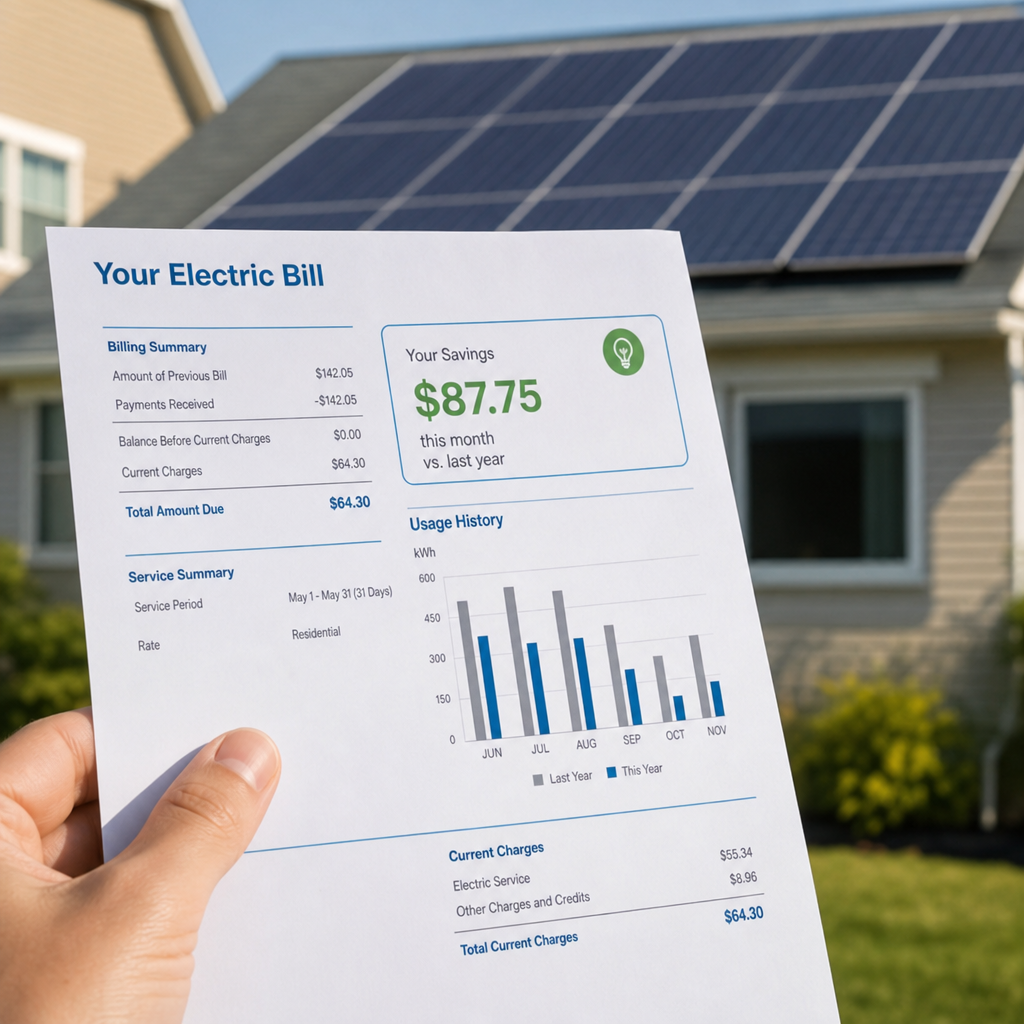
Payback period is one of the most important numbers for homeowners evaluating solar, since it tells you when your monthly savings start becoming pure profit. In California, typical solar payback periods currently range from 6 to 10 years, depending on system cost, financing method, incentives, and whether a battery is included.
Several factors shorten or lengthen this timeline:
www.everysun.com offers flexible payment options designed to help homeowners start saving immediately, rather than waiting years to see a return, along with a 20-year installation guarantee and 25-year product warranties that protect your investment well past the typical payback period.
One of the most overlooked aspects of solar savings calculations is future utility rate inflation. California's major utilities have raised residential electricity rates significantly over the past several years, and most forecasts expect this trend to continue. The California Energy Commission has noted that rate increases are driven by grid infrastructure upgrades, wildfire mitigation costs, and rising demand.
This matters because solar savings calculations based on today's rates likely understate your actual long-term benefit. If your utility rate increases by even 3–5% annually, a solar system that saves you $1,800 in year one could be saving you $3,000 or more annually by year 15, simply because you're avoiding a steadily rising cost.
Here's a simplified illustration of how rate inflation affects avoided costs over time for a household with a consistent 9,000 kWh annual solar offset:
| Year | Estimated Utility Rate (per kWh) | Annual Avoided Cost |
|---|---|---|
| Year 1 | $0.32 | $2,880 |
| Year 5 | $0.37 | $3,330 |
| Year 10 | $0.43 | $3,870 |
| Year 15 | $0.50 | $4,500 |
| Year 20 | $0.58 | $5,220 |
This is why locking in your electricity production cost today, through a properly sized solar and battery system, becomes more valuable every year rates continue climbing.
Yes, and under California's current billing structure, battery storage has become one of the most effective ways to maximize savings. Without a battery, any solar electricity you don't use immediately is exported to the grid at the lower NEM 3.0 avoided-cost rate. With a battery, that same electricity can be stored and used later in the day, during peak evening rate periods, effectively letting you "buy back" your own solar power at a much higher implied value than the export credit would provide.
Key battery storage benefits include:
Everysun's battery storage systems are designed to integrate seamlessly with their US-made high-efficiency panels, combining Swedish safety engineering standards with smart energy management to help California homeowners get the most value from every kilowatt-hour they produce.
While national and statewide averages are useful, your actual savings depend on your specific home and habits. Here's a simple step-by-step approach to estimating your potential savings before requesting a formal quote:

A trustworthy installer should be able to show you projected first-year savings, 25-year savings estimates, and a clear payback timeline, not just a rough national average.
Even well-intentioned solar buyers sometimes leave savings on the table due to avoidable mistakes. Watch out for these common pitfalls:
Working with an experienced, transparent installer helps you avoid these mistakes and ensures your system is properly sized and configured for maximum long-term savings.
Can solar panels really eliminate my electric bill completely? It's possible, especially with a well-sized system and battery storage, but most homeowners still see a small minimum monthly connection charge from their utility. Full elimination depends on your usage, system size, and export credit structure.
Do solar savings estimates account for panel degradation? Reputable installers factor in a small annual degradation rate, typically around 0.5% per year, when calculating long-term savings projections.
How quickly will I see savings after installation? Most homeowners see reduced electric bills starting with their very first billing cycle after their system is activated and interconnected with the utility.
Does cloudy weather significantly reduce savings? Solar panels still generate electricity on cloudy days, just at reduced output. California's generally sunny climate means most regions see strong annual production despite occasional overcast periods.
Solar panels remain one of the most effective long-term investments California homeowners can make against rising electricity costs. While national averages suggest savings between $1,000 and $2,600 annually depending on system size, your actual results depend on your usage patterns, roof characteristics, utility rate structure, and whether you pair your system with battery storage. With utility rates continuing to climb and NEM 3.0 rewarding self-consumption, a properly designed solar and battery system offers both immediate bill reduction and long-term financial protection.
www.everysun.com helps California homeowners model these exact savings before installation, using US-made high-efficiency panels built to Swedish safety and engineering standards, backed by flexible payment options, a 20-year installation guarantee, and 25-year product warranties. If you're ready to find out exactly how much solar can save on your electric bill, Everysun's team can provide a detailed, personalized analysis built around your home, your usage, and your goals.
© 2025 Everysun Inc. All Rights Reserved.


Get Your Free Solar Quote
Request your free quote and see how solar can work for your home and budget