10-25 Solar Panels: How Many Does Your California House Actually Need?
October 2, 2026
|
California
Deciding to go solar is easy. Figuring out exactly how many panels your roof needs is where most homeowners get stuck. Too few panels and you're still writing checks to your utility every month. Too many and you've overspent on a system that produces more power than you'll ever use.
The honest answer is: most California homes need somewhere between 15 and 25 panels, but the right number for your specific house depends on your electricity usage, roof orientation, local sunshine, and the efficiency of the panels you choose. In this article, we'll break down the exact calculations so you can walk into a quote with realistic expectations instead of guesswork.
Before we dig into the math, here's a general reference table showing typical panel counts based on monthly electricity usage. These numbers assume standard 400-watt panels and average California sun exposure of about 5 peak sun hours per day.
| Average Monthly Electric Bill | Estimated Annual Usage (kWh) | Approximate Panels Needed |
|---|---|---|
| $100 | 6,000 kWh | 10-12 panels |
| $150 | 9,000 kWh | 14-16 panels |
| $200 | 12,000 kWh | 18-20 panels |
| $250 | 15,000 kWh | 22-24 panels |
| $300+ | 18,000+ kWh | 26+ panels |
Keep in mind these are starting estimates. Your actual system size will be refined based on your roof's usable space, shading, and whether you plan to add an electric vehicle or battery storage down the road. A professional site assessment from a licensed installer like www.everysun.com will always give you a more precise figure than any online calculator.
The single biggest factor in sizing a solar system is your household's annual electricity consumption. You can find this information in two places:
According to the U.S. Energy Information Administration, the average American household consumes roughly 10,500 kWh per year, though California homes often run lower due to the mild climate and widespread adoption of energy-efficient appliances. Still, usage varies dramatically based on:
If you've recently added an EV or are planning to electrify your home with heat pumps, factor in that future usage now rather than resizing your system later, which is always more expensive than building in extra capacity from the start.
Not all sunlight is equal. Solar professionals use a metric called "peak sun hours" to describe the number of hours per day when sunlight intensity averages 1,000 watts per square meter, which is the benchmark condition panels are rated against.
California enjoys some of the best solar irradiance in the country, but it does vary by region:
| California Region | Average Peak Sun Hours/Day |
|---|---|
| Los Angeles | 5.5 - 6.0 |
| San Diego | 5.5 - 6.0 |
| Sacramento | 5.2 - 5.8 |
| San Francisco Bay Area | 4.8 - 5.3 |
| Fresno / Central Valley | 5.5 - 6.2 |
| Eureka / North Coast | 4.0 - 4.5 |
Data compiled from NREL's National Solar Radiation Database.
Homes in sunnier inland regions like Fresno or the Inland Empire will generate more electricity per panel than homes along the fog-prone North Coast, meaning coastal homeowners may need a few extra panels to hit the same production target.
Once you know your annual usage and local peak sun hours, you can estimate the system size you need using this formula:
System Size (kW) = Annual kWh Usage ÷ 365 ÷ Peak Sun Hours ÷ 0.80 (efficiency derate)
The 0.80 derate accounts for real-world losses from inverter inefficiency, panel degradation, dust, and temperature effects — a standard adjustment recommended by solar engineers and referenced in guidance from the U.S. Department of Energy's Solar Energy Technologies Office.
Example calculation:
A Sacramento household using 12,000 kWh per year, with 5.5 peak sun hours:
That household would need roughly a 7.5 kW solar system to fully offset their electric bill.
Once you know your required system size, divide it by your panel's wattage to get the panel count.
Number of Panels = System Size (watts) ÷ Panel Wattage
Using the Sacramento example above with a 7.5 kW (7,500-watt) system:
This is why panel efficiency matters so much. Higher-wattage, high-efficiency panels — like the US-made panels installed by www.everysun.com — can meet the same energy target with fewer panels, which is especially valuable on smaller roofs or homes with limited south-facing space.
Not all solar panels produce the same amount of electricity per square foot. Efficiency ratings, measured as a percentage of sunlight converted to usable electricity, directly affect how many panels you'll need.
| Panel Type | Typical Wattage | Efficiency Rating | Panels Needed for 7.5 kW System |
|---|---|---|---|
| Standard polycrystalline | 325-350W | 15-17% | 21-23 panels |
| Standard monocrystalline | 370-400W | 18-20% | 19-20 panels |
| High-efficiency monocrystalline | 420-450W | 20-22% | 17-18 panels |
| Premium high-efficiency (US-made) | 460-500W | 21-23% | 15-16 panels |
Higher efficiency panels cost somewhat more per unit, but the reduction in total panel count often offsets labor and mounting hardware costs, while also preserving roof space for future expansion. This is a key reason many California homeowners choose premium panels even when budget options are available, a trend confirmed by industry pricing data from EnergySage.
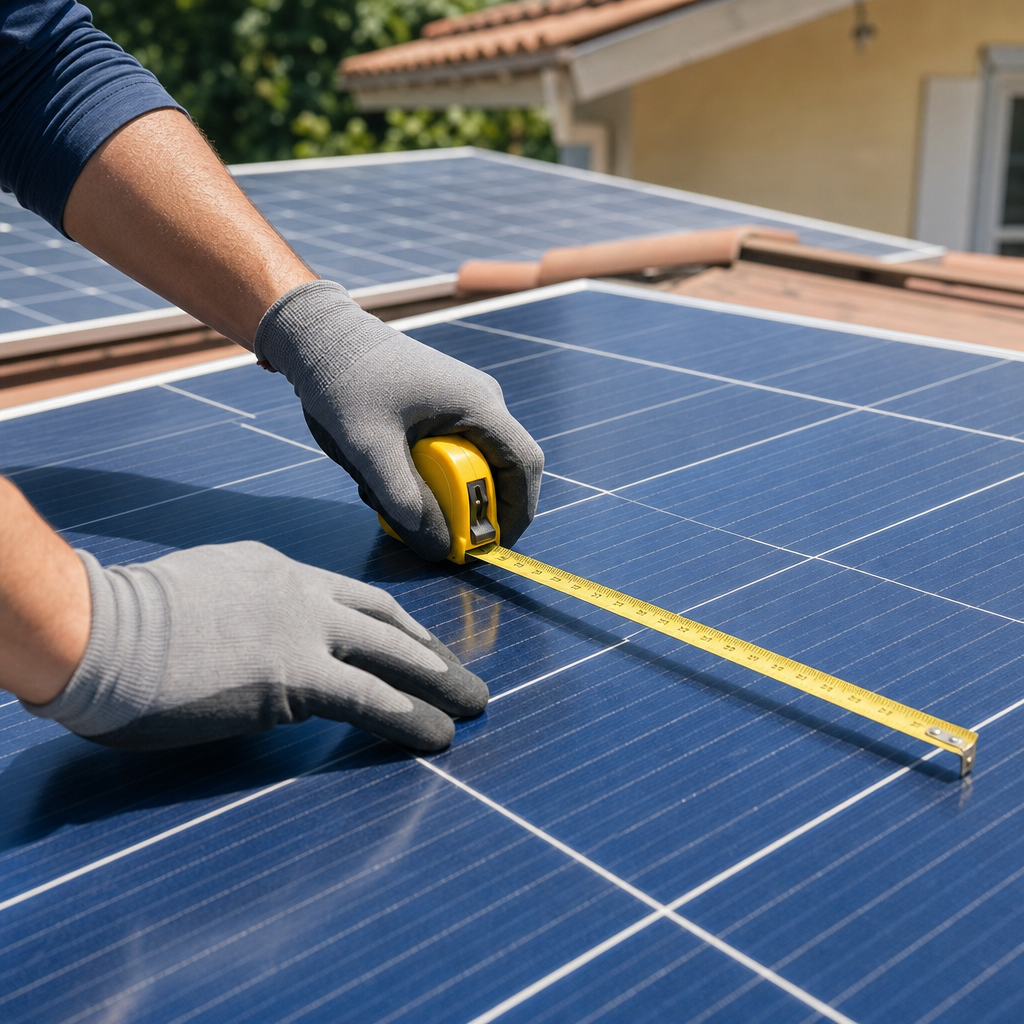
Even if your calculations call for 20 panels, your roof might only have usable space for 15. Standard residential solar panels measure approximately 65 inches by 39 inches, or about 17.5 square feet each.
To estimate your roof's panel capacity:
If your roof can't accommodate the full system size, you have three main options:
Roof orientation also matters significantly. South-facing roofs in California typically produce the most electricity, while east- and west-facing sections produce about 10-20% less, and north-facing roofs are generally not recommended for panel placement.
Many California homeowners are now pairing solar with battery storage, partly due to changes in net metering policy under NEM 3.0, which reduced the compensation rate for excess solar exported to the grid.
Under NEM 3.0, it's often more financially efficient to store your excess solar production in a battery and use it during evening peak rate hours rather than selling it back to the utility at a lower rate. This shift affects system sizing in two ways:
A typical California home pairing a 10 kWh battery with solar will often need a system in the 7-9 kW range (roughly 17-22 panels) to reliably charge the battery daily while still covering real-time household usage.
Sizing a solar system sounds straightforward, but many homeowners make avoidable errors that lead to underperforming systems or unnecessary costs.
A professional energy audit and site visit, like the ones offered by www.everysun.com, eliminates most of this guesswork by using satellite imagery, shading analysis tools, and historical utility data to produce an accurate, customized system design.
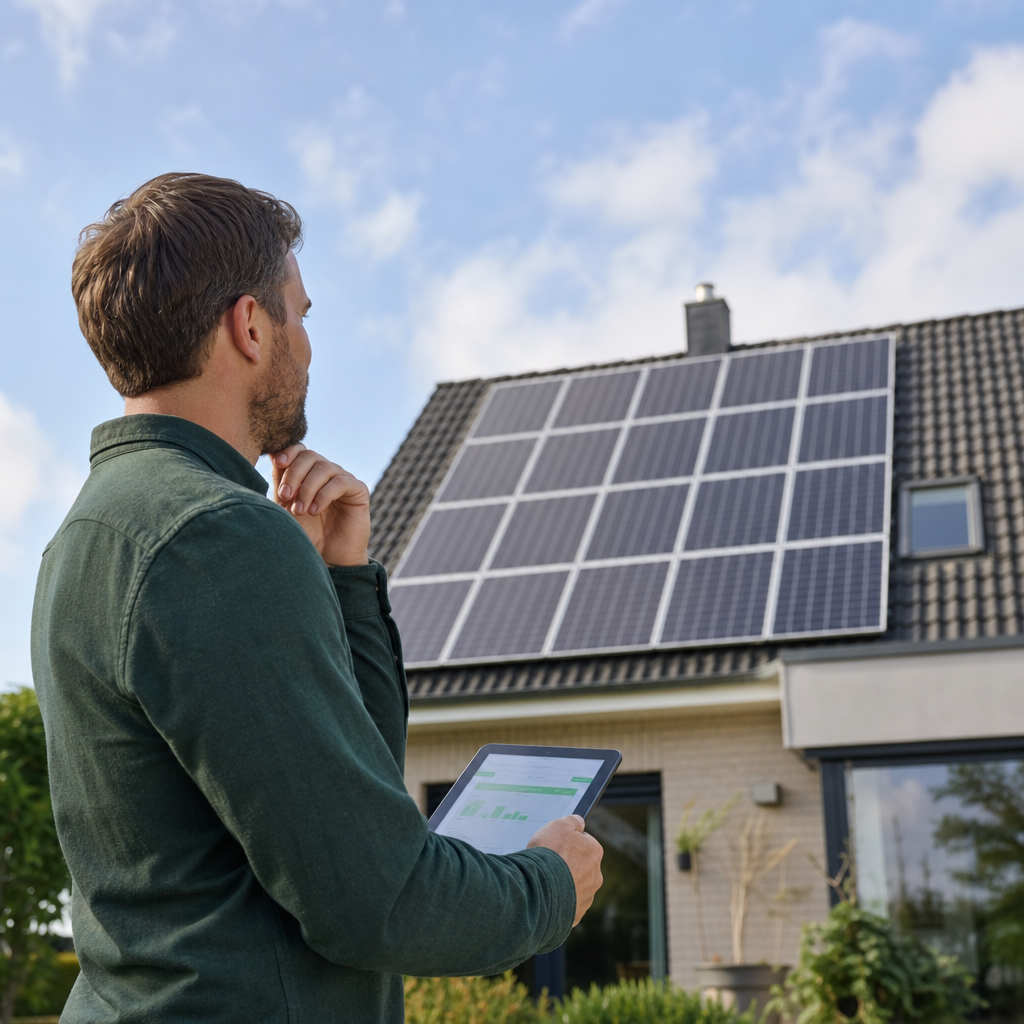
To put these numbers in context, here's how panel requirements typically look across different California household profiles, assuming 400-watt panels and average regional sun exposure.
| Home Profile | Annual Usage | Estimated System Size | Approx. Panel Count |
|---|---|---|---|
| Small condo, 1-2 occupants | 4,500 kWh | 3.5 kW | 9 panels |
| Average single-family home, 3-4 occupants | 11,000 kWh | 7.0 kW | 18 panels |
| Larger home with pool/spa | 16,000 kWh | 10.2 kW | 26 panels |
| Home with EV charging | 14,500 kWh | 9.2 kW | 23 panels |
| Home with EV + battery storage | 18,000 kWh | 11.5 kW | 29 panels |
These figures illustrate why a one-size-fits-all answer doesn't work. A retired couple in a two-bedroom home has vastly different needs than a family of five running two electric vehicles and central air conditioning. This is also why reputable installers always perform individualized assessments rather than quoting a flat "average home" package.
Online solar calculators can provide ballpark estimates, but they can't account for your roof's actual condition, local permitting requirements, or the specific performance characteristics of different panel brands. A licensed installer brings several advantages:
Everysun combines US-made, high-efficiency solar panels with Swedish-engineered safety and installation standards, backed by a 20-year installation guarantee and 25-year product warranties. This approach gives California homeowners confidence that their system is sized correctly the first time, rather than requiring costly add-ons later. Flexible payment options also make it easier to start with the right-sized system from day one instead of under-building to save on upfront costs.
So, how many solar panels do you actually need for your house? For most California homeowners, the answer falls between 15 and 25 panels, but your exact number depends on your energy usage, roof space, local sunshine, panel efficiency, and whether you're planning to add battery storage or an EV charger. The calculations above give you a strong starting point, but a professional site assessment will always provide the most accurate and cost-effective system design.
Rather than guessing or settling for an undersized system that leaves you paying partial utility bills for years, it pays to work with a team that understands both the engineering and the long-term value of solar. www.everysun.com specializes in precisely this kind of tailored system design, helping California homeowners install the right number of high-efficiency panels backed by industry-leading warranties and installation guarantees, so you can start generating clean, reliable energy with confidence from day one.
© 2025 Everysun Inc. All Rights Reserved.


Get Your Free Solar Quote
Request your free quote and see how solar can work for your home and budget