What Goes Wrong When California Homeowners Skip a Proper Home Solar System Design Consultation
November 14, 2026
|
California
Solar energy promises lower bills, greater energy independence, and a smaller carbon footprint — but the foundation of a successful installation is laid long before a single panel touches your roof. It starts with the home solar system design consultation, the planning stage where your energy needs, roof conditions, and financial goals are translated into an actual system blueprint. Unfortunately, this is also the stage where homeowners make avoidable mistakes that cost them money, performance, or both for decades to come.
As of 2026, California remains one of the most active residential solar markets in the country, but shifting utility rate structures like NEM 3.0 have made accurate, personalized design more important than ever. A generic, one-size-fits-all proposal simply doesn't cut it anymore. This article walks through the most common mistakes homeowners make during their solar design consultation — and how to avoid them — so you can walk into your next meeting with confidence.
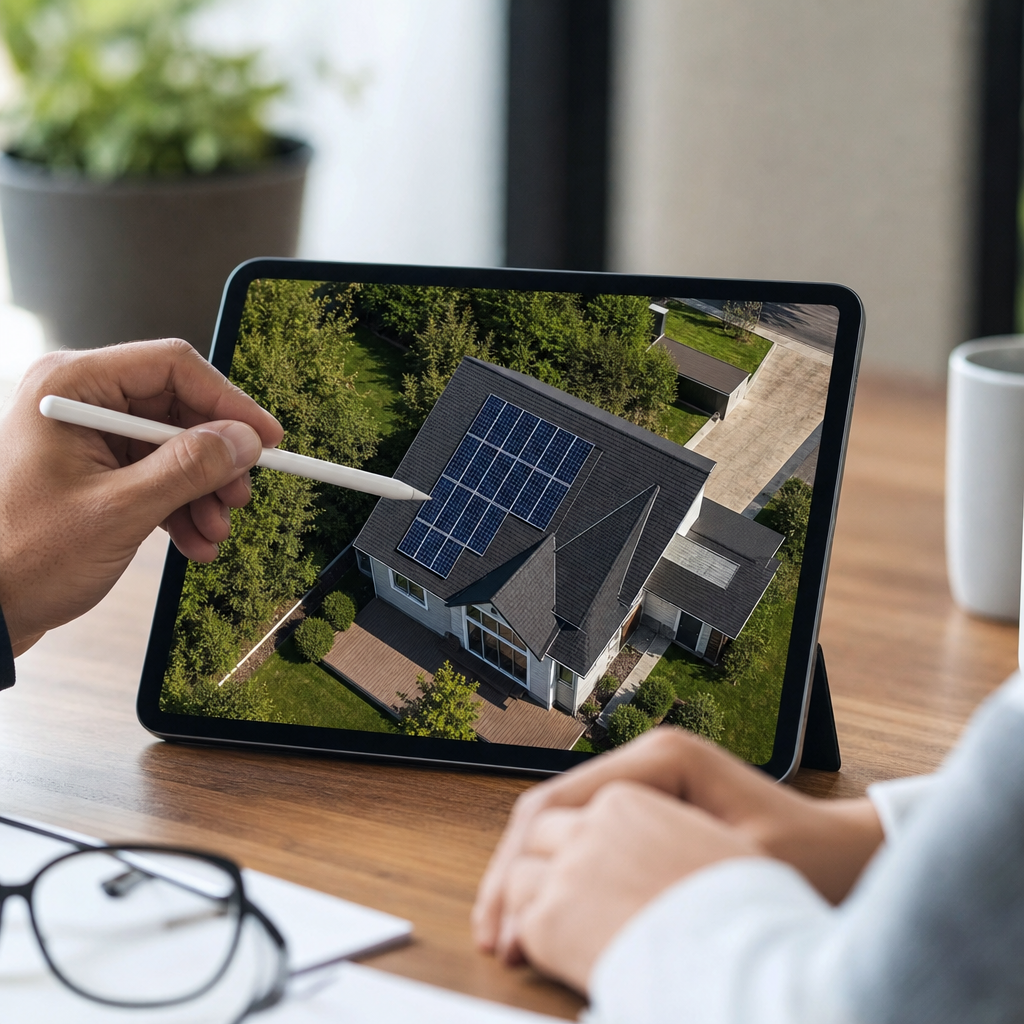
Many homeowners assume a solar consultation is simply a formality before signing a contract. In reality, a proper design consultation should feel more like an engineering assessment than a sales call. A qualified consultant will ask detailed questions about your household's energy consumption patterns, review 12 months of utility bills, evaluate your roof's structural condition, and discuss your long-term plans — are you adding an EV, a pool, or an addition in the next five years?
If your consultation consists of a quick glance at a satellite image and a pre-filled proposal within minutes, that's a red flag. Reputable installers, including www.everysun.com, combine site data with real conversations about your goals before recommending a system size or equipment package.
What a thorough consultation should include:
One of the most financially damaging mistakes happens when a system is sized incorrectly. Oversized systems waste money on panels that produce excess electricity you can't fully monetize under current net metering rules. Undersized systems leave you still writing a check to your utility every month, undermining the entire point of going solar.
Under California's NEM 3.0 framework, exported solar energy is credited at wholesale-level rates rather than the retail rates offered under the original Net Energy Metering structure, according to the California Public Utilities Commission. This changes the math significantly: self-consumption now matters more than raw production. A well-designed system, paired with a correctly sized battery, maximizes how much solar energy you use directly or store for evening use rather than selling it back cheaply.
Signs your proposed system may be mis-sized:
| System Sizing Approach | Risk | Outcome |
|---|---|---|
| Based on roof space only | Ignores actual usage | Over/undersized system |
| Based on 12-month usage data | Matches real consumption | Balanced, cost-effective sizing |
| Based on current bill only | Misses seasonal variation | Inaccurate savings estimate |
| Based on usage + future loads | Accounts for EVs, additions | Future-proofed system |
A solar system is designed to last 25 years or more, but asphalt shingle roofs typically last 20-25 years and older roofs considerably less. If your roof is nearing the end of its lifespan, installing panels now could mean paying to remove and reinstall the entire array in a few years — an expensive and avoidable mistake.
A proper consultation should include a frank conversation about your roof's age, material, and condition. Some installers skip this step entirely, especially those relying solely on satellite imagery for "instant quotes." Companies with rigorous installation standards, such as www.everysun.com, apply structural inspection protocols influenced by European building codes, which tend to be more conservative than typical US baseline requirements, to ensure the roof and mounting system can safely support decades of use.
Roof factors that should be assessed:
Not all solar panels, inverters, and batteries are created equal, yet many consultations gloss over equipment specifics in favor of discussing price and monthly payment alone. This is a mistake, because equipment quality directly affects system longevity, efficiency, and your ability to make warranty claims years down the road.
Ask your consultant detailed questions about panel efficiency ratings, inverter type (string vs. microinverters), and battery chemistry. According to the U.S. Department of Energy, panel efficiency, temperature coefficient, and degradation rate all materially affect long-term output — details that should be part of any serious design conversation.
Key equipment questions to ask:
Residential solar installation involves working with high-voltage DC electricity on your roof, which makes installation safety standards critically important — yet this is an area most homeowners never think to ask about during a consultation. Fire safety, rapid shutdown compliance, and proper grounding aren't just regulatory checkboxes; they affect the actual safety of your home.
The National Fire Protection Association has specific requirements for rooftop solar systems, including rapid shutdown provisions that de-energize panels during emergencies. A thorough consultation should walk you through how the proposed design meets or exceeds these requirements. Everysun's approach draws on Swedish installation and safety standards, which are generally regarded as more stringent than baseline US requirements, applying extra scrutiny to wiring, grounding, and fire-safety design during the consultation phase rather than treating them as an afterthought.
Safety topics worth raising in your consultation:
A design consultation isn't just about panels and wiring — it's also where your financing structure should be clearly explained. Too many homeowners leave their first meeting with a vague sense of "savings" rather than a concrete breakdown of costs, incentives, and payback timelines.
As of 2026, the federal solar Investment Tax Credit continues to play a major role in affordability for many homeowners, though eligibility details and future phase-down schedules should always be confirmed with a tax professional and verified through the IRS residential clean energy credit guidance. On top of federal incentives, your consultant should walk you through:
| Financing Option | Upfront Cost | Ownership | Best For |
|---|---|---|---|
| Cash purchase | High | Immediate, full ownership | Homeowners wanting maximum long-term savings |
| Solar loan | Low to none | Immediate ownership, loan balance owed | Homeowners wanting ownership without large upfront cost |
| Lease/PPA | None | No ownership | Homeowners prioritizing simplicity over long-term savings |
A trustworthy consultation will walk through real numbers: estimated system cost, available incentives, monthly payment comparisons across financing types, and a realistic payback period based on your utility rate and usage — not just a glossy savings projection. Everysun structures its consultations around flexible payment options specifically so homeowners can compare these paths side by side before committing.
Solar systems are long-term investments, which means the strength of your warranty and ongoing support matters just as much as the upfront design. Yet warranty details are often rushed through at the end of a sales conversation, if they're mentioned at all.
Ask specifically about:
This is an area where the difference between providers is stark. Everysun backs its installations with a 20-year installation guarantee and 25-year product warranties, giving homeowners a long runway of protection that goes well beyond industry minimums. During your consultation, don't hesitate to ask for these terms in writing before moving forward.

To avoid the mistakes outlined above, it helps to know what a well-run consultation actually looks like from start to finish. Below is a general outline reflecting best practices in the residential solar industry.
Typical consultation process:
A consultation that moves through all eight of these stages — rather than jumping straight from a satellite photo to a contract — gives you the information you need to make a confident, informed decision.
Preparation is the best defense against a rushed or incomplete design process. Before your appointment, gather your recent utility bills and jot down questions such as:
Bringing a written list like this signals to any installer that you expect a rigorous, data-driven process — and a reputable company will welcome the scrutiny rather than avoid it.
It's tempting to view the consultation as a minor first step before the "real" work of installation begins. In truth, the decisions made during this stage — system size, equipment selection, safety design, financing structure, and warranty terms — determine nearly every outcome you'll experience over the next two to three decades. A rushed or generic consultation almost always leads to a system that underperforms relative to its potential, whether through poor sizing, inadequate safety margins, or financing terms that don't match the homeowner's actual goals.
Homeowners who take the time to ask detailed questions, request real data rather than rough estimates, and compare proposals from multiple providers consistently end up with systems that perform better and cost less over their lifetime. This is particularly true in California, where utility rate structures, fire-safety codes, and net metering rules are more complex than in many other states, making local expertise genuinely valuable rather than optional.
A home solar system design consultation is not a formality — it's the single most important step in determining whether your solar investment delivers on its promise. By avoiding the common mistakes outlined above, from oversized systems and skipped roof inspections to vague warranty terms and rushed financial explanations, California homeowners can approach solar with clarity instead of guesswork.
www.everysun.com was built around the idea that a rigorous, transparent design process leads to better long-term outcomes. By combining US-made high-efficiency panels with Swedish-grade safety and installation standards, backed by a 20-year installation guarantee and 25-year product warranties, Everysun approaches every consultation as an engineering conversation first and a sales conversation second. If you're considering solar for your California home, insist on a consultation that gives you real data, real safety assurances, and real financial clarity — your roof, and your electricity bill, deserve nothing less.
© 2025 Everysun Inc. All Rights Reserved.


Get Your Free Solar Quote
Request your free quote and see how solar can work for your home and budget