How to Choose and Install Home Solar Battery Storage in California
August 31, 2026
|
California
California homeowners have watched electricity rates climb year after year, while grid reliability during wildfire season and heat waves has become less predictable. That combination has pushed home solar battery storage from a luxury add-on to a near-essential part of any residential solar system. If you already have panels—or are planning an installation—understanding how to select and install a battery correctly can mean the difference between a system that quietly powers your home through an outage and one that leaves you in the dark.
This guide walks through the practical steps of adding battery storage to a home solar system in California, from sizing and cost to incentives and installer selection.
California's utilities have restructured how solar customers get paid for excess energy. Under the current Net Billing Tariff (commonly called NEM 3.0), the value of exporting surplus solar power back to the grid has dropped substantially compared to the older net metering rules. According to the California Public Utilities Commission, export compensation rates are now tied to the "avoided cost" of energy, which is typically far lower than retail electricity rates.
This shift changes the math for homeowners. Instead of exporting daytime solar power for modest credit, it now makes more financial sense to store that power in a battery and use it during evening peak hours when utility rates are highest. In practice, this means:
Add in California's exposure to Public Safety Power Shutoffs (PSPS) during fire season, and battery storage becomes both a financial and a resilience decision.
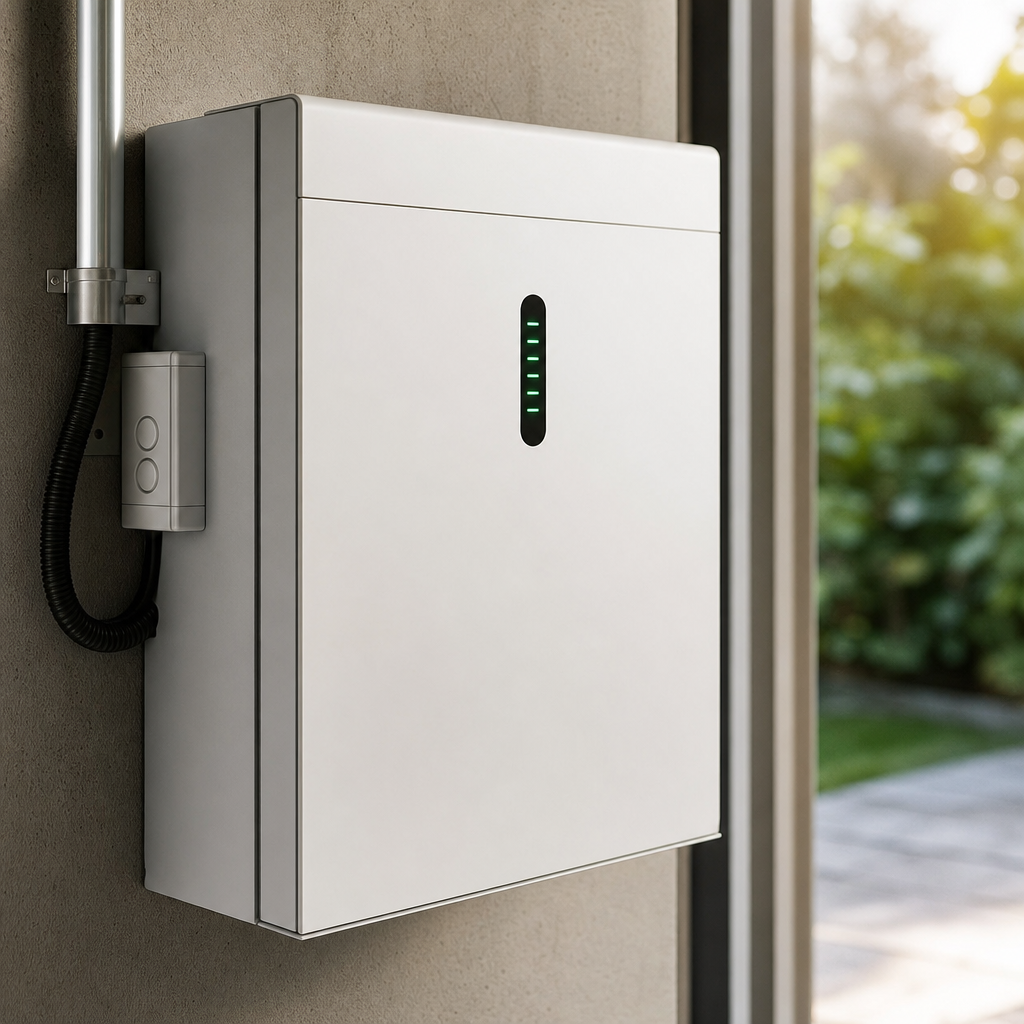
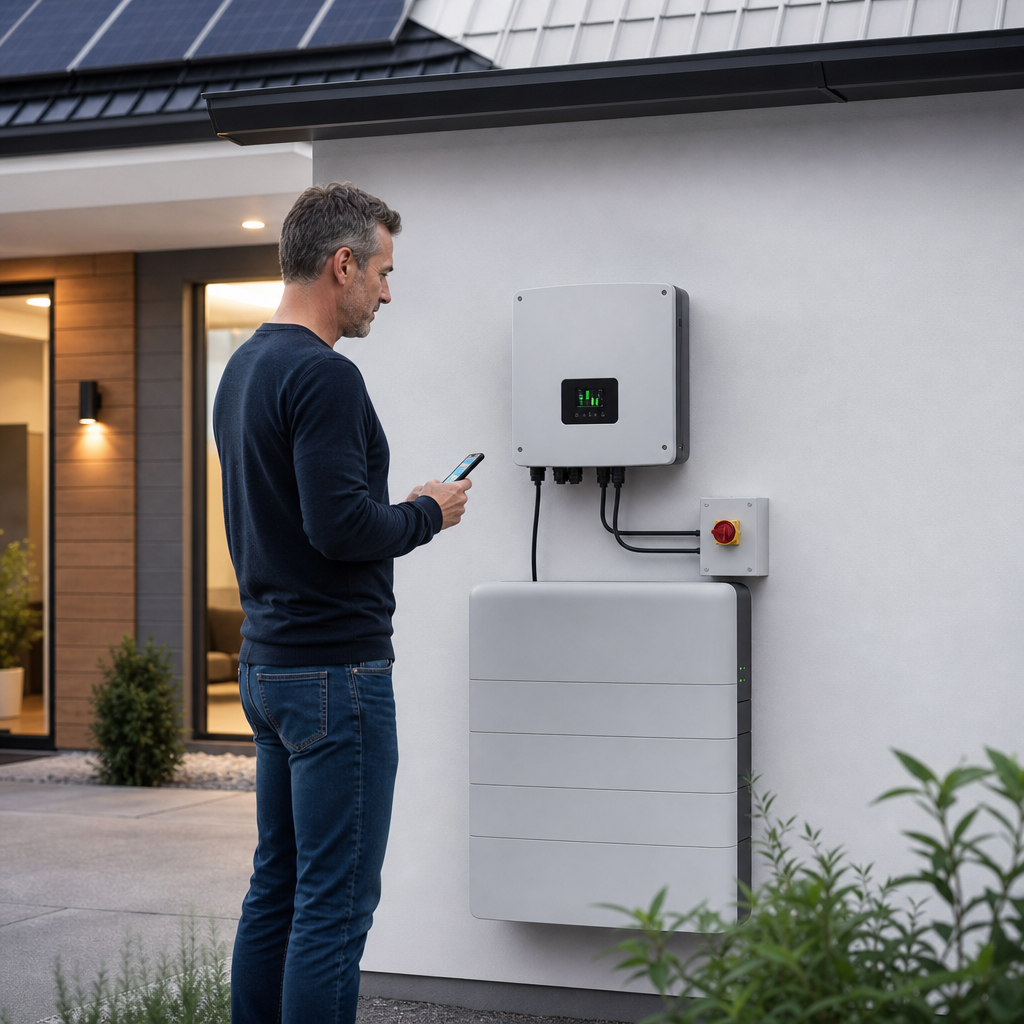
A home battery storage system sits between your solar panels, your home's electrical panel, and the grid. During the day, solar panels generate more electricity than a typical home uses. Instead of sending that surplus to the utility, the battery stores it in lithium-ion cells. In the evening or during an outage, the stored energy powers your home automatically.
Most modern systems include:
Companies like Everysun design these systems around each household's actual consumption data, rather than a one-size-fits-all battery size, which helps homeowners avoid paying for more capacity than they'll use.
Battery sizing depends on three factors: your average daily electricity usage, how many hours of backup you want, and which appliances or circuits you consider essential during an outage.
Keep in mind that backup duration depends heavily on what's running. Air conditioning, electric water heaters, and EV chargers draw significantly more power than lighting or electronics, so a battery sized for basic backup will drain much faster if high-load appliances stay connected.
While Everysun's installation team helps homeowners select equipment based on their specific home and goals, it's useful to understand how the major battery technologies on the market compare.
Most reputable installers, including Everysun, now favor LFP chemistry for home use because of its improved safety record and longer cycle life, which matters over a 20-25 year solar system lifespan. The National Renewable Energy Laboratory has published extensive research on battery degradation rates that supports LFP's advantage in long-term residential applications.
Battery pricing and backup performance are project-specific. Capacity, continuous and surge power, backed-up loads, electrical upgrades, equipment compatibility, installation location, permitting, and financing all affect the proposal. Everysun should model the home's actual interval usage and essential loads rather than publish a universal price or hours-of-backup promise. The former federal residential clean-energy credit does not apply to expenditures made after December 31, 2025.
Battery costs vary based on capacity, brand, installation complexity, and whether the system is retrofitted to existing solar or installed alongside new panels. As of 2026, homeowners in California can generally expect the following ranges:
Whether you're adding a battery to an existing solar array or installing a new combined system, the general process follows a consistent sequence.
Because permitting requirements vary by county and utility territory, working with an installer familiar with local jurisdictions can shave weeks off the process. Everysun's installation teams follow Swedish-influenced safety and quality protocols throughout each of these steps, an approach that's less common among US-based installers but adds an extra layer of rigor to wiring, mounting, and inspection readiness.
Many homeowners ask whether battery storage means they can go completely off-grid. In most California climates, a fully off-grid system is technically possible but rarely practical for a primary residence. It requires oversized battery banks, backup generators, and conservative energy habits to cover extended cloudy periods, which drives costs far higher than a grid-connected system.
A more realistic and common goal is grid independence during specific hours or events:
This hybrid approach captures most of the financial and resilience benefits of storage without the expense and complexity of true off-grid design.
When evaluating a battery purchase, homeowners should look closely at:
Everysun backs its installations with a 20-year installation guarantee and 25-year product warranties on panels, giving homeowners a long runway of protection that matches the actual lifespan of a well-installed system. Full details on coverage and system options are available at www.everysun.com.
When comparing financing offers, ask installers for:
A transparent installer will walk through these numbers without pressure, and reputable companies will encourage homeowners to compare multiple quotes before committing.
The quality of installation affects both safety and long-term performance as much as the battery hardware itself. Poor wiring, incorrect load calculations, or improperly configured backup circuits can lead to systems that underperform or fail during the exact outages they're meant to handle.
When vetting installers, California homeowners should verify:
Everysun combines US-manufactured, high-efficiency panels with installation standards drawn from Swedish safety practices, an approach built around long-term reliability rather than the fastest possible install. Homeowners can review system options, financing plans, and service areas directly at www.everysun.com.
Home solar battery storage has shifted from an optional upgrade to a central part of a smart solar strategy in California, largely driven by changes to net billing rules and the state's increasing exposure to grid disruptions. Choosing the right battery size, chemistry, and installer determines whether a system genuinely reduces your bills and keeps your home running during an outage, or simply adds cost without delivering real value.
Taking time to understand sizing, cost structures, warranties, and installer credentials puts homeowners in a strong position to make a confident decision. For California homeowners ready to explore a system built around US-made components, rigorous installation standards, and long-term guarantees, www.everysun.com offers a straightforward starting point to get a personalized assessment and move toward lower bills and greater energy resilience.
© 2025 Everysun Inc. All Rights Reserved.


Get Your Free Solar Quote
Request your free quote and see how solar can work for your home and budget