Home Solar Battery Storage: The Complete Guide for California Homeowners
August 31, 2026
|
California
Home solar battery storage has moved from a luxury add-on to a near-essential component of residential solar systems in California. With rising utility rates, the shift to Net Billing under NEM 3.0, and increasingly frequent grid disruptions during wildfire season, homeowners are discovering that solar panels alone no longer deliver the same financial and energy security benefits they once did. Pairing solar with battery storage is now the smartest way to maximize savings, keep the lights on during outages, and take control of your energy future.
This guide breaks down everything California homeowners need to know about home solar battery storage — how it works, what it costs, which systems perform best, and how to choose the right setup for your household.
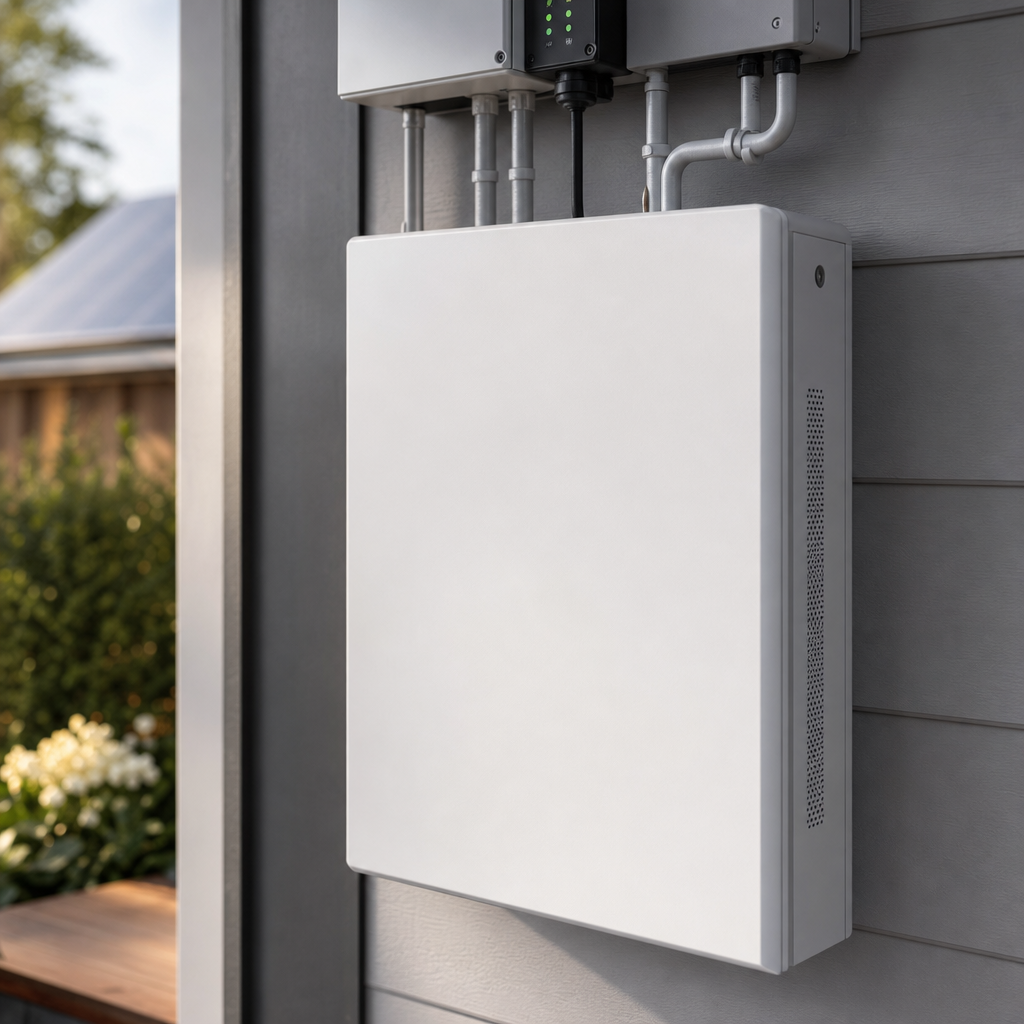
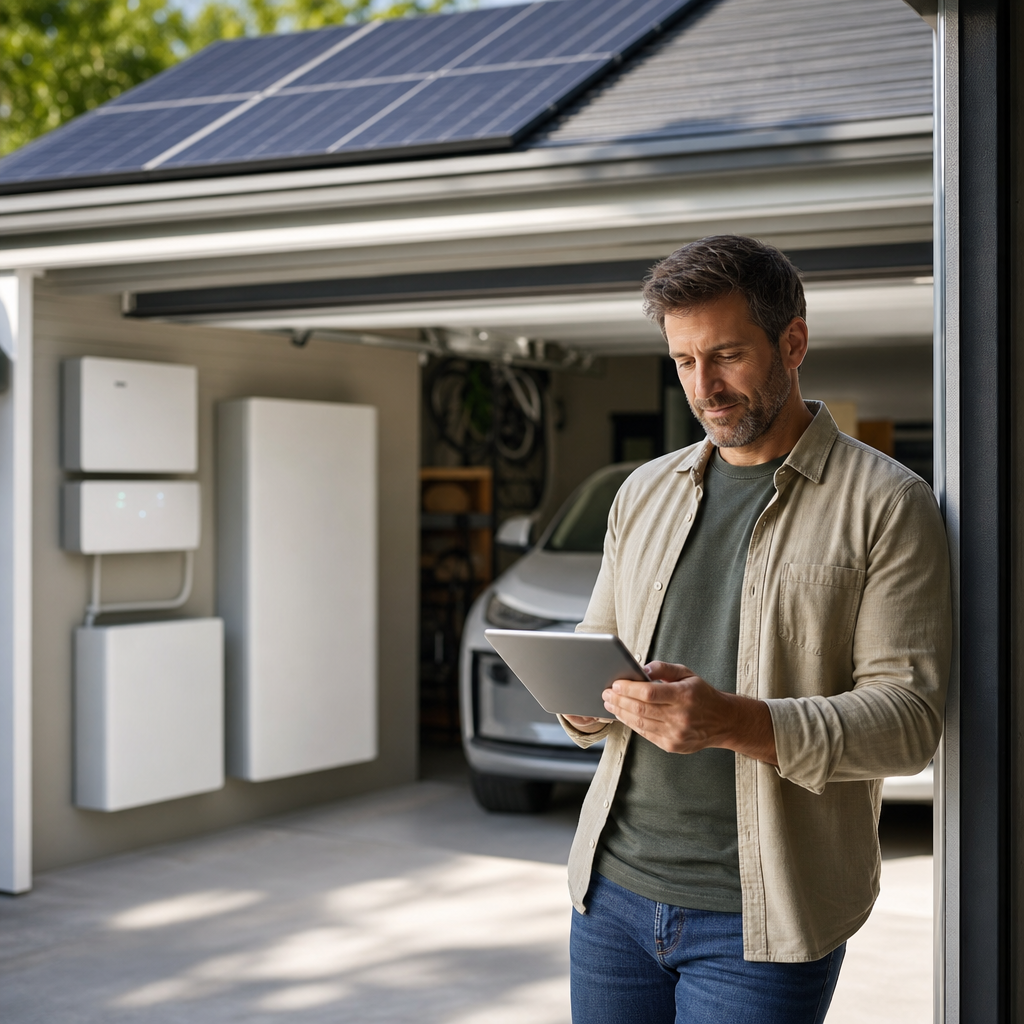
Home solar battery storage refers to rechargeable battery systems that store excess electricity generated by your solar panels during the day so you can use it later — at night, during peak-rate hours, or during a power outage. Instead of sending surplus solar energy back to the grid for a modest credit, a battery lets you use that energy yourself, when you need it most.
A typical residential battery system includes:
Battery storage systems can be installed alongside a new solar array or retrofitted onto an existing system, making them accessible to homeowners who went solar years ago but skipped storage the first time around.
California's energy landscape has changed dramatically in recent years, and battery storage has become central to getting the most value from a solar investment.
2. Time-of-use rates penalize evening electricity use. Most California utilities, including PG&E, SCE, and SDG&E, now charge the highest rates during early evening hours — exactly when solar production drops off and household demand rises. A battery charged during the day can offset these expensive peak hours automatically.
3. Wildfire-related Public Safety Power Shutoffs (PSPS) are common. According to the California Public Utilities Commission, utilities have increasingly relied on preemptive shutoffs during high fire-risk conditions. Homes with battery backup keep essential circuits — refrigerators, medical equipment, Wi-Fi, and lighting — running through these events.
4. Grid reliability concerns are growing statewide. The U.S. Energy Information Administration has reported rising instances of grid strain during extreme heat events, when demand for air conditioning spikes across the state simultaneously.
For these reasons, more California homeowners are viewing battery storage not as optional, but as a core requirement for a solar system that actually pays off.
Understanding the day-to-day mechanics of a battery system helps clarify why it's such a valuable investment.
This cycle repeats daily, and smart home energy management systems can optimize charging and discharging based on weather forecasts, utility rate schedules, and household usage patterns.
Choosing the right battery depends on your home's energy usage, backup needs, and budget. Below is a comparison of some of the most widely installed residential battery systems in California as of 2026.
Specifications vary by installer and configuration; always confirm current specs with your solar provider.
Most homeowners choose to install one to three battery units depending on household size, essential appliance backup needs, and whether they want whole-home or partial-home backup coverage.
Installed battery cost and backup duration depend on capacity, power rating, backed-up loads, electrical upgrades, equipment compatibility, site conditions, permitting, and payment structure. A project-specific load analysis and itemized proposal are more reliable than universal price or runtime ranges. The former federal residential clean-energy credit does not apply to expenditures made after December 31, 2025.
Battery storage is a significant investment, but understanding the numbers helps homeowners plan accordingly. Costs vary based on battery capacity, installation complexity, and whether the battery is installed with a new solar array or added to an existing system.
While upfront costs can feel substantial, the U.S. Department of Energy notes that pairing storage with solar can meaningfully improve long-term return on investment, particularly in states with time-of-use rate structures like California.
Homeowners who add battery storage to their solar panel systems typically experience benefits across four major categories:
Financial Benefits
Energy Independence
Environmental Impact
Peace of Mind
Selecting the ideal battery storage system requires evaluating several household-specific factors:
Working with an experienced provider ensures your system is sized correctly the first time, avoiding the common mistake of undersized batteries that can't cover a full evening of use or oversized systems that add unnecessary cost.
Battery safety has become an increasingly important topic as lithium-based storage systems have grown in popularity. Poorly installed or low-quality battery systems can pose fire risks, which is why installation standards matter as much as the equipment itself.
Reputable installers follow strict protocols, including:
Everysun applies Swedish safety and installation standards — known globally for rigorous engineering and quality control — to every residential system it installs. Combined with US-made, high-efficiency solar panels, this approach ensures homeowners receive a system built for long-term safety and performance, not just short-term savings. Learn more about their approach to safe, reliable solar and storage installation at www.everysun.com.
Basic maintenance considerations include:
Most manufacturers back their batteries with 10-year warranties covering capacity retention (typically guaranteeing at least 70% of original capacity through the warranty period). When paired with a strong installation warranty — such as Everysun's 20-year installation guarantee and 25-year product warranties — homeowners can feel confident their investment is protected for decades, not just years.
Beyond daily electricity savings, battery storage plays an important role in long-term financial planning for homeowners. Real estate research consistently shows that homes equipped with solar and battery storage tend to sell faster and at a premium compared to homes without them, since buyers increasingly view energy resilience as a valuable feature rather than a novelty.
Additionally, as California utilities continue to adjust rate structures and demand charges, homeowners with storage are better insulated from future rate volatility. Instead of being fully exposed to whatever pricing changes utilities implement, battery owners maintain the flexibility to manage their own energy consumption patterns.
Does battery storage work with any solar system? Most modern battery systems are compatible with both new and existing solar installations, though older systems may require additional equipment such as a compatible inverter or backup gateway.
Can I add a battery to my solar system later? Absolutely. Battery storage can be retrofitted onto most existing solar arrays, making it a practical upgrade for homeowners who installed solar before storage became standard practice.
Home solar battery storage has fundamentally changed what it means to "go solar" in California. It's no longer just about generating clean electricity — it's about strategically storing and using that electricity to maximize savings, ensure backup power during outages, and build long-term energy independence. With NEM 3.0 reducing the value of grid exports and utility rates continuing to rise, battery storage has become one of the most effective ways to protect your investment and your household's energy security.
Choosing an experienced, safety-focused installer makes all the difference in system performance and longevity. Everysun combines US-made high-efficiency solar panels with Swedish safety and installation standards, flexible payment options, a 20-year installation guarantee, and 25-year product warranties — giving California homeowners a dependable path to energy savings and independence. To explore whether solar and battery storage are right for your home, visit www.everysun.com and take the next step toward a more resilient, affordable energy future.
© 2025 Everysun Inc. All Rights Reserved.


Get Your Free Solar Quote
Request your free quote and see how solar can work for your home and budget