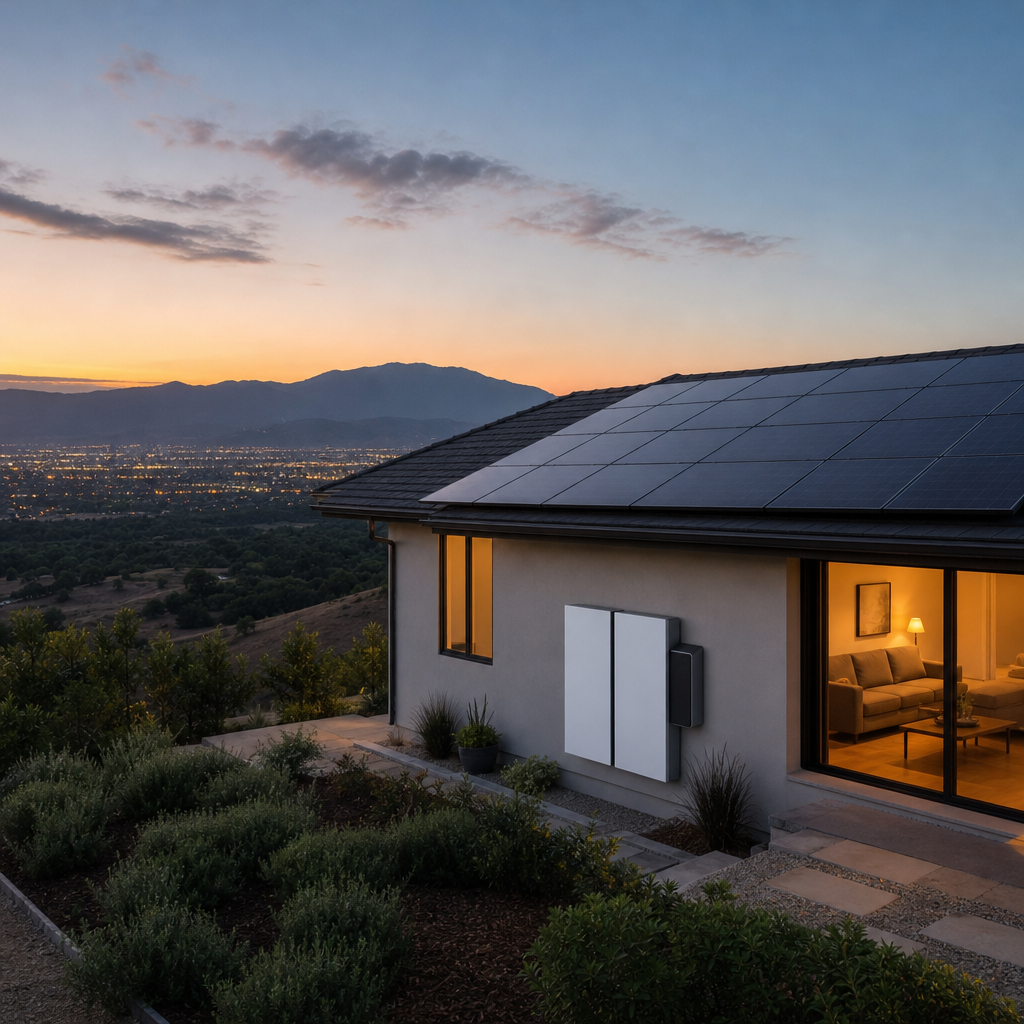
DIY Solar Could Save $8,000–$15,000—But Can I Install Solar Panels Myself in California?
October 26, 2026
|
California
Solar panel prices have dropped dramatically over the past decade, and DIY solar kits are now sold online with promises of installation in a single weekend. If you're a California homeowner staring at rising utility bills, it's natural to ask: can I install solar panels myself and skip the labor costs entirely? The honest answer is yes, technically, in many cases—but the financial, legal, and safety realities are far more complicated than the marketing suggests. This article breaks down what DIY solar actually involves, what it costs, where it can go wrong, and when hiring a professional installer like www.everysun.com is the smarter long-term investment.
Installing solar panels yourself isn't just bolting hardware to your roof. A complete residential solar project includes several interconnected steps, each requiring different skills and, in most cases, different licenses.
A DIY solar installation typically requires you to:
Skipping or mishandling any one of these steps can delay your project by months or void your ability to connect to the grid at all. According to the U.S. Department of Energy, permitting and interconnection alone can be the most time-consuming part of any residential solar project, DIY or professional.
California does allow homeowners to act as their own general contractor on their primary residence under what's known as an "owner-builder" permit. This means you can legally pull permits and perform much of the installation work yourself. However, there are important caveats.
The California Public Utilities Commission maintains current rules on interconnection, net metering, and homeowner responsibilities, and it's worth reviewing before you commit to any installation approach.
The appeal of DIY is obvious: cutting out labor can save a significant percentage of total project cost. But the full cost comparison needs to include permitting delays, equipment markups, potential rework, and lost incentives.
| Cost Factor | DIY Installation | Professional Installation |
|---|---|---|
| Equipment (panels, inverter, racking) | $10,000–$16,000 | $10,000–$16,000 |
| Labor | $0 (your time) | $3,000–$6,000 |
| Permitting fees | $500–$1,500 | $500–$1,500 (often handled by installer) |
| Design & engineering | DIY or paid separately ($500–$1,000) | Included |
| Inspection failures/rework | Common, adds cost and delay | Rare, installer corrects at no charge |
| Warranty coverage | Equipment only, no labor warranty | 20–25 year labor and product warranties |
| Average total (6kW system) | $11,000–$18,000 | $15,000–$22,000 |
Figures are illustrative estimates based on typical California residential system sizes and current market pricing as of 2026; actual costs vary by region, roof complexity, and equipment selection.
The gap looks like free money in favor of DIY, but it doesn't account for the value of warranties, correct system sizing, or the time cost of managing permits and inspections yourself—often across multiple departments that don't communicate with each other.
Rooftop solar isn't just carpentry. It combines structural, electrical, and fire-safety disciplines, and mistakes in any of these areas carry real consequences.
Roof damage and leaks. Improperly flashed mounting points are one of the most common causes of long-term roof damage after a solar install. A single missed seal can lead to water intrusion that isn't discovered until it's caused rot or mold.
Electrical and fire hazards. Solar systems carry both AC and DC current, and DC arc faults are a known fire risk when wiring isn't properly terminated or when rapid shutdown devices aren't installed to code. The National Fire Protection Association has specific standards (NFPA 70, the National Electrical Code) governing solar installations for exactly this reason.
Incorrect system sizing. Without professional load calculations, DIY installers often oversize or undersize systems, leading to underwhelming bill savings or wasted investment in excess capacity.
Warranty voids. Many premium panel and inverter manufacturers require certified installation to maintain full product warranties. A self-installed system may only qualify for a reduced or materials-only warranty, leaving you exposed if equipment fails.
Insurance complications. If a fire or structural issue is traced back to unpermitted or self-performed electrical work, homeowners insurance claims can be denied, a risk confirmed by multiple insurance industry guidance documents, including consumer guidance from the Insurance Information Institute.
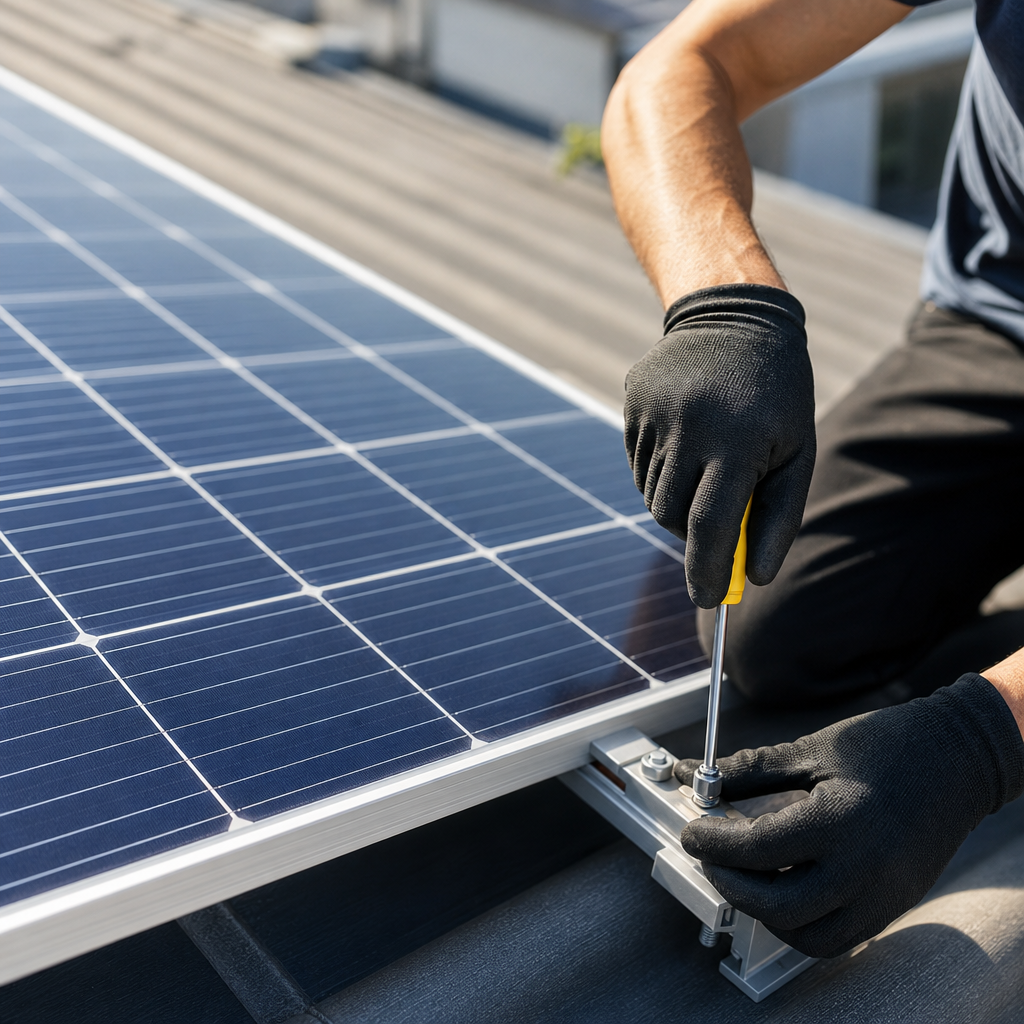
Several companies now sell "plug and play" solar kits marketed directly to homeowners. These kits typically include panels, a string or microinverter system, mounting rails, and basic wiring diagrams. What they almost never include is the local knowledge needed to navigate your specific jurisdiction's permitting process, utility interconnection agreement, or structural engineering sign-off for your particular roof type.
Common gaps in DIY kits include:
For homeowners who are confident, electrically experienced, and willing to invest significant personal time, these kits can work. For most people, the complexity quickly outweighs the savings, particularly once battery storage enters the picture, since battery systems add additional code requirements around fire rating, ventilation, and placement relative to living spaces, as outlined by the National Renewable Energy Laboratory in its residential solar-plus-storage research.
Even skilled DIYers frequently underestimate how long permitting and inspection can take in California. Most jurisdictions require separate sign-offs for structural and electrical work, and some cities have additional fire department review for rooftop access pathways and rapid shutdown labeling.
A typical approval sequence looks like this:
For professional installers who submit dozens of applications a month, this process is routine. For a first-time DIY applicant, missing paperwork or incorrect single-line diagrams are common causes of rejected applications, each of which resets the review clock. Delays of two to four months beyond initial estimates are not unusual for self-managed projects.
DIY solar isn't automatically a bad idea. For certain homeowners and certain system types, it can be a reasonable path.
DIY may make sense if you:
Professional installation is the better choice if you:
| Homeowner Situation | Recommended Approach |
|---|---|
| Simple roof, strong electrical skills, time-flexible | DIY may be viable |
| Battery storage desired | Professional installation strongly recommended |
| Planning to sell home within 5–10 years | Professional installation for clean documentation |
| Limited time for permitting/inspections | Professional installation |
| Want maximum long-term warranty protection | Professional installation |
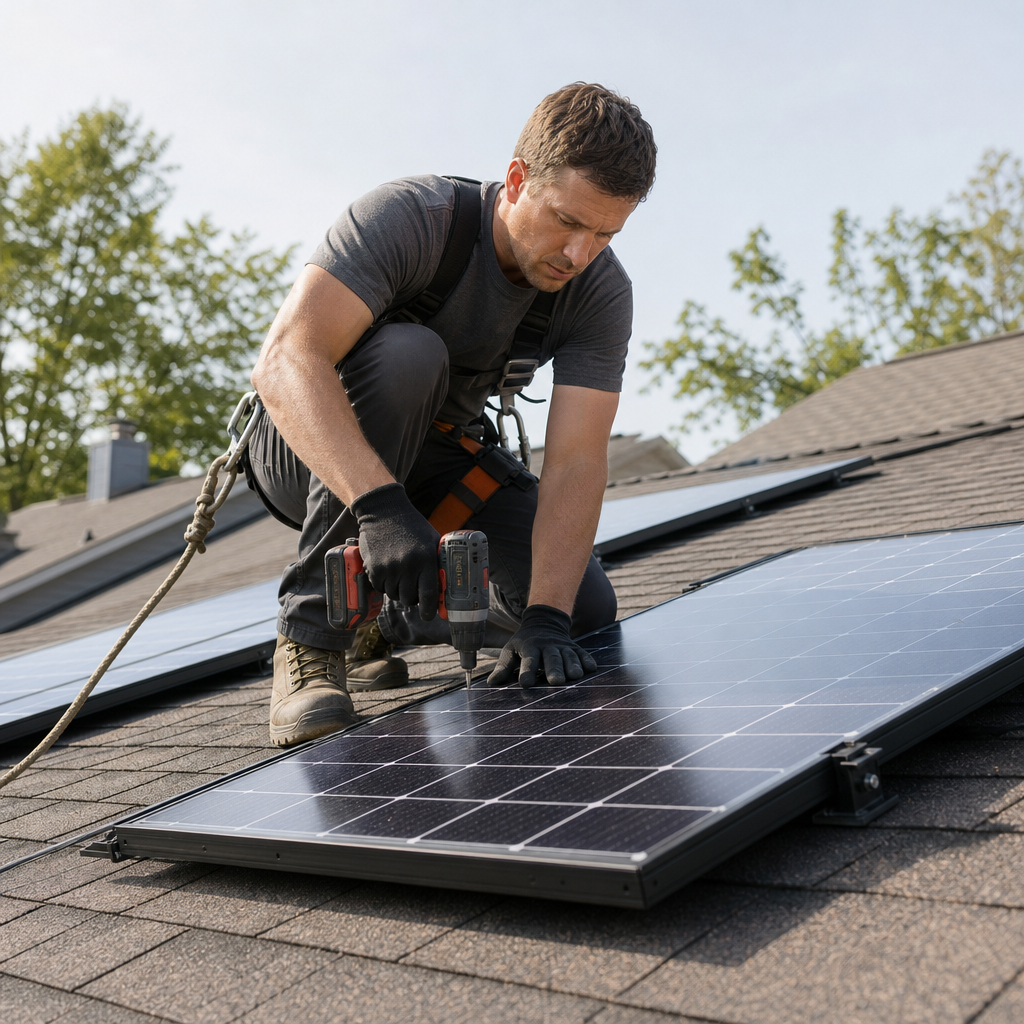
It's tempting to view professional installation purely as an added expense, but the comparison changes when you factor in the full lifecycle of a solar system, typically 25 years or more. A licensed installer brings engineering-grade system design, code-compliant wiring, and manufacturer-backed warranties that protect you from costly repairs down the line.
www.everysun.com approaches this by combining US-made high-efficiency panels with Swedish safety and installation standards, an approach built around minimizing the exact failure points that trip up DIY installations: improper roof penetration, undersized wiring, and inconsistent inspection outcomes. Every Everysun installation includes a 20-year installation guarantee and 25-year product warranties, protections that are simply unavailable to someone installing panels without certification.
Professional installers also typically manage:
This full-service approach is especially valuable in California, where interconnection rules and incentive structures have changed significantly in recent years. Staying current with state-level solar policy, as tracked by the California Energy Commission, is now effectively a full-time job that most homeowners don't have time to take on themselves.
Beyond installation quality, working with a licensed solar company often unlocks financing and incentive options that DIY installers can't access. Many solar loan products, including some $0-down financing plans, require that the system be installed by a licensed, insured contractor. Similarly, certain utility rebate programs and performance-based incentives require proof of professional installation and inspection sign-off before funds are released.
Flexible payment structures—monthly financing, lease options, or power purchase agreements—are also generally unavailable to homeowners installing their own systems, since lenders want assurance that the system was built to code by a qualified party. For homeowners trying to go solar with little or no upfront cost, this alone can tip the decision firmly toward professional installation.
Choosing between DIY and professional solar installation ultimately comes down to your tolerance for risk, your available time, and how much you value warranty protection and long-term reliability. A small, simple, off-grid system might be a reasonable weekend project for an experienced DIYer. But for most California homeowners seeking to reduce their electric bills, qualify for financing, add battery storage, and protect their home's resale value, professional installation delivers far more value than the upfront labor savings suggest.
If you're weighing your options, a no-pressure consultation can clarify exactly what a correctly sized, fully permitted system would cost for your specific home, and what protections you'd gain compared to a DIY approach.
Solar is a 25-year investment in your home and your energy independence, and the difference between a system installed to Swedish safety standards with a 20-year installation guarantee and a self-installed system with no labor warranty can matter enormously the first time something needs repair. www.everysun.com was built around that difference: combining high-efficiency, US-made panels with rigorous installation standards, flexible payment options, and warranty protection that gives California homeowners confidence their system will perform reliably for decades, not just through the first inspection.
© 2025 Everysun Inc. All Rights Reserved.


Get Your Free Solar Quote
Request your free quote and see how solar can work for your home and budget