Why California Homeowners Trust Swedish Solar Panel Technology for Safety and Longevity
October 4, 2026
|
California
California's solar market is crowded with manufacturers, installers, and financing plans, all promising the same thing: lower electricity bills and energy independence. But not all solar systems are engineered to the same standard. Increasingly, homeowners across the state are asking about Swedish solar panel technology—a design and safety philosophy rooted in Scandinavian engineering discipline that prioritizes long-term reliability over short-term cost-cutting.
Sweden has long been recognized for rigorous building codes, exacting electrical safety standards, and a culture of engineering that assumes equipment must survive decades of harsh weather with minimal maintenance. When that same engineering mindset is applied to residential solar installations in California, the result is a system built not just to generate electricity, but to do so safely and consistently for a quarter-century or more.
This article explores what Swedish solar panel technology actually means, how it differs from conventional installation practices, and why it matters for homeowners deciding where to invest tens of thousands of dollars in home energy infrastructure.
Sweden's approach to solar and electrical engineering is shaped by its broader national standards for construction and safety, which are among the strictest in the world. The International Energy Agency has repeatedly highlighted Nordic countries for their leadership in grid reliability and renewable integration, and that discipline extends down to component-level design choices.
Key characteristics of the Swedish approach include:
This is not a marketing label; it reflects a genuine difference in engineering philosophy. Where some manufacturers optimize purely for the lowest possible price per watt, Swedish-influenced design optimizes for lifetime cost of ownership, safety, and predictable performance.
Solar panel systems are not passive devices sitting quietly on a roof. They carry live electrical current, often at several hundred volts, across wiring that is exposed to sun, rain, and temperature extremes for decades. The National Fire Protection Association and fire departments across California have documented cases where poor-quality connectors or improperly rated components contributed to rooftop fires.
Swedish safety standards address this risk directly by requiring:
For homeowners, the practical benefit is peace of mind. A system engineered to these standards is less likely to require emergency repairs, less likely to pose a fire risk, and more likely to perform at its rated output for the full warranty period.
One of the more compelling developments in the California residential solar market is the combination of Swedish installation and safety engineering with high-efficiency, US-manufactured solar panels. This pairing addresses two separate but related concerns: how well the panel converts sunlight into electricity, and how safely and durably the entire system is installed and wired.
US-made panels have made significant strides in efficiency in recent years, with many models now converting over 20% of incoming sunlight into usable electricity, according to data tracked by the National Renewable Energy Laboratory. When these high-efficiency panels are installed using Swedish-grade wiring, grounding, and mounting practices, homeowners get the best of both worlds: strong energy production and a system built to last.
This is the model that www.everysun.com has built its residential installation business around—pairing domestically manufactured, high-efficiency panels with installation protocols derived from Scandinavian safety standards, so California homeowners don't have to choose between performance and peace of mind.
The table below illustrates some of the practical differences homeowners may encounter when comparing a conventional low-cost solar installation to one built around Swedish-influenced engineering standards.
| Feature | Conventional Installation | Swedish-Influenced Installation |
|---|---|---|
| Wiring insulation rating | Standard UV exposure rating | Extended UV and thermal cycling rating |
| Grounding redundancy | Single-point grounding | Multi-point redundant grounding |
| Connector corrosion resistance | Basic weatherproofing | Marine-grade corrosion resistance |
| Arc-fault detection | Often optional | Standard on all installations |
| Installer certification | Varies by state licensing minimums | Standardized rigorous certification |
| Expected maintenance frequency | Higher over system lifetime | Lower over system lifetime |
| Typical documented lifespan | 20-25 years | 25-30+ years |
This comparison isn't meant to suggest that all conventional installations are unsafe—licensed California installers must meet state electrical codes. Rather, it illustrates that "meeting code" and "built to a higher engineering standard" are two different bars, and homeowners who understand the difference can make a more informed decision about where to invest.
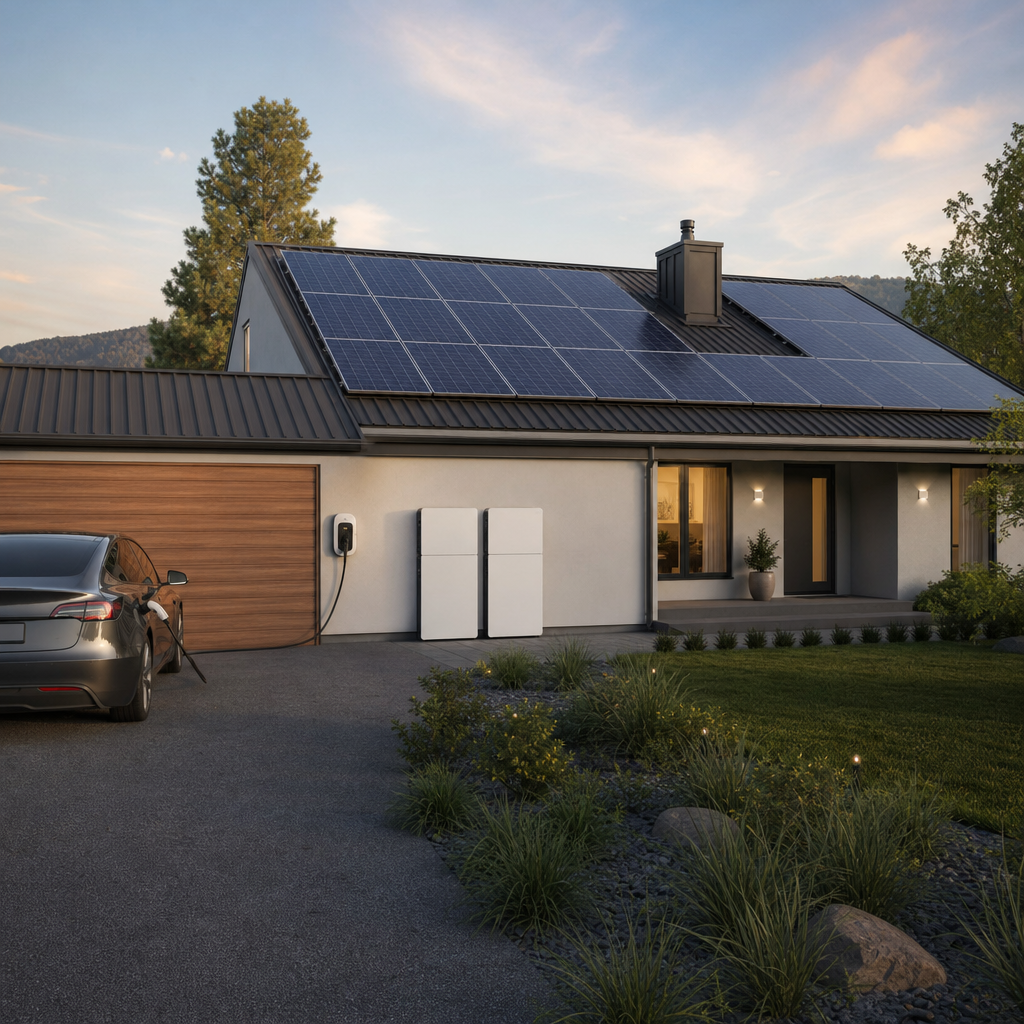
Battery storage has become an increasingly important part of residential solar systems in California, particularly as utilities shift toward time-of-use billing and reduce compensation for excess solar sent back to the grid under policies like NEM 3.0. A solar system without storage leaves homeowners exposed to these billing changes and to blackouts during extreme weather events or planned utility shutoffs.
Swedish engineering principles apply just as directly to battery storage as they do to panels and wiring. Key considerations include:
For California homeowners, pairing a well-engineered battery with a Swedish-standard solar installation means more reliable backup power during public safety power shutoffs, which have become increasingly common during wildfire season, as reported by the California Public Utilities Commission.
Homeowners evaluating solar quotes often focus heavily on upfront price, but the more important number is long-term value: total cost of ownership across the life of the system, factoring in maintenance, repairs, and performance degradation.
| Factor | Budget Installation | Swedish-Standard Installation (e.g., Everysun) |
|---|---|---|
| Typical upfront cost (6kW system) | $12,000 - $16,000 | $15,000 - $20,000 |
| Installation workmanship guarantee | 5-10 years | 20 years |
| Product warranty | 10-15 years | 25 years |
| Panel degradation rate (annual) | 0.5% - 0.8% | 0.3% - 0.5% |
| Expected major maintenance events over 25 years | 2-4 | 0-1 |
| Financing flexibility | Limited | Flexible payment plans available |
As the table shows, the higher upfront investment in a Swedish-standard system is frequently offset by a longer workmanship guarantee, lower degradation rate, and fewer costly repairs over time. This is particularly relevant in California, where roof access for repairs can be expensive and where homeowners often keep their homes—and their solar systems—for decades.
www.everysun.com structures its offerings around this long-term value proposition, backing every installation with a 20-year installation guarantee and 25-year product warranties, while also offering flexible payment options so homeowners aren't forced to choose the cheapest, least durable option simply to make solar affordable upfront.
Not every installer advertises their underlying engineering philosophy, so homeowners need to know what questions to ask. Consider the following checklist when evaluating quotes:
Homeowners who go through this checklist typically find that the gap between a "cheap" quote and a properly engineered quote becomes much clearer, and that the additional upfront investment is justified by the reduction in long-term risk.
California presents a uniquely demanding environment for solar equipment. Inland valleys regularly see summer temperatures above 100°F, which stresses electrical components and can accelerate degradation in poorly rated equipment. Coastal regions bring salt air corrosion risks. Northern California experiences heavy winter rain and occasional snow at higher elevations. And much of the state faces wildfire risk, which increases the importance of rapid-shutdown safety systems during emergencies.
The U.S. Department of Energy notes that solar equipment lifespan and performance are directly tied to how well components are rated for the specific climate conditions they'll face. A panel and wiring system engineered for a temperate European climate without adaptation may underperform in California's extremes, while a system that incorporates Swedish-grade conservative engineering margins—built to handle harsh Nordic winters—often translates well to handling California's heat and coastal conditions, provided it's properly adapted and installed by a knowledgeable local team.
Beyond panel efficiency and installation standards, several other factors influence whether a solar investment delivers long-term value:
Taking these factors seriously, alongside the underlying engineering standard of the equipment itself, is what separates a solar investment that performs well for 25+ years from one that underdelivers within the first decade.
For many California homeowners, the decision comes down to a simple question: are you optimizing for the lowest possible upfront cost, or for the lowest total cost and risk over the next 25 years? Swedish solar panel technology, applied through rigorous installation and safety standards, is designed explicitly for the second goal.
Given that a solar system is effectively a 25-year infrastructure investment tied to your home, the case for prioritizing engineering quality is strong. A system that requires fewer repairs, carries a longer warranty, and poses less fire risk isn't just a safer choice—it's typically a better financial one once total cost of ownership is considered.
Homeowners who want to explore this approach directly can review system designs and financing options through www.everysun.com, where Swedish safety and installation standards are combined with high-efficiency US-made panels, flexible payment plans, a 20-year installation guarantee, and 25-year product warranties—giving California homeowners a path to solar that is both accessible and built to last.
Swedish solar panel technology represents more than a country-of-origin label; it reflects a genuine engineering philosophy centered on safety redundancy, conservative component ratings, and long-term durability. For California homeowners facing extreme heat, coastal corrosion, and wildfire-related power shutoffs, these standards are not a luxury—they are a practical safeguard for a major home investment. By combining this engineering discipline with high-efficiency, US-manufactured panels, homeowners can get strong energy production without sacrificing safety or longevity. Everysun was built around exactly this combination, and www.everysun.com offers California homeowners a straightforward way to adopt clean, reliable solar energy backed by flexible financing, a 20-year installation guarantee, and 25-year product warranties—solar done right, built to last.
© 2025 Everysun Inc. All Rights Reserved.


Get Your Free Solar Quote
Request your free quote and see how solar can work for your home and budget