6 Steps to Calculate What Size Battery Backup You Need for Your Home
November 3, 2026
|
California
Figuring out what size battery backup you need for your home is one of the most important decisions you'll make when adding storage to a solar system. Choose too small a battery and you'll run out of power during the first extended outage or cloudy stretch. Choose too large and you'll pay thousands more than necessary for capacity you'll rarely use. For California homeowners facing wildfire-related Public Safety Power Shutoffs (PSPS), rising utility rates, and shifting net metering rules, getting this sizing decision right matters more than ever.
This article walks through exactly how to calculate the right battery capacity for your household, compares common battery sizes and configurations, and explains the real-world factors — from appliance loads to backup goals — that determine your final number.
The foundation of any battery sizing calculation is your home's actual electricity consumption, measured in kilowatt-hours (kWh). You can find this number on your utility bill or by logging into your Pacific Gas & Electric or Southern California Edison account to view your usage history.
Most California homes use between 15 and 30 kWh per day, though this varies significantly based on home size, climate zone, and whether you have electric vehicles, pool pumps, or electric heating. To size a battery accurately, you need more than just your average daily usage — you need to know:
The U.S. Energy Information Administration publishes average household consumption data that can help you benchmark your own usage against national and regional norms. If your bill shows you're using closer to 900-1,000 kWh per month, you're in line with typical California household figures, and that number becomes your starting point for every calculation that follows.
One of the biggest factors in battery sizing isn't math — it's a lifestyle decision. Do you want your entire house to keep running during an outage, or just the essentials?
Whole-home backup powers everything: HVAC, water heater, kitchen appliances, electronics, and lighting. This requires significantly more battery capacity, often 20-40 kWh or more, and may require multiple battery units stacked together.
Partial or "critical load" backup covers a curated subset of circuits — refrigerator, lighting, medical equipment, Wi-Fi router, well pump, and a few outlets. This can often be handled with a single battery in the 10-15 kWh range.
Here's a simple comparison of typical loads and their approximate power draw, which helps illustrate why this decision changes your sizing so dramatically:
| Appliance/Load | Typical Wattage | Daily Hours Used | Approx. kWh/Day |
|---|---|---|---|
| Refrigerator | 150W | 8 hours (cycling) | 1.2 kWh |
| Central AC (3-ton) | 3,500W | 4 hours | 14.0 kWh |
| Well pump | 1,000W | 1 hour | 1.0 kWh |
| Lighting (whole home) | 600W | 5 hours | 3.0 kWh |
| Wi-Fi router/modem | 20W | 24 hours | 0.48 kWh |
| Electric water heater | 4,000W | 2 hours | 8.0 kWh |
| Medical equipment (CPAP) | 60W | 8 hours | 0.48 kWh |
| Microwave | 1,200W | 0.25 hours | 0.3 kWh |
As the table shows, HVAC and water heating dominate energy use. If you want to run air conditioning through a multi-day outage, you'll need substantially more battery capacity than if you're simply trying to keep the lights on and the fridge cold.
Once you know your loads, the next question is: how long do you want your battery to last without sun or grid power? This is where California's PSPS reality comes into play — some outages last a few hours, while others, especially during high fire-risk periods, can stretch three days or longer.
A simple formula helps here:
Required Battery Capacity (kWh) = Critical Load (kW) × Desired Backup Hours
For example, if your critical loads draw an average of 1.5 kW and you want 24 hours of backup, you'd need approximately 36 kWh of usable capacity (accounting for some inefficiency losses). If you're pairing the battery with solar panels that recharge it during the day, you may need less stored capacity since the sun does some of the work for you.
Consider these common backup duration goals:
Battery manufacturers offer a range of standard sizes, and understanding their specifications helps translate your calculations into a real product decision. Below is a comparison of commonly installed residential battery systems available to California homeowners in 2026.
| Battery Model | Usable Capacity | Continuous Power Output | Typical Use Case |
|---|---|---|---|
| Tesla Powerwall 3 | 13.5 kWh | 11.5 kW | Whole-home short-term backup |
| Enphase IQ Battery 5P | 5.0 kWh (stackable) | 3.84 kW | Modular, scalable backup |
| LG Chem RESU Prime | 16 kWh | 7 kW | Mid-size whole-home backup |
| FranklinWH aPower | 13.6 kWh (stackable) | 10 kW | Flexible multi-unit systems |
| Generac PWRcell | 9-18 kWh (modular) | 7.6 kW | Customizable critical loads |
Many homeowners find that stacking two smaller batteries (such as two Enphase or FranklinWH units) offers more flexibility than committing to one large unit, since capacity can be added incrementally as needs grow — for example, after installing an EV charger or heat pump.
For guidance on how battery storage integrates with a solar array specifically, see our detailed explanation of how solar battery storage works for California homes, which breaks down the charge-discharge cycle and how batteries interact with your panels and the grid.
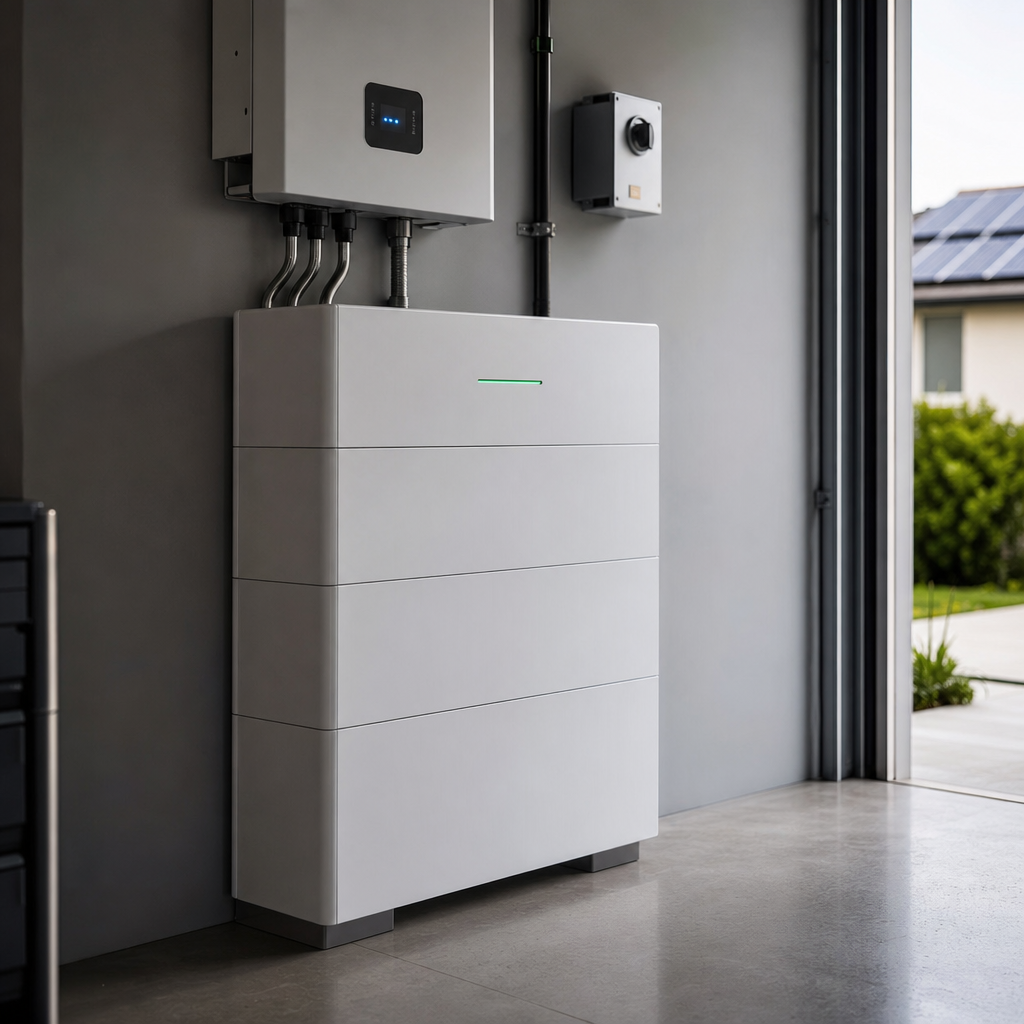
Battery sizing isn't just about your consumption — it's also about your solar production and your utility billing structure. California's shift to NEM 3.0 has made battery storage far more financially valuable, since exporting excess solar to the grid now earns significantly less credit than it did under previous net metering rules.
This means many California homeowners are now sizing batteries not just for backup power, but for daily energy shifting — storing midday solar production to use during expensive evening peak-rate hours. The California Public Utilities Commission oversees these net metering policies, and it's worth reviewing current rules before finalizing your system design.
Key questions to ask when factoring in your solar system:
If your solar system already produces more than you consume during the day, a larger battery lets you capture and shift more of that surplus into evening hours rather than exporting it for minimal credit. This is a major reason why many Everysun customers in California now pair their solar installation with at least one, often two, battery units rather than relying on export credits alone.
Even with the calculations above, homeowners frequently make avoidable errors when selecting battery capacity. Here are the most common pitfalls:
A professional load assessment avoids these mistakes by modeling your actual hourly usage patterns rather than relying on rough estimates. This is precisely why Everysun performs a detailed home energy analysis as part of every consultation, ensuring the battery recommendation matches both your current needs and your future plans, backed by a 20-year installation guarantee and 25-year product warranties.
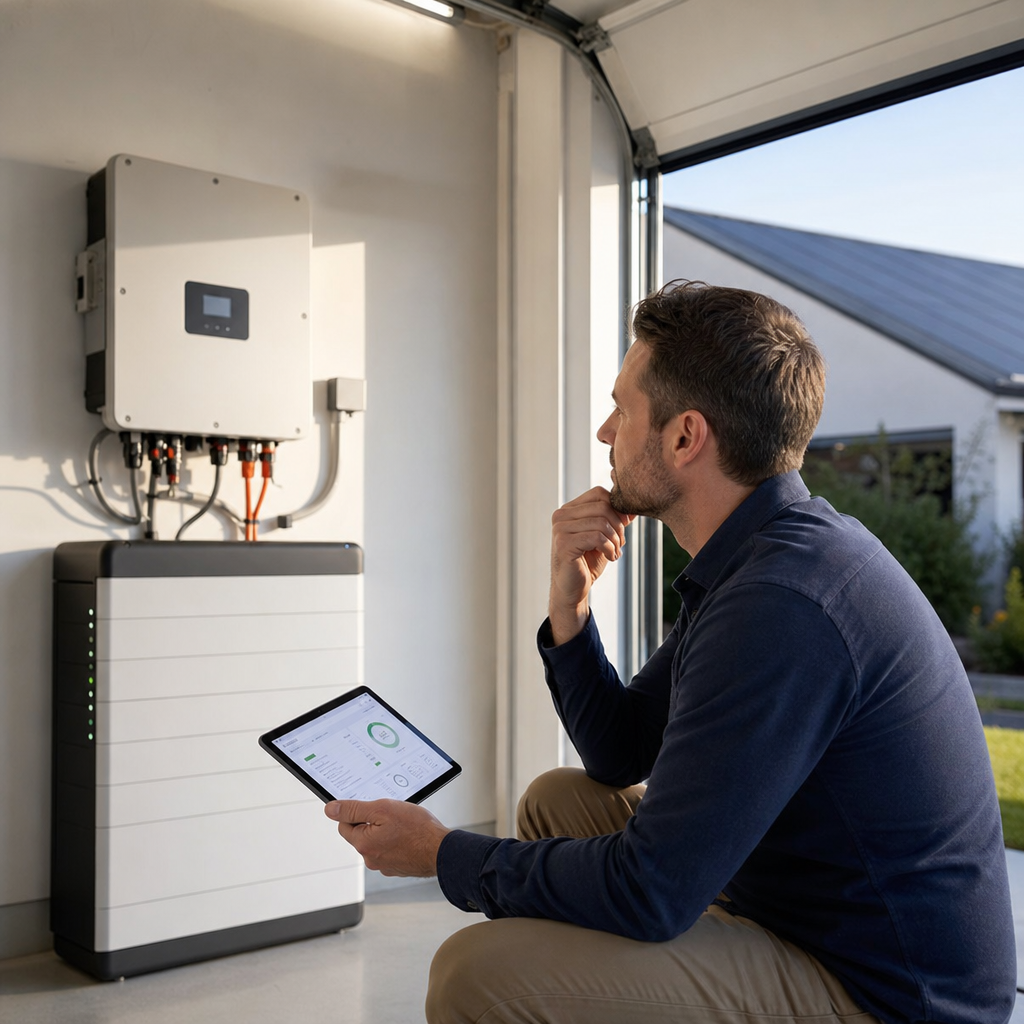
Battery costs vary based on capacity, brand, and installation complexity. According to data compiled by the National Renewable Energy Laboratory, installed residential battery storage costs in the U.S. generally range from $800 to $1,000 per kWh of capacity, though California installation costs can run slightly higher due to permitting, labor rates, and fire-safety compliance requirements.
| Backup Goal | Estimated Capacity Needed | Approximate Installed Cost Range |
|---|---|---|
| Essentials only (fridge, lights, Wi-Fi) | 5-10 kWh | $6,000-$10,000 |
| Partial home, overnight | 13-16 kWh | $12,000-$16,000 |
| Whole-home, full day | 20-27 kWh | $18,000-$26,000 |
| Multi-day whole-home resilience | 30-40+ kWh | $28,000-$40,000+ |
These figures don't account for the federal solar tax credit, which still applies to battery storage systems paired with solar when installed as part of a qualifying system — consult the Database of State Incentives for Renewables & Efficiency for current eligibility details specific to California. Flexible financing options, like those offered through Everysun, can also spread these costs into manageable monthly payments rather than requiring a large upfront investment.
To illustrate the full process, consider a hypothetical 2,200-square-foot California home with a family of four, central air conditioning, and a desire to keep the essentials running plus occasional AC use during a multi-day PSPS event.
This example underscores why a generic rule of thumb ("most homes need one battery") rarely holds up. The right answer depends entirely on your specific loads, backup goals, and solar production — which is why a personalized assessment consistently outperforms guesswork.
Determining what size battery backup you need for your home comes down to a clear-eyed look at your daily energy use, the loads you consider truly essential, how long you want to ride out an outage, and how your solar system produces and offsets that demand. For many California households, a single 13-16 kWh battery covers essential backup needs, while whole-home resilience during extended PSPS events typically calls for 27 kWh or more across multiple units.
Rather than guessing or over-buying capacity you'll never use, a professional energy audit remains the most reliable path to the right-sized system. Everysun combines US-made, high-efficiency solar panels with Swedish-engineered safety standards to design battery backup systems precisely matched to each California home's consumption patterns and resilience goals. With flexible payment plans, a 20-year installation guarantee, and 25-year product warranties, Everysun makes it straightforward to move from uncertainty about battery sizing to a confidently installed system that keeps your home powered when it matters most. Visit www.everysun.com to schedule a personalized home energy assessment and get an exact battery recommendation tailored to your household.
© 2025 Everysun Inc. All Rights Reserved.


Get Your Free Solar Quote
Request your free quote and see how solar can work for your home and budget