Solar Panel Installation Companies Reviews for California Homeowners
October 31, 2026
|
California
Choosing a solar installer is one of the biggest home improvement decisions a California homeowner will make, and most people start the same way: by reading solar panel installation companies reviews online. Star ratings and testimonials feel like a shortcut to confidence, but reviews alone rarely tell the whole story. Installation quality, warranty strength, financing terms, and long-term support matter just as much as what a five-star review says about a sales rep's friendliness.
This article breaks down how to actually use reviews effectively, what red flags to watch for, how California's top installers compare on key metrics, and why the fine print behind a company's reputation matters more than its star count.
Online reviews are a useful starting point, but they have real limitations. Most review platforms capture a customer's experience at the point of sale or shortly after installation—long before anyone knows how the system performs in year five, ten, or twenty. Solar is a 20-25 year investment, so a glowing review written one month after installation says very little about long-term reliability.
Consider what reviews typically do and don't capture:
According to the Solar Energy Industries Association, residential solar adoption has grown dramatically over the past decade, which means the review pool is often skewed toward newer installers with shorter track records. A company with hundreds of five-star reviews from the last 18 months may simply be new—not necessarily better than an established installer with a smaller but more seasoned review history.
It's also worth noting that review platforms can be manipulated. The Federal Trade Commission has taken action against companies for incentivized or fake reviews across multiple industries, including home services. This doesn't mean solar reviews are untrustworthy by default, but it does mean they should be cross-referenced against other data points.
Rather than skimming star ratings, homeowners should read reviews with a specific checklist in mind. Here's what separates a useful review from a vague one:
It also helps to check how a company responds to negative reviews. A thoughtful, solution-oriented response to a complaint often says more about a company's culture than a dozen generic five-star posts.
Not all negative signals are equal, but certain patterns in reviews and company behavior should raise serious concern:
In California, licensed contractors are required to carry a C-46 Solar Contractor license or an appropriate C-10 electrical license through the Contractors State License Board. Always verify a company's license status directly through the CSLB website rather than relying solely on a company's claims. This single step filters out a significant number of unreliable operators before you even get to reading reviews.
Star ratings compress a lot of nuance into a single number. To make a genuinely informed decision, homeowners should compare installers across several concrete factors side by side. The table below outlines the categories that matter most when evaluating a solar company, independent of their review scores.
| Evaluation Factor | Why It Matters | What to Verify |
|---|---|---|
| Equipment origin & efficiency | Affects long-term output and degradation rate | Panel brand, efficiency rating, manufacturing standards |
| Installation warranty length | Covers workmanship issues, not just equipment | Years covered, what voids it |
| Product/equipment warranty | Protects against panel or inverter failure | Manufacturer vs. installer-backed warranty |
| Financing flexibility | Impacts monthly costs and ownership timeline | Loan, lease, PPA, or cash purchase options |
| Licensing & insurance | Legal protection and accountability | CSLB license number, liability insurance |
| Local permitting experience | Speeds up installation and avoids delays | Track record with local utility and city permitting offices |
This kind of structured comparison reveals far more than a star rating ever could, because it focuses on the contractual and technical commitments a company is actually willing to put in writing.
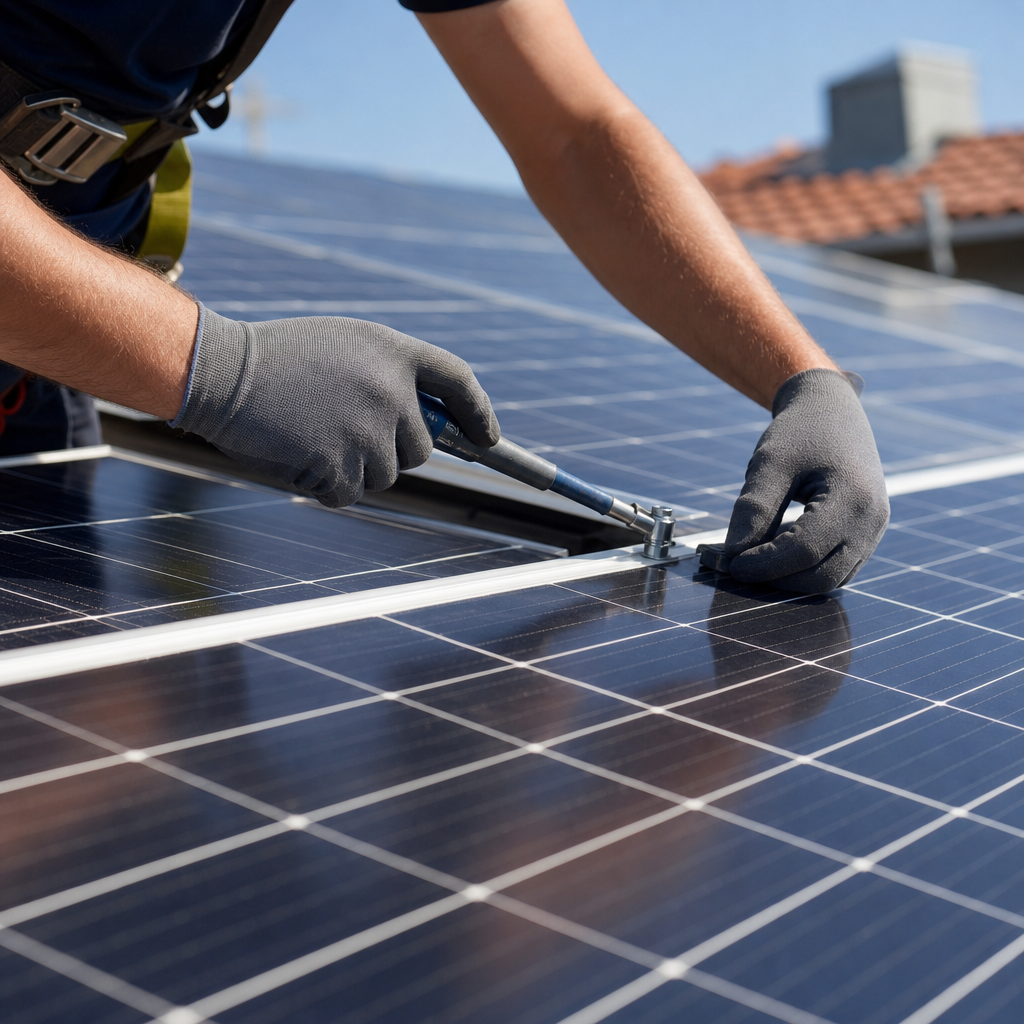
One of the clearest ways to evaluate a solar company—beyond reviews—is to look closely at what they guarantee. Many installers offer only manufacturer warranties on equipment and little to no coverage on the actual installation workmanship. That gap matters, because most solar issues that arise in the first decade are related to installation quality: roof penetrations, wiring, and mounting hardware, not the panels themselves.
Everysun approaches this differently by backing every installation with a 20-year installation guarantee alongside 25-year product warranties on its US-made, high-efficiency panels. This dual-layer protection reflects a combination of American manufacturing standards and Swedish safety and installation protocols, which emphasize rigorous quality control throughout the design and mounting process. For homeowners comparing companies, this kind of structured, long-term guarantee is a far more reliable indicator of quality than a handful of enthusiastic reviews.
When comparing warranty structures across installers, consider the table below as a general framework for what strong protection looks like versus what's common industry-wide.
| Warranty Type | Industry Standard | Stronger-Than-Average Example |
|---|---|---|
| Installation/workmanship warranty | 5-10 years | 20 years |
| Panel product warranty | 10-15 years | 25 years |
| Inverter warranty | 10-12 years | 12-25 years depending on inverter type |
| Performance guarantee | 80-85% output at 25 years | 85%+ output at 25 years |
Homeowners should request these terms in writing before signing any contract, regardless of how positive a company's reviews appear.
A significant portion of negative reviews in the solar industry trace back not to equipment failure, but to financing confusion. Leases and power purchase agreements (PPAs), for example, can result in homeowners not actually owning their system, which affects resale value and long-term savings. According to the U.S. Department of Energy, understanding financing structure is one of the most important steps before going solar, because it directly affects both monthly costs and long-term equity in the system.
Common financing options include:
Everysun offers flexible payment options designed to make solar ownership more accessible, which matters because ownership structures tend to correlate with higher long-term customer satisfaction—homeowners who own their systems typically see greater electricity bill savings and retain more home value benefits than those locked into leases or PPAs. For a deeper look at how to evaluate installers on more than price alone, resources like Consumer Affairs' solar guide offer additional independent comparisons.
Reviews can inform your shortlist, but the final decision should come from direct conversations with each installer. Homeowners should ask:
The last question is particularly important. A company confident in its equipment and installation process should have no hesitation providing a written performance guarantee.
California's solar landscape has unique variables that affect both installation companies' reputations and the actual value homeowners get from their systems. Net Energy Metering 3.0 (NEM 3.0) significantly changed the economics of solar by reducing compensation for excess energy exported to the grid, making battery storage far more valuable than it used to be. According to the California Public Utilities Commission, homeowners under NEM 3.0 generally see better returns when pairing solar with battery storage rather than relying solely on grid export credits.
This shift matters when reading reviews, too. A five-star review written under the old NEM 2.0 framework may not reflect the savings a new customer can expect today. When comparing installation companies, ask specifically how their proposed system design accounts for current NEM 3.0 rules and whether they recommend battery storage as part of the package.
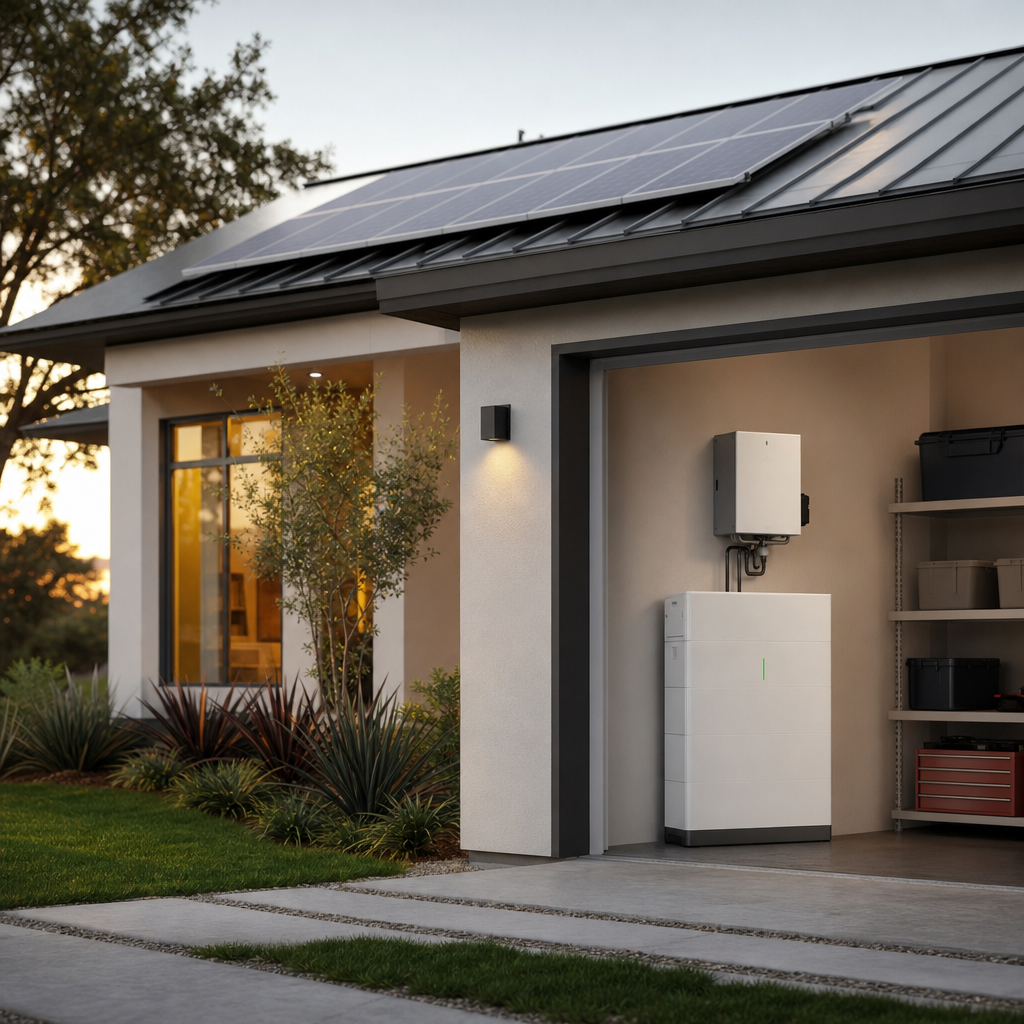
Everysun's approach of pairing high-efficiency panels with battery storage directly addresses this shift, helping homeowners maximize self-consumption of solar energy rather than depending heavily on export credits that are worth less than they once were. You can review how www.everysun.com structures these combined systems to understand how battery integration affects long-term savings under current California utility rules.
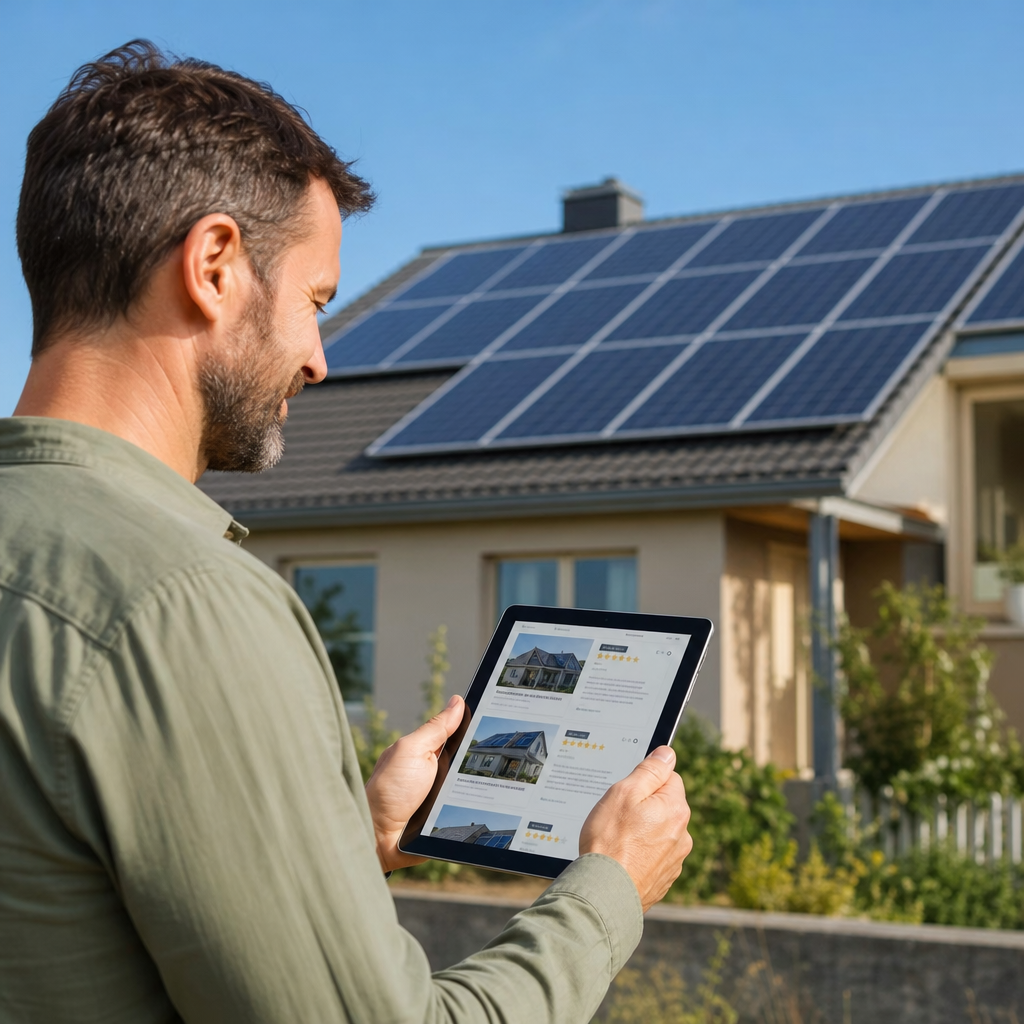
Not all review platforms carry equal reliability. Understanding the strengths and weaknesses of each can help homeowners weigh information more accurately.
| Platform | Strengths | Limitations |
|---|---|---|
| Google Reviews | Large volume, easy to verify reviewer history | Can include unverified or incentivized reviews |
| Better Business Bureau | Tracks complaint resolution, accreditation status | Lower review volume, slower updates |
| EnergySage | Verified installer network, standardized comparisons | Limited to installers enrolled on the platform |
| Yelp | Detailed narrative reviews | Filtering algorithm can hide legitimate reviews |
| CSLB Public Records | Licensing status, disciplinary actions | Doesn't reflect customer satisfaction, only compliance |
Using at least three of these sources in combination gives a far more balanced picture than relying on any single platform.
Before making a final decision, run through this quick checklist:
Taking these steps turns a passive review-reading exercise into an active, evidence-based evaluation process.
Solar panel installation companies reviews are a valuable starting point, but they shouldn't be the only factor guiding a decision that will affect your home's energy costs for the next two decades. Licensing, warranty strength, financing transparency, and how a company adapts to California's evolving utility rules all matter just as much as what strangers say online. By combining careful review analysis with direct questions about guarantees and equipment, homeowners can separate genuinely reliable installers from those simply skilled at generating positive feedback.
Everysun stands out in this landscape by combining US-made, high-efficiency panels with Swedish-engineered safety and installation standards, backed by a 20-year installation guarantee and 25-year product warranties. Paired with flexible payment options and battery storage designed for California's current NEM 3.0 environment, www.everysun.com offers homeowners a transparent, long-term path to lower electricity bills and reliable clean energy—built on guarantees you can verify, not just reviews you have to trust.
© 2025 Everysun Inc. All Rights Reserved.


Get Your Free Solar Quote
Request your free quote and see how solar can work for your home and budget