Can Monthly Payment Plans for Solar Panels Really Lower Your California Energy Bill?
November 1, 2026
|
California
Rising electricity rates have pushed thousands of California homeowners to look seriously at solar power, but the upfront cost of a system can still feel like a major hurdle. The good news is that paying cash is no longer the only path to solar ownership. Monthly payment plans for solar panels have become the most common way homeowners go solar today, allowing families to start saving on electricity bills almost immediately without draining their savings accounts.
This article breaks down how monthly solar payment plans work, what they typically cost, how they compare to leases and cash purchases, and what to look for before signing an agreement. Whether you're comparing lenders or trying to understand your options with a local installer like www.everysun.com, this guide will help you make a confident, informed decision.
A decade ago, most solar customers either paid cash or signed a lease. Today, solar loans and other monthly payment structures dominate the residential market. According to the U.S. Department of Energy's Solar Energy Technologies Office, financing innovation has been one of the biggest drivers of residential solar adoption nationwide, and California remains one of the largest markets for these products.
There are several reasons homeowners prefer monthly plans:
With California utility rates among the highest in the country, the math increasingly favors homeowners who finance rather than wait to save up for a cash purchase. The California Public Utilities Commission oversees the net metering rules that directly affect how much value your solar system generates each month, which is an important factor to understand before signing any financing agreement.
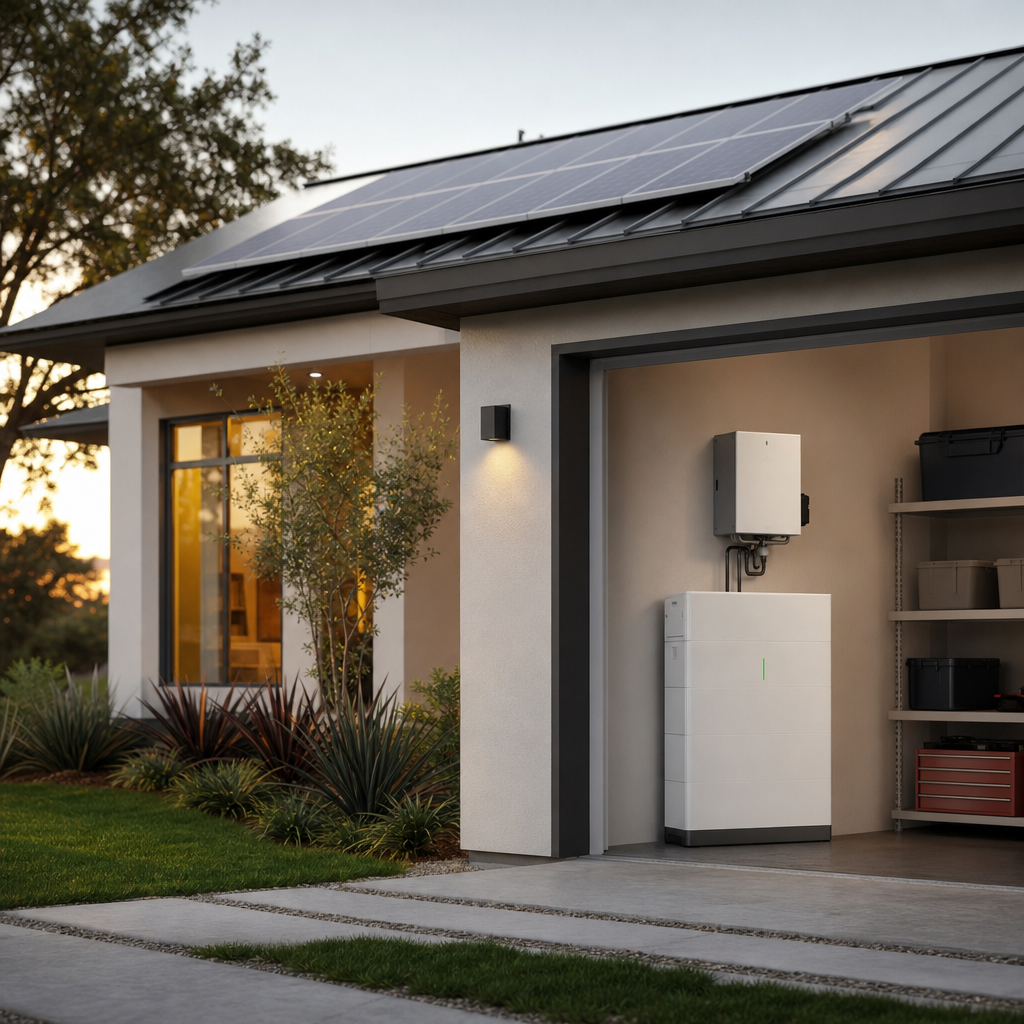
At a basic level, a monthly solar payment plan functions like any other installment loan. A lender covers the cost of your solar panel system and battery storage, and you repay that amount over a set term with interest. Here's what typically happens during the process:
Most residential solar loans run between 10 and 25 years, with longer terms producing lower monthly payments but more interest paid over time. Shorter terms cost more per month but save money overall.
| Financing Type | Ownership | Typical Term | Monthly Payment Impact | Tax Credit Eligibility |
|---|---|---|---|---|
| Solar Loan | Homeowner owns system | 10-25 years | Fixed monthly payment | Yes |
| Solar Lease | Third party owns system | 20-25 years | Fixed monthly payment | No (installer claims it) |
| Power Purchase Agreement (PPA) | Third party owns system | 20-25 years | Payment varies with usage | No (installer claims it) |
| Cash Purchase | Homeowner owns system | N/A | No monthly payment | Yes |
| Home Equity Loan/HELOC | Homeowner owns system | 5-30 years | Fixed or variable payment | Yes |
Each option has trade-offs, and the right choice depends on your financial situation, how long you plan to stay in your home, and whether you want to maximize long-term savings or minimize short-term costs.
Not every homeowner pays the same amount for a similarly sized system. Several variables influence your final monthly payment:
Understanding these variables helps you compare quotes accurately. Two companies may advertise the same monthly payment but structure very different total costs depending on term length and fees.
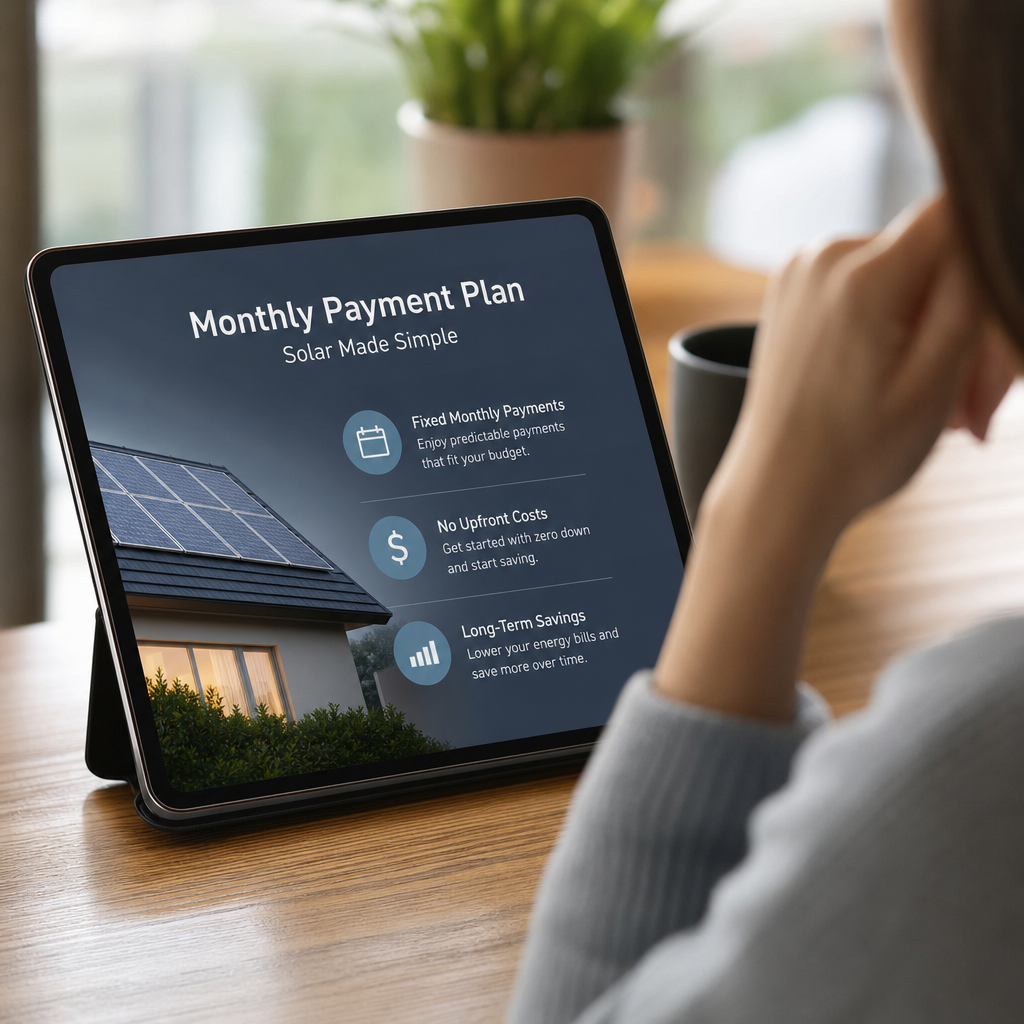
To illustrate how these variables play out, here's a simplified comparison of estimated monthly payments for a mid-sized California residential solar system (approximately 7 kW) before incentives are applied. These figures are illustrative only and will vary by lender, location, and equipment chosen.
| Loan Term | Interest Rate | Estimated System Cost | Estimated Monthly Payment |
|---|---|---|---|
| 10 years | 5.5% | $24,000 | $260 |
| 15 years | 6.0% | $24,000 | $203 |
| 20 years | 6.5% | $24,000 | $179 |
| 25 years | 7.0% | $24,000 | $170 |
As the table shows, extending the loan term reduces the monthly payment but increases total interest paid over the life of the loan. Homeowners who plan to apply the federal solar investment tax credit toward their loan principal can often shorten their effective payback period significantly, sometimes restructuring the loan to lower payments even further after the credit is applied.
One of the most common points of confusion for homeowners is the difference between a solar loan with monthly payments and a lease or power purchase agreement, which also involve monthly payments but work very differently.
Solar Loans
Solar Leases
Power Purchase Agreements (PPAs)
The Clean Energy States Alliance has published consumer guidance noting that ownership-based financing, such as loans, tends to produce greater long-term savings for homeowners who stay in their homes for more than seven to ten years, while leases and PPAs may appeal to those who prioritize simplicity over maximum savings.
Before committing to any monthly payment plan, it's worth slowing down and asking pointed questions. A reputable installer should be able to answer all of these clearly:
Asking these questions upfront prevents surprises later and ensures you're comparing apples to apples across different quotes. Reliable installers, including www.everysun.com, typically walk homeowners through each of these details during the consultation process, along with providing documentation of equipment warranties and workmanship guarantees.
A monthly payment plan is only as good as the system backing it. If panels underperform or require costly repairs a few years into a 20-year loan, the monthly savings you expected can disappear quickly. This is why warranty coverage matters just as much as the financing terms themselves.
Strong warranty protection should include:
Everysun, for example, pairs US-made high-efficiency panels with installation practices built on Swedish safety standards, backed by a 20-year installation guarantee and 25-year product warranties. That kind of layered protection matters when you're financing a system over two decades: it ensures that if something goes wrong, you're not left paying a loan for equipment that no longer performs as promised. For homeowners comparing providers, it's worth reviewing how www.everysun.com structures its guarantees alongside its financing options, since long-term protection directly affects the real-world affordability of any monthly plan.

A useful way to evaluate any monthly payment plan is to calculate your break-even point — the moment when cumulative solar savings surpass what you've spent on financing. To estimate this:
For many California homeowners, break-even typically falls somewhere between six and twelve years, depending on system size, financing terms, and local utility rates. Since most loan terms extend well beyond that point, homeowners often enjoy a decade or more of substantially reduced energy costs after the system is paid off. The Lawrence Berkeley National Laboratory's Electricity Markets & Policy research group has published extensive data on solar payback periods and how they vary by region, which can offer useful benchmarks when evaluating your own numbers.
Monthly payment plans have made solar accessible to a much broader range of California homeowners, removing the need for a large upfront investment while still allowing families to build equity and claim valuable tax incentives. The key is understanding exactly what you're financing — not just the panels, but the warranties, the installer's reputation, and the fine print of the loan itself.
Taking the time to compare loan terms, ask the right questions, and evaluate warranty coverage will help ensure your monthly solar payment truly delivers the savings and energy independence you're expecting. For homeowners ready to explore flexible, transparent financing options backed by strong warranties and professional installation standards, www.everysun.com offers a straightforward path to going solar — combining high-efficiency, US-made panels, rigorous Swedish-inspired safety practices, and payment plans designed to fit real California budgets, so you can start reducing your electricity bills with confidence.
© 2025 Everysun Inc. All Rights Reserved.


Get Your Free Solar Quote
Request your free quote and see how solar can work for your home and budget