How to Choose Between a Solar Panel Lease vs Buy Option for Your Home
September 21, 2026
|
California
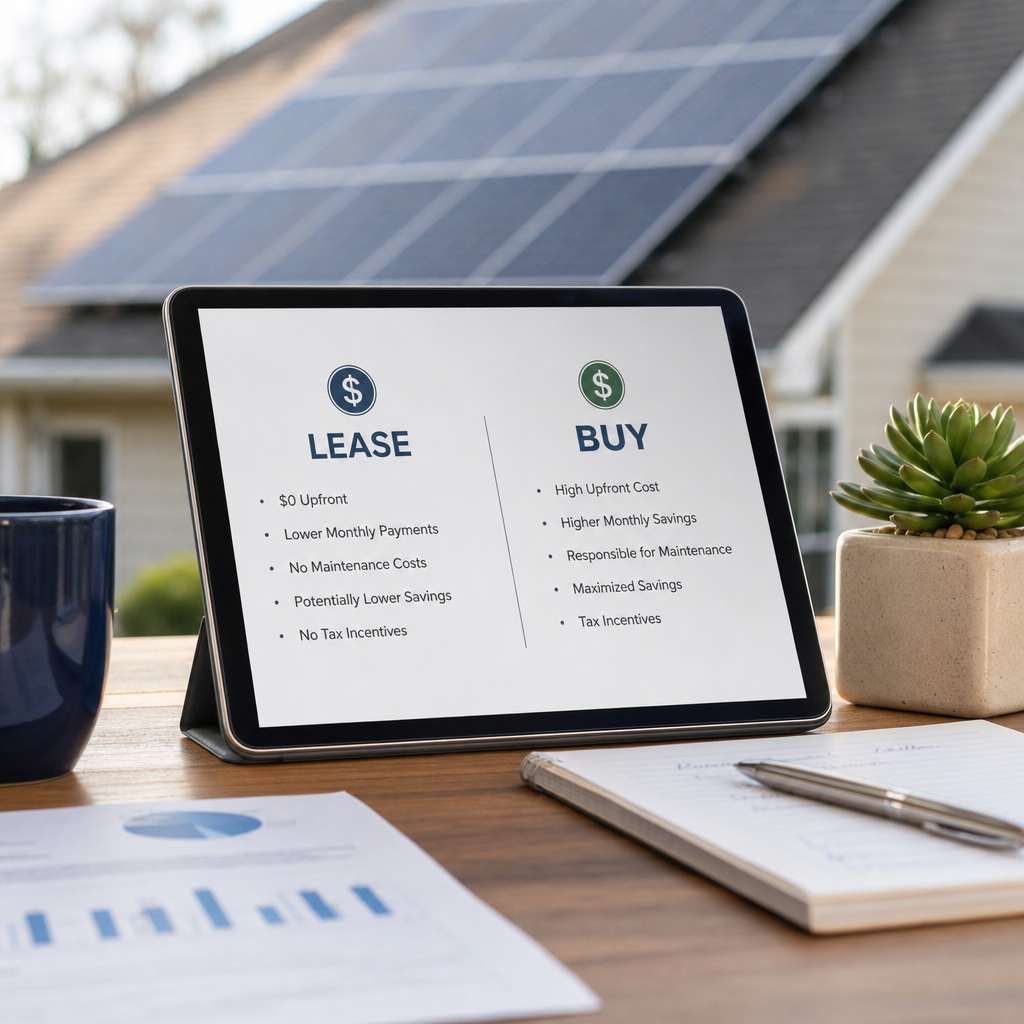
Choosing how to pay for a home solar system is often more complicated than choosing the system itself. California homeowners exploring solar almost always land on the same fork in the road: lease the panels or buy them outright. Each path affects your monthly bill, your home's resale value, your eligibility for incentives, and how much you ultimately save over 20-plus years. This guide breaks down the solar panel lease vs buy decision in plain terms, with real numbers, so you can choose the path that fits your finances and your long-term goals.
Before comparing costs, it helps to understand what each arrangement legally and financially involves.
Leasing a solar system means a third-party company owns the panels installed on your roof. You pay a fixed monthly fee — similar to a car lease — in exchange for the electricity the system produces. Some companies also offer a Power Purchase Agreement (PPA), where instead of a flat lease fee, you pay per kilowatt-hour of electricity generated, usually at a rate lower than your utility's price.
Buying a solar system means you own the equipment from day one, whether you pay cash upfront or finance the purchase through a solar loan. Ownership means you're entitled to the federal solar tax credit, any state or utility rebates, and the full value of the energy your system produces.
The distinction matters because ownership status determines who captures the financial upside of solar: you, or the leasing company.
Cost structure is usually the first thing homeowners compare, and it's where the two options diverge sharply.
| Factor | Solar Lease / PPA | Buying (Cash or Loan) |
|---|---|---|
| Upfront cost | $0 typically | $0 (loan) to full system cost (cash) |
| Monthly payment | Fixed lease fee or per-kWh rate | Loan payment or none (if cash) |
| Payment escalator | Often 1–3% annual increase | None (cash); fixed with most loans |
| Contract length | 20–25 years | N/A (you own it) |
| Who claims tax credit | Leasing company | Homeowner |
| Ownership at end of term | Renew, remove, or buy out system | You already own it |
According to the U.S. Department of Energy, the average residential solar system in the U.S. ranges from roughly $16,000 to $25,000 before incentives, though California system costs vary based on roof size, panel efficiency, and whether battery storage is included. A lease avoids that upfront number entirely, which is why it appeals to homeowners who want predictable payments without financing a large purchase. But the trade-off is that you're paying for electricity generation on someone else's terms, for two decades, with built-in annual price increases baked into most contracts.
This is one of the most misunderstood parts of the lease vs buy decision. The federal Residential Clean Energy Credit currently allows homeowners to deduct 30% of their total solar system cost from their federal taxes, as confirmed by the Internal Revenue Service.
Here's the catch: only the system owner can claim this credit.
For a $20,000 system, that's a $6,000 difference in your pocket versus the leasing company's. This single factor pushes many financially savvy homeowners toward buying, even if it means taking out a solar loan rather than paying cash.
Monthly payments only tell part of the story. The bigger question is what happens over the full 20-to-25-year lifespan of a solar system.
The Lawrence Berkeley National Laboratory's Comparative Analysis of solar ownership models has found that owned systems generally deliver higher lifetime savings than third-party-owned systems, primarily because owners keep 100% of the value created by incentives, net metering credits, and rising utility rates. In California specifically, where utility rates have climbed steadily and NEM 3.0 has changed export compensation, owning a system paired with battery storage often produces the strongest long-term return, since it maximizes self-consumption of your own solar energy.
Solar ownership status can significantly affect a home sale.
Owned systems are widely viewed as a value-add. Multiple studies, including research summarized by Zillow, suggest homes with owned solar panels can sell for a premium compared to similar homes without solar, because buyers see immediate utility savings and no ongoing obligation.
Leased systems complicate a sale. The lease doesn't disappear when you sell — it must either be:
Some buyers walk away from deals entirely rather than take on an unfamiliar 15-year lease obligation, and real estate agents frequently report that leased solar can slow down or complicate transactions. If you plan to sell your home within the next decade, this is a critical factor to weigh carefully before signing a lease.
Another meaningful difference is who handles repairs and performance issues over the life of the system.
| Responsibility | Lease/PPA | Owned System |
|---|---|---|
| Equipment repairs | Leasing company | Homeowner (covered by warranty) |
| Performance monitoring | Leasing company | Homeowner or installer |
| Roof damage during install | Varies by contract | Installer's guarantee typically applies |
| Insurance requirements | Often required by lessor | Homeowner's standard policy usually sufficient |
| End-of-term options | Renew, remove, or buy system | None needed — already yours |
With a lease, maintenance is technically "hands-off" for the homeowner since the leasing company is incentivized to keep the system running. However, response times can vary, and homeowners have less control over which technicians service their equipment or how quickly issues are resolved.
With an owned system, your protection comes from the manufacturer's product warranty and the installer's workmanship guarantee. This is why choosing a reputable, established installer matters so much. Everysun backs every installation with a 20-year installation guarantee and 25-year product warranties on its US-made, high-efficiency panels, giving homeowners the same long-term peace of mind a lease promises — without giving up ownership or tax benefits.
Battery storage has become central to solar economics in California, especially after net metering changes reduced the value of exporting excess power to the grid. Under NEM 3.0, homeowners are compensated far less for power sent back to the utility, making it more valuable to store and use your own solar energy during evening peak hours instead.
This shift affects the lease vs buy decision in an important way:
Homeowners who want resilience during outages, plus the best possible return under current California rate structures, generally find that owning both the panels and the battery delivers more flexibility than a lease structure allows.
Understanding when you actually start "winning" financially helps put the decision in perspective.
| Payment Method | Typical Break-Even Point | 25-Year Estimated Savings* |
|---|---|---|
| Cash Purchase | 6–9 years | Highest |
| Solar Loan | 8–12 years | High (slightly reduced by interest) |
| Lease/PPA | Rarely reaches full "break-even" due to ongoing payments | Lowest |
*Actual savings depend on system size, local utility rates, sun exposure, and incentive eligibility. These are general industry estimates, not guarantees.
Cash purchases typically deliver the fastest payback because there's no financing cost and the full tax credit applies immediately. Loans take slightly longer due to interest, but still outperform leases over the long run because the homeowner retains the tax credit and any appreciation in electricity savings. Leases, by design, are structured to generate steady revenue for the leasing company across the full contract term, which is why homeowners rarely see the same magnitude of savings as they would with ownership.
Whether you're leaning toward a lease or a purchase, ask these questions before committing:
Asking these questions upfront prevents unpleasant surprises years into a contract — particularly with leases, where terms are harder to renegotiate once signed.
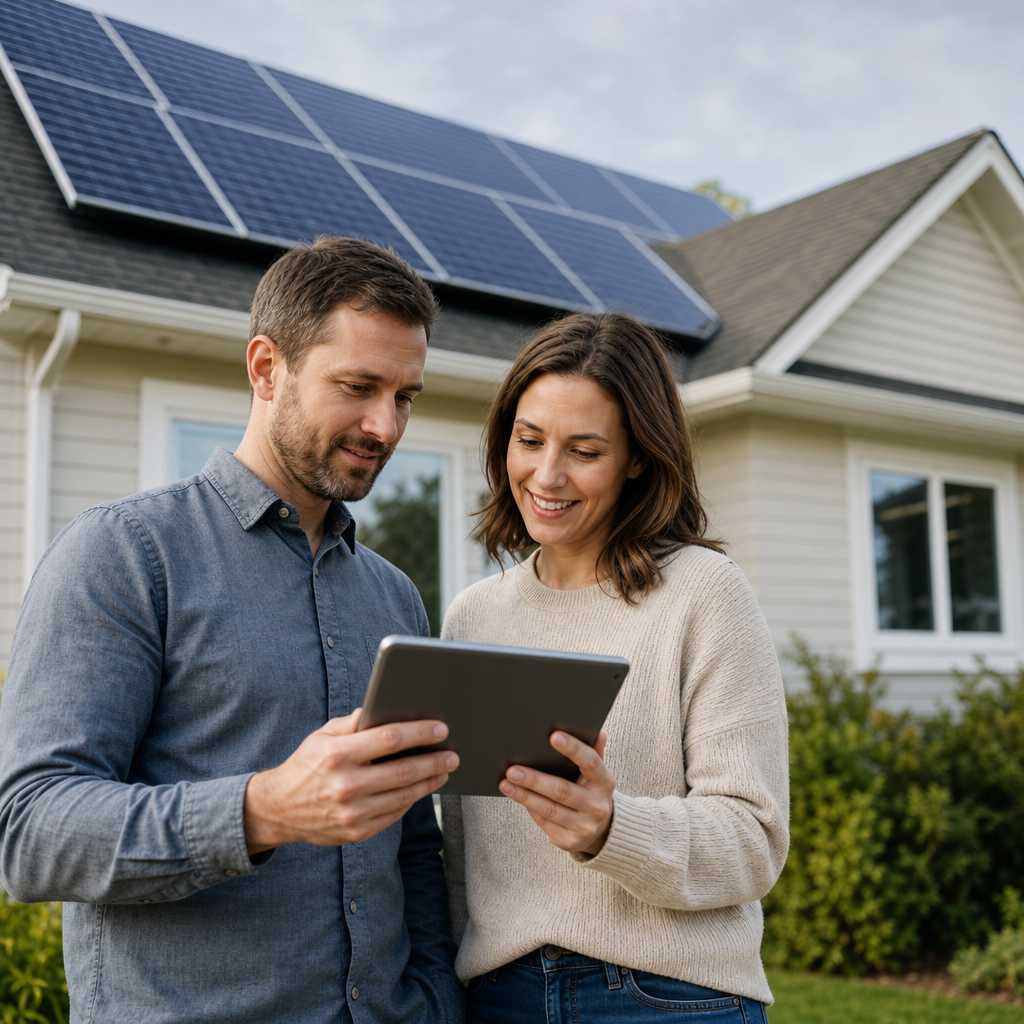
There's no universal right answer, but some general patterns hold true for most California homeowners:
Leasing may make sense if:
Buying may make sense if:
For most California homeowners planning to stay put for several years, buying — whether with cash or a solar loan — tends to deliver significantly more value over the life of the system. The upfront hurdle is real, but flexible financing options have made ownership far more accessible than it used to be, without requiring a large cash outlay.
The solar panel lease vs buy decision ultimately comes down to how you value control, long-term savings, and flexibility versus short-term simplicity. Leasing offers convenience with no upfront cost, but it sacrifices the tax credit, long-term savings, and resale simplicity that ownership provides. Buying requires more upfront consideration but consistently delivers stronger financial outcomes for homeowners who plan to stay in their homes and want to maximize the value of California's abundant sunshine.
Everysun helps California homeowners navigate this decision with flexible payment options designed to make ownership accessible — combining US-made, high-efficiency panels with Swedish safety and installation standards, a 20-year installation guarantee, and 25-year product warranties. Whether you're comparing lease offers, loan terms, or cash purchase numbers, working with an experienced local installer ensures you understand exactly what you're signing up for and how it affects your home's value for decades to come. If you're ready to move from comparing options to building a system that actually pays off, Everysun is built to help you own your energy future — not rent it.
© 2025 Everysun Inc. All Rights Reserved.


Get Your Free Solar Quote
Request your free quote and see how solar can work for your home and budget