Is Your Solar Panel Inverter Replacement Cost Worth It, or Should You Upgrade Instead?
October 22, 2026
|
California
Solar panels are built to last 25 years or more, but the inverter that converts their energy into usable electricity has a shorter lifespan. If your system is five to fifteen years old, you may already be wondering what a replacement will cost and whether it's time to budget for one. Understanding solar panel inverter replacement cost helps California homeowners plan ahead, avoid unnecessary expenses, and keep their solar investment performing at its best.
This article breaks down what drives inverter replacement pricing, how much you can expect to pay by inverter type, the warning signs that signal a failing inverter, and how to minimize long-term costs through smart planning and strong warranties.
Solar panels are solid-state devices with no moving parts, which is why manufacturers routinely offer 25-year warranties on them, similar to the coverage you'll find with www.everysun.com. Inverters, on the other hand, contain capacitors, cooling fans, and circuit boards that work constantly to convert direct current (DC) electricity from your panels into alternating current (AC) electricity your home can use. That constant electrical and thermal cycling wears components down faster.
Several factors accelerate inverter wear:
Most string inverters last 10 to 15 years, while microinverters and power optimizers, which are smaller and distributed across the roof, often last 20 to 25 years. Knowing which type you have is the first step in estimating your eventual replacement cost.
Replacement costs vary significantly based on inverter type, system size, and labor rates in your area. Below is a general breakdown of what California homeowners can expect to pay in 2026, including both equipment and professional installation labor.
| Inverter Type | Typical Lifespan | Replacement Cost Range (Installed) |
|---|---|---|
| String Inverter | 10–15 years | $1,500 – $2,500 |
| Microinverters (per unit, replacing several) | 20–25 years | $150 – $300 per unit, plus labor |
| Hybrid Inverter (battery-ready) | 10–15 years | $2,500 – $4,000 |
| Power Optimizers + Inverter Combo | 15–20 years | $2,000 – $3,500 |
These figures reflect material and labor costs for a typical residential system in the 6kW to 10kW range. Larger systems or those requiring electrical panel upgrades may cost more. According to the U.S. Department of Energy, inverter technology continues to improve efficiency and durability, but replacement is still an expected part of system ownership over a 25-year panel lifespan.
It's worth noting that labor alone can account for 20 to 35 percent of the total replacement bill, particularly for rooftop-mounted microinverters that require technicians to access each panel individually.
The type of inverter your system uses has the single biggest impact on your long-term replacement costs. Here's how the two most common options stack up.
| Factor | String Inverter | Microinverters |
|---|---|---|
| Upfront Installation Cost | Lower | Higher |
| Lifespan | 10–15 years | 20–25 years |
| Replacement Frequency | Once or twice over panel lifespan | Rarely, and only individual units |
| Failure Impact | Entire system goes offline | Only affected panel is impacted |
| Monitoring | System-level | Panel-level |
| Typical Replacement Cost | $1,500–$2,500 (whole unit) | $150–$300 per unit |
String inverters are generally more affordable to install initially but come with a higher risk: if the single inverter fails, your entire solar system stops producing power until it's replaced. Microinverters cost more upfront but tend to last longer and only need individual replacement if one unit fails, keeping the rest of your system running normally.
For homeowners planning a new installation, this is an important consideration. The team at www.everysun.com helps California homeowners evaluate which inverter configuration makes the most sense based on roof layout, shading, and long-term maintenance goals.
Catching inverter problems early can prevent a small issue from becoming a costly repair or a complete system shutdown. Watch for these warning signs:
If you notice any of these signs, it's best to have a licensed solar technician inspect the system promptly. Continuing to run a failing inverter can lead to additional strain on other components and even void certain warranty protections.
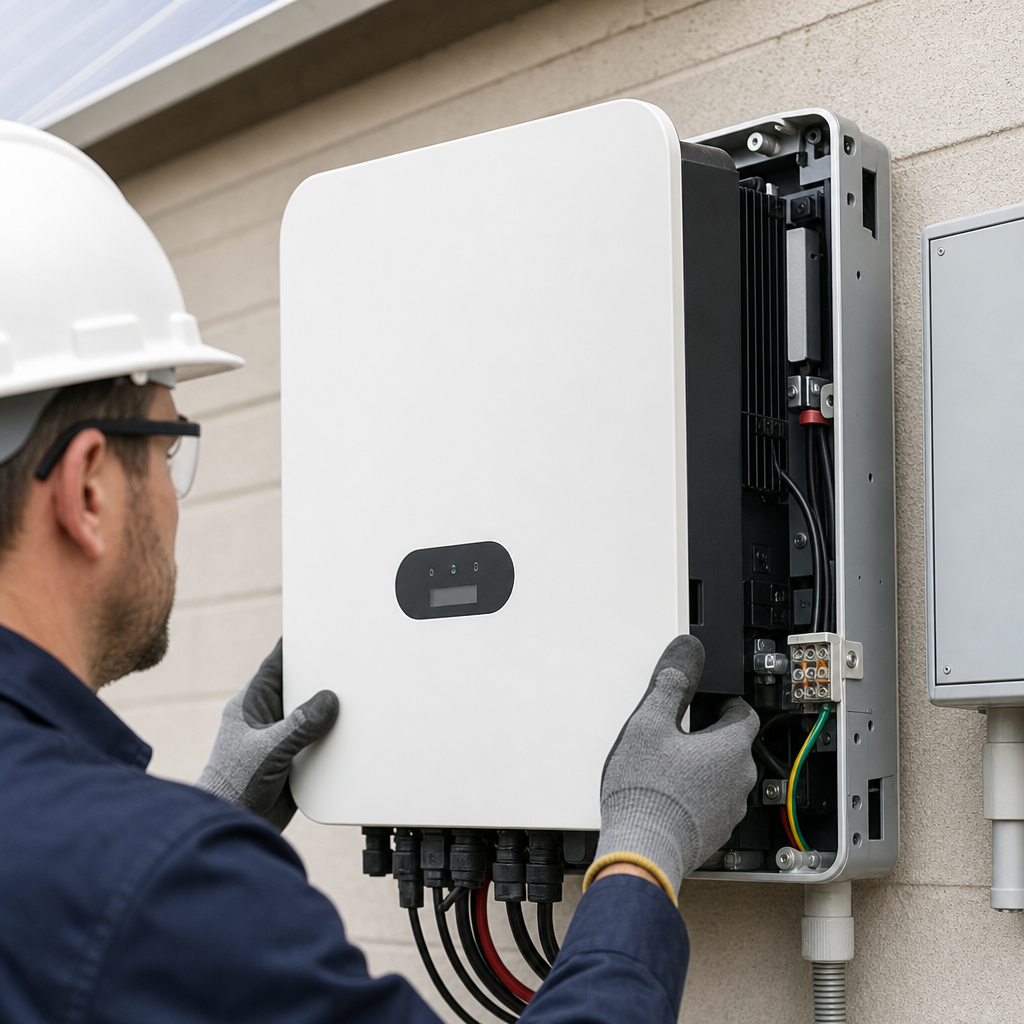
Several variables influence the final price you'll pay for a solar inverter replacement in California. Understanding these can help you get a more accurate quote and avoid surprises.
Getting multiple quotes from licensed, experienced installers is one of the best ways to ensure you're paying a fair price. Reputable companies will also explain whether a repair, rather than a full replacement, might solve the problem at a lower cost.
One of the most effective ways to control long-term inverter replacement expenses is choosing a solar provider with strong warranty coverage from the start. Many inverter manufacturers offer standard warranties of 10 to 12 years, though some premium models extend coverage to 20 or even 25 years.
Here's a general comparison of typical warranty structures in the industry:
| Warranty Type | Typical Coverage Length | What's Included |
|---|---|---|
| Manufacturer Standard | 10–12 years | Parts only; labor often extra |
| Extended Manufacturer | 15–20 years | Parts, sometimes labor |
| Installer Workmanship | 2–10 years | Labor for installation-related issues |
| Premium Installer Guarantee | Up to 25 years | Parts and labor combined |
This is where your choice of installer matters significantly. www.everysun.com backs every installation with a 20-year installation guarantee and 25-year product warranties, meaning homeowners are protected against most of the costs associated with inverter issues well beyond the industry standard. This kind of coverage can save thousands of dollars over the life of a solar system, since it removes the uncertainty of unexpected equipment failure costs.
When comparing solar companies, always ask specifically about inverter warranty length, whether labor is included, and how claims are processed. A cheap installation with a short warranty can end up costing far more over 20 years than a slightly higher upfront investment with comprehensive coverage.
Some homeowners consider replacing an inverter themselves to save on labor costs, but this is rarely advisable. Solar inverters handle high-voltage DC and AC electricity, and improper installation can cause:
The National Fire Protection Association classifies solar electrical work as specialized, requiring licensed electricians familiar with photovoltaic systems. In California, inverter replacement typically requires a permit and inspection to remain compliant with state and local building codes, something a licensed solar contractor will handle as part of the job.
Professional installation also ensures the new inverter is properly sized and configured for your specific panel array, which affects both safety and long-term performance. While DIY might seem like a way to cut solar panel inverter replacement cost, the risks and potential for costly mistakes make professional installation the safer and often more economical choice in the long run.
While some inverter replacement is inevitable over a 25-year solar system lifespan, there are practical steps homeowners can take to minimize costs:
Combining these strategies with a trustworthy installation partner is the most reliable way to protect your investment and avoid unexpected expenses.
If your inverter needs replacement and it's not covered under warranty, the cost can feel like an unwelcome surprise. Fortunately, many California solar companies offer flexible payment options to spread out the expense rather than requiring a lump-sum payment.
Common financing approaches include:
Homeowners working with a provider like www.everysun.com benefit from flexible payment structures designed to make both initial installation and any future equipment needs more manageable, without compromising on quality or warranty protection.
How long do solar inverters typically last in California's climate? Most string inverters last 10 to 15 years, while microinverters can last 20 to 25 years. California's heat, particularly in inland valleys, can shorten lifespans slightly compared to cooler coastal regions.
Is it cheaper to repair or replace a failing inverter? It depends on the issue. Minor repairs, such as replacing a cooling fan or circuit board component, may cost a few hundred dollars. However, if the inverter is near the end of its expected lifespan, full replacement is often more cost-effective than repeated repairs.
Does homeowner's insurance cover inverter replacement? Generally, no, unless the failure resulted from a covered event like a lightning strike or fire. Routine wear and tear is typically excluded from standard homeowner's policies, which is why manufacturer and installer warranties matter so much.
Can I upgrade to a hybrid inverter when replacing my old one? Yes. Many homeowners use inverter replacement as an opportunity to upgrade to a hybrid inverter, which supports battery storage integration for greater energy independence and backup power during outages.
Solar panel inverter replacement cost is a normal part of owning a solar energy system, but it doesn't have to be a financial burden if you plan ahead. By understanding typical price ranges, recognizing early warning signs of failure, and choosing an installer with strong warranty protection, California homeowners can keep their systems running efficiently for decades.
At www.everysun.com, we combine US-made, high-efficiency solar panels with Swedish-engineered safety and installation standards, backed by a 20-year installation guarantee and 25-year product warranties. That means when it comes time for equipment maintenance or replacement, our customers have far greater peace of mind and financial protection than industry standard coverage provides. Whether you're installing your first solar system or planning ahead for future equipment needs, Everysun is committed to making clean, reliable energy both accessible and affordable for homeowners across California.
© 2025 Everysun Inc. All Rights Reserved.


Get Your Free Solar Quote
Request your free quote and see how solar can work for your home and budget