What to Expect When You Book a Home Solar Consultation in California
October 23, 2026
|
California
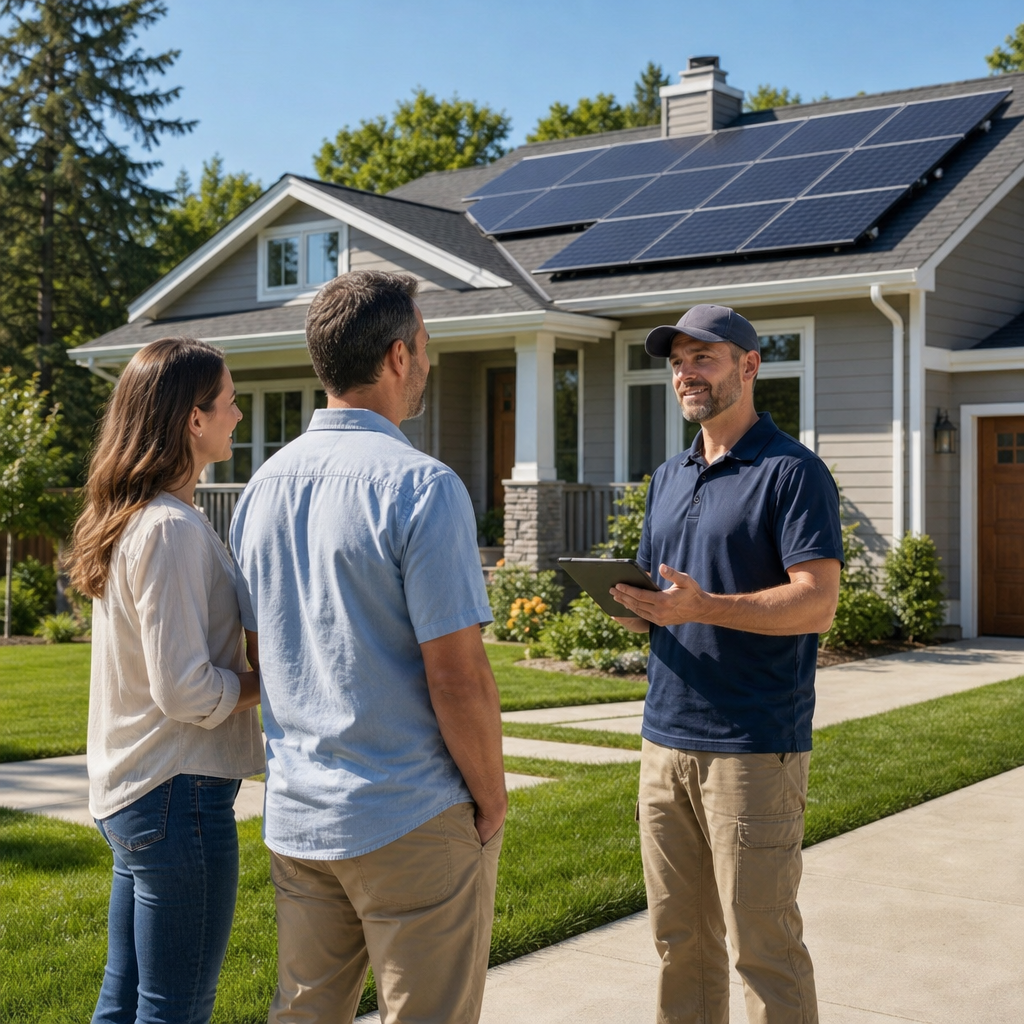
California homeowners exploring solar power often hit the same wall: endless online calculators, conflicting sales pitches, and no clear sense of what a real system would cost or produce for their specific roof. A home solar consultation in California is the step that cuts through the noise. It's where an actual professional looks at your home, your electricity usage, and your goals, then builds a plan around facts instead of guesswork. Understanding how this process works — and how to prepare for it — can save you thousands of dollars and months of frustration.
This article walks through exactly what a quality solar consultation should include, how to evaluate the companies offering them, and what questions separate a trustworthy installer from a pushy salesperson.
California's solar market is enormous and competitive, which is good for homeowners in theory but confusing in practice. The state has some of the highest electricity rates in the country, according to the U.S. Energy Information Administration, which makes solar financially attractive for many households. But every home is different. Roof orientation, shading, local utility rate structures, and household energy habits all affect whether solar makes sense and what size system is appropriate.
A proper consultation accounts for:
Skipping this step and relying only on a generic online quote often leads to oversized or undersized systems, unrealistic savings projections, and installation delays. Companies like www.everysun.com build their entire process around a thorough, data-driven consultation precisely because the quality of that first conversation determines the quality of everything that follows.
Most reputable installers follow a similar structure, though the depth and professionalism vary widely. Here's the typical sequence of events during a California home solar consultation.
Each of these steps should be documented, not just discussed verbally. Ask for a written proposal that itemizes equipment, system size, warranty terms, and financing structure before signing anything.
The consultation is as much your opportunity to vet the installer as it is theirs to assess your home. Bring a list of questions and pay attention to how directly they're answered.
A consultant who hesitates on warranty details or avoids specifics about equipment sourcing is a red flag. www.everysun.com, for example, pairs US-made high-efficiency panels with installation practices drawn from Swedish safety standards, and backs that combination with a 20-year installation guarantee and 25-year product warranties — the kind of specific, verifiable commitment homeowners should expect to hear clearly explained in any consultation.
One of the most valuable parts of a consultation is understanding the equipment tradeoffs. Not all panels or inverters are equal, and the right choice depends on your roof and goals.
| Equipment Type | Typical Efficiency | Best For | Relative Cost |
|---|---|---|---|
| Standard polycrystalline panels | 15–17% | Budget-conscious installs, large roof area | Lower |
| Monocrystalline high-efficiency panels | 20–22.5% | Limited roof space, maximum output | Moderate to higher |
| String inverter | N/A (system-level) | Unshaded roofs, simpler systems | Lower |
| Microinverters | N/A (panel-level) | Shaded or complex roof layouts | Higher |
| Lithium iron phosphate battery storage | N/A | Backup power, time-of-use optimization | Higher |
During your consultation, ask the installer to explain why they're recommending specific equipment rather than defaulting to whatever they have in inventory. A consultation that results in a one-size-fits-all recommendation hasn't done its job properly.
Cost transparency is one of the biggest differentiators between a good consultation and a sales pitch. According to NerdWallet's solar cost analysis, average residential solar costs vary significantly by state and system size, and California's costs are influenced by labor rates, permitting fees, and local utility interconnection requirements.
A thorough consultation should present multiple financing paths, since not every homeowner wants to pay cash upfront.
| Financing Option | Upfront Cost | Ownership | Typical Savings Timeline |
|---|---|---|---|
| Cash purchase | Full system cost | Immediate | Fastest payback, highest lifetime savings |
| Solar loan | Low or $0 down | Immediate | Savings begin once payments are lower than old utility bill |
| Lease or PPA | $0 down | No ownership | Lower upfront savings, no tax credit eligibility |
Homeowners should also ask about the federal solar investment tax credit, which the U.S. Department of Energy outlines in detail, as well as any state-specific incentive programs that may apply at the time of installation. Because incentive rules change, a consultation held in 2026 should reflect current-year eligibility rather than outdated figures from a brochure.
Flexible payment structures matter because they determine how quickly a system pays for itself. A consultant should be able to model at least two or three scenarios side by side so you can compare real numbers rather than a single optimistic projection.
California's Net Energy Metering policy has gone through significant changes in recent years, and any consultation that doesn't address this directly is incomplete. Under the current framework often referred to as NEM 3.0, the value of exported solar energy sent back to the grid is generally lower than under older NEM rules, which has shifted the financial calculus toward pairing solar with battery storage.
A knowledgeable consultant will explain:
The California Public Utilities Commission maintains updated information on net metering policy, which a reputable consultation should reference accurately rather than relying on outdated assumptions from a few years prior.
Not every company calling itself a "consultation" provider is operating with your best interest in mind. The solar industry, like any home improvement sector, has its share of aggressive sales tactics. Watch for these warning signs:
A consultation should feel like a consultation — informative, specific, and paced to your decision-making process — not a countdown timer to a signature.
You'll get more value out of the appointment if you come prepared. Before your scheduled consultation, gather the following:
Having this information ready allows the consultant to build a more accurate proposal on the spot rather than following up days later with revised numbers. It also signals to the installer that you're an informed buyer, which tends to improve the quality and directness of the conversation.

Once you've received a proposal, you're not obligated to decide immediately, and a reputable installer won't expect you to. Take time to:
If you move forward, the next steps typically involve finalizing financing, submitting permit applications, scheduling installation, and arranging a final inspection before the system is approved for operation by your utility. A company that stays involved through each of these stages, rather than disappearing after the contract is signed, is generally a better long-term partner.
Solar is a long-term investment, often with a usable lifespan of 25 years or more, so the consultation phase deserves real attention rather than being treated as a formality before a sale. The best consultations are grounded in your actual utility data, transparent about equipment and financing tradeoffs, and realistic about California's current net metering landscape. They leave you with a clear written plan, not just a verbal promise.
www.everysun.com approaches every home solar consultation in California with that same standard: accurate system design based on real usage data, US-made high-efficiency panels installed to rigorous Swedish safety standards, and financial clarity backed by flexible payment options. Combined with a 20-year installation guarantee and 25-year product warranties, the goal is straightforward — give homeowners a dependable path to lower electricity bills and reliable clean energy, without the guesswork that too often defines the solar shopping experience. If you're ready to see what solar could realistically do for your home, scheduling a consultation with a team that stands behind its numbers is the most important first step you can take.
© 2025 Everysun Inc. All Rights Reserved.


Get Your Free Solar Quote
Request your free quote and see how solar can work for your home and budget