Solar Panel Cost Per Watt in California
September 11, 2026
|
California
Understanding solar panel cost per watt is the single most useful skill a California homeowner can bring to the solar buying process. It's the metric installers use internally to price systems, and it's the fastest way to compare quotes from different companies without getting lost in marketing jargon. If you've been collecting quotes and noticed the numbers vary widely, cost per watt is the tool that cuts through the confusion and tells you whether you're looking at a fair deal or an inflated one.
This article breaks down what cost per watt actually means, what the current California averages look like in 2026, what factors move the number up or down, and how to use it to evaluate proposals with confidence.
Cost per watt is calculated by dividing the total price of a solar system by its total wattage capacity. For example, if a 7,000-watt (7 kW) system costs $21,000 installed, the cost per watt is $3.00.
This figure typically includes:
Cost per watt is useful because it normalizes pricing across systems of different sizes. A 10 kW system will obviously cost more in total dollars than a 5 kW system, but comparing their per-watt pricing tells you which one is the better value on an apples-to-apples basis.
It's worth noting that cost per watt is usually quoted two ways: pre-incentive (the sticker price before any tax credits or rebates) and post-incentive (the net price after incentives like the federal solar tax credit are applied). Always confirm which number you're looking at when comparing quotes, since the difference can be substantial.
As of 2026, California residential solar pricing has stabilized after several years of fluctuating panel costs, tariff changes, and shifts in state incentive programs like the transition to NEM 3.0 billing. Homeowners today typically see per-watt costs in the following range depending on system size, equipment tier, and add-ons like battery storage.
| System Size | Average Cost Per Watt (Pre-Incentive) | Estimated Gross System Cost |
|---|---|---|
| 4 kW | $3.40–$4.20 | $13,600–$16,800 |
| 6 kW | $3.20–$4.00 | $19,200–$24,000 |
| 8 kW | $3.00–$3.80 | $24,000–$30,400 |
| 10 kW | $2.90–$3.60 | $29,000–$36,000 |
| 12 kW | $2.80–$3.50 | $33,600–$42,000 |
These figures reflect typical market pricing across California installers and can vary based on roof complexity, panel brand, and whether battery storage is bundled into the project. Premium equipment, such as high-efficiency US-made panels, may sit at the upper end of these ranges but often deliver more energy production per square foot of roof space, which can lower the effective cost per watt of usable output over time.
Not all solar quotes are created equal, and the per-watt price you're quoted depends on several variables working together.
Higher-efficiency panels generate more electricity per square foot, which can mean fewer panels are needed to hit your target production. US-manufactured, high-efficiency panels often carry a higher sticker price per watt but reduce long-term degradation and maximize output on space-constrained California roofs.
Steep pitches, multiple roof planes, tile roofing, or older roofs requiring reinforcement all add labor costs that increase the effective cost per watt.
Adding a battery like a Tesla Powerwall or Enphase battery increases total project cost significantly, though it's often quoted separately from the solar-only cost per watt. Battery storage has become increasingly common in California since the shift to NEM 3.0, which reduced compensation for excess solar exported to the grid.
California cities and counties vary in permitting costs and inspection timelines, and some utility territories require additional interconnection studies that add to overhead costs.
Installers offering longer workmanship guarantees and stronger product warranties may price slightly higher per watt, but this often reflects better long-term protection rather than inflated margin. A company backing its installation with a 20-year workmanship guarantee is investing in fewer future service calls and callbacks, which is typically reflected in the quality of components and labor practices used upfront.
It helps to see how per-watt pricing plays out across different types of installers. Below is a simplified comparison of common installer categories in California.
| Installer Type | Typical Cost Per Watt | Warranty Coverage | Notes |
|---|---|---|---|
| National big-box solar chains | $3.00–$4.50 | 10–25 years, varies by component | Higher marketing overhead, less local customization |
| Small local installers | $2.70–$3.80 | Often 10 years | Lower overhead, variable quality control |
| Premium regional installers (e.g., Everysun) | $3.00–$4.00 | 20-year install guarantee, 25-year product warranty | Higher-grade components, stronger long-term protection |
| DIY/kit solar | $1.50–$2.50 | Manufacturer only, no install guarantee | Requires owner to manage permitting and installation |
The lowest cost per watt isn't always the best value. A system priced cheaply today but lacking strong warranty backing can end up costing more in repairs, underperformance, or premature panel replacement over a 25-year lifespan. This is why many California homeowners are willing to pay a modest premium for combined US-manufactured equipment and rigorous installation standards, such as the Swedish safety and engineering protocols used by www.everysun.com on every project.
The pre-incentive cost per watt is only part of the picture. California homeowners currently benefit from several programs that meaningfully reduce the net cost of going solar.
When these programs are factored in, many California homeowners see their effective cost per watt drop by 20–30% compared to the sticker price quoted before incentives.
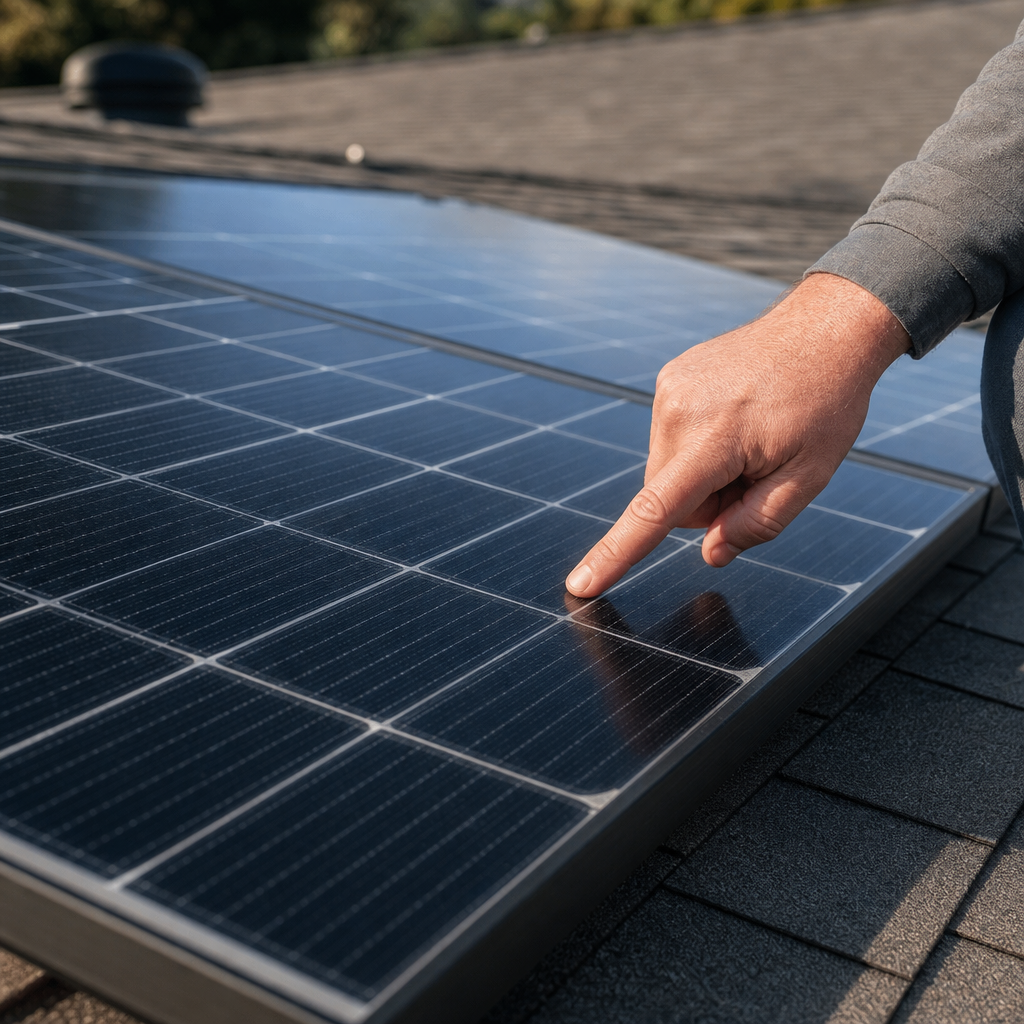
Focusing solely on the lowest advertised cost per watt can lead homeowners to overlook factors that matter more over a system's 25+ year lifespan.
Because of these factors, many industry experts, including analysts at the National Renewable Energy Laboratory, emphasize evaluating solar quotes based on lifetime production value and warranty terms rather than upfront price alone.
When comparing multiple quotes, use the following checklist to make sure you're comparing true value, not just sticker price.
Following this process prevents the common mistake of choosing a quote based purely on the lowest number, which can result in hidden costs or subpar equipment down the line.
Since NEM 3.0 reduced the value of exporting excess solar power back to the grid, battery storage has become a much more central part of the California solar conversation. While batteries are usually priced separately from the solar array itself, they influence how homeowners think about overall system value per watt of usable, storable energy.
| Battery Option | Approximate Cost | Usable Capacity | Notes |
|---|---|---|---|
| Entry-level battery | $9,000–$11,000 | 10 kWh | Basic backup for essential circuits |
| Mid-tier battery | $11,000–$14,000 | 13–14 kWh | Whole-home backup for smaller homes |
| Premium battery system | $14,000–$18,000 | 15–20 kWh | Extended backup, ideal for larger households |
When paired with solar, battery storage increases self-consumption of solar energy, reducing dependence on grid electricity during peak pricing hours. This is particularly valuable in California, where time-of-use electricity rates can make evening grid power significantly more expensive than the marginal cost of stored solar energy.

Beyond the core equipment and labor, several line items can quietly affect your final cost per watt if you're not paying close attention during the quoting process.
Working with an experienced local installer helps identify these costs upfront rather than encountering them mid-project. Companies familiar with California's diverse housing stock and permitting environments, such as www.everysun.com, are typically better equipped to provide accurate, all-inclusive quotes from the start.
Solar panel cost per watt remains the most reliable way to compare quotes and understand what you're truly paying for when going solar in California. In 2026, homeowners can expect average pricing between roughly $2.80 and $4.20 per watt before incentives, with the final number shaped by panel quality, inverter choice, roof complexity, and whether battery storage is included.
The cheapest per-watt quote isn't always the smartest long-term investment. Strong warranties, high-quality US-made components, and rigorous installation standards protect your system's performance and your home for decades, not just years. Everysun combines high-efficiency, US-manufactured panels with Swedish-engineered safety and installation standards, backed by a 20-year installation guarantee and 25-year product warranties, giving California homeowners a transparent, dependable path to lower electricity bills and long-term energy independence. To get a personalized, all-inclusive quote and see how your home's specific cost per watt compares, visit www.everysun.com and start building a solar system designed to perform for decades to come.
© 2025 Everysun Inc. All Rights Reserved.


Get Your Free Solar Quote
Request your free quote and see how solar can work for your home and budget