6 Facts Behind California Net Metering Solar Explained for Homeowners
September 22, 2026
|
California
Solar energy has become one of the most practical ways for California homeowners to fight rising electricity costs, but understanding how you get credited for the extra power your panels produce is essential to knowing whether solar truly pays off. That's where net metering comes in. If you've been researching solar and keep running into terms like "NEM 3.0," "export credits," or "true-up billing," this article breaks it all down in plain language so you can make a confident, informed decision.
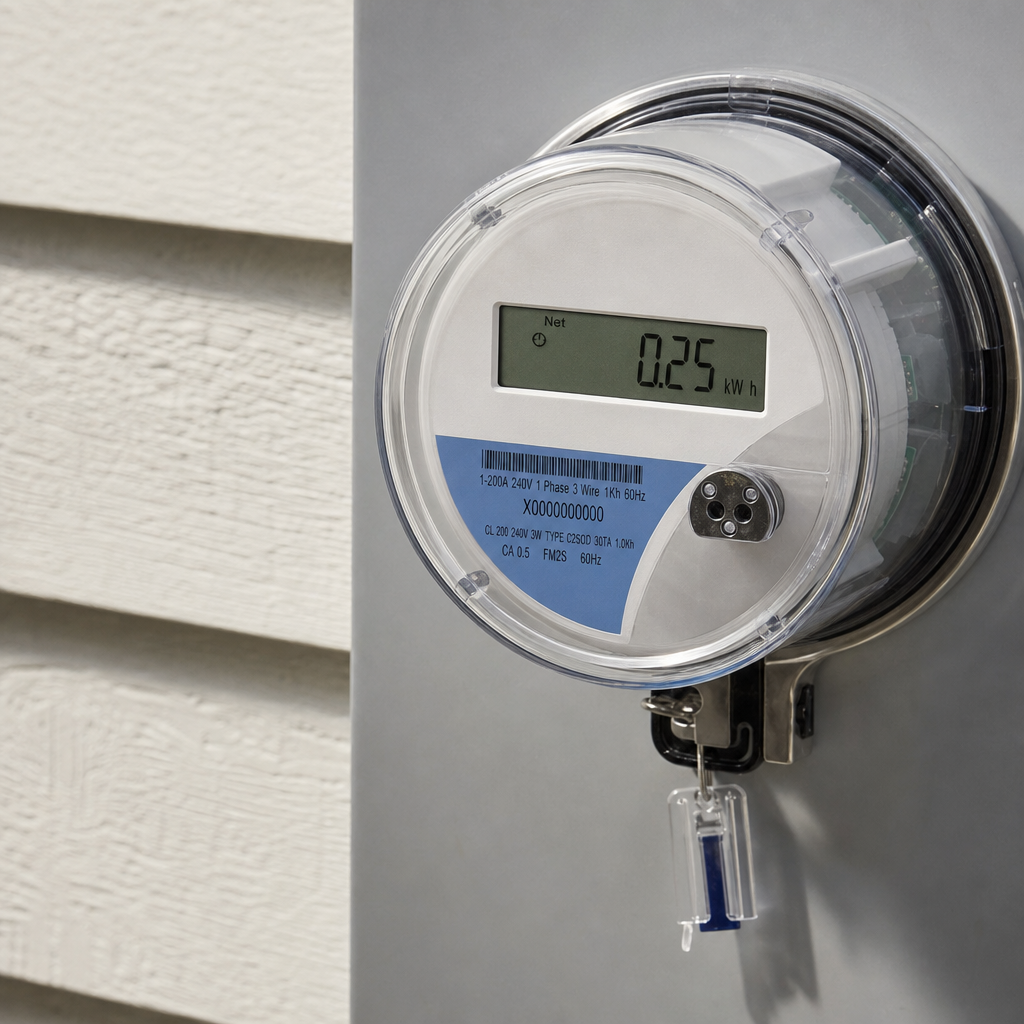
Net metering is the billing arrangement between you and your utility company that determines how much credit you receive for the excess solar electricity your system sends back to the grid. When your panels generate more power than your home is using — which typically happens during sunny daytime hours — that surplus energy flows outward through your utility meter and into the local grid. In exchange, your utility issues you a credit that can offset the cost of electricity you pull from the grid at night or on cloudy days.
In simple terms, net metering turns the grid into a kind of energy bank. You deposit surplus solar power during the day and withdraw stored credit when your system isn't producing enough to cover your household's needs. The "net" in net metering refers to the difference between what you send out and what you draw back in, which is what ultimately shows up on your monthly bill.
California was one of the first states to adopt net metering decades ago, and it's part of the reason the state became a national leader in rooftop solar adoption. However, the program has changed significantly over the years, and the rules that applied to homeowners who went solar a decade ago look very different from what new solar customers experience today.
California's net metering policy has gone through three major iterations, each adjusting how much value homeowners receive for their exported solar energy.
The shift from NEM 2.0 to NEM 3.0 reduced the value of exported solar energy by roughly 75% on average, according to estimates cited by the Solar Energy Industries Association. This change was controversial, but it didn't kill the economics of solar — it simply changed the strategy homeowners need to use to maximize savings.
Under NEM 3.0, your utility calculates credits using an hourly "Avoided Cost Calculator" schedule that assigns a different value to solar exports depending on the time and season. Generally speaking, exports during the afternoon — when solar production is highest — are worth less because the grid already has plenty of supply. Exports during early evening hours, when demand peaks and solar production drops off, are worth considerably more.
Here's a simplified look at how export values can differ by time of day for a typical California utility customer:
| Time of Export | Approximate Value per kWh (NEM 3.0) | Why |
|---|---|---|
| 10 a.m. – 2 p.m. | $0.03 – $0.08 | High solar output statewide, low grid demand |
| 4 p.m. – 6 p.m. | $0.10 – $0.20 | Rising demand, solar output declining |
| 6 p.m. – 9 p.m. | $0.25 – $0.45+ | Peak demand ("net peak"), minimal solar available |
This table illustrates why timing matters so much more under NEM 3.0. Homeowners who can shift their usage — or store their surplus energy — to align with high-value hours end up with significantly better financial outcomes than those who simply export everything at midday and buy it back at night.
Because exported solar power is worth so much less during the day, home battery storage has moved from a "nice to have" to a near-necessity for many California solar shoppers. A battery lets you store your midday solar surplus and use it yourself during the expensive evening peak hours instead of selling it back to the utility for pennies.
Consider the practical difference:
This is one of the biggest reasons www.everysun.com designs most of its California solar proposals around pairing panels with battery storage. A properly sized battery can meaningfully shorten your payback period and provide backup power during outages — an added benefit given California's ongoing wildfire-related public safety power shutoffs.
To understand exactly what changed, it helps to compare the two programs directly.
| Feature | NEM 2.0 | NEM 3.0 |
|---|---|---|
| Export credit basis | Retail electricity rate | Avoided-cost value (time-based) |
| Best strategy | Export as much as possible | Self-consume or store via battery |
| Battery incentive | Optional, moderate savings | Strongly recommended for savings |
| Interconnection fee | Lower | Slightly higher in some cases |
| Bill credit rollover | Annual true-up | Annual true-up (unchanged) |
| Eligibility today | Grandfathered for existing customers only | Applies to all new solar applications |
If you already have solar installed under NEM 1.0 or NEM 2.0, you're typically grandfathered into that program for 20 years from your original interconnection date, according to guidance published by the California Solar & Storage Association. New solar customers, however, are automatically enrolled in NEM 3.0, which is why designing your system with battery storage and smart usage habits in mind matters more than ever.
Even though NEM 3.0 reduced the value of exported energy, solar remains a financially sound investment for most California homeowners — it just requires smarter system design and usage habits. Here are strategies that make the biggest difference:
Does net metering still make solar worth it in 2026? Yes, for the vast majority of homeowners. While NEM 3.0 reduced export values, self-consumption and battery storage strategies allow most solar households to still achieve strong long-term savings and payback periods typically between six and nine years, depending on system size, usage, and financing terms.
What is "true-up" billing? True-up billing refers to the annual reconciliation your utility performs to compare the total energy you exported to the grid against the total energy you drew from it over the past 12 months. If you exported more value in credits than you used, you may receive a small payment or rollover credit; if you used more than you exported, you'll owe the difference. Understanding your true-up statement is a key part of managing solar savings effectively.
Can I switch from NEM 2.0 to NEM 3.0 voluntarily? Generally, existing NEM 2.0 customers should not switch voluntarily, since NEM 2.0 offers better compensation. Switching would forfeit your grandfathered status. Adding battery storage to an existing NEM 2.0 system typically does not require switching to NEM 3.0, though it's worth confirming details with your installer and utility.
Will net metering rules change again? It's possible. Net metering policy is set by the California Public Utilities Commission and has already changed twice in less than a decade. Homeowners installing solar today should design their systems based on current NEM 3.0 rules while understanding that future policy shifts could occur, which is another reason battery storage — a hedge against utility rate volatility — makes long-term sense.
How is export value calculated hour by hour? The Avoided Cost Calculator, maintained and updated by the CPUC, assigns value based on wholesale electricity market data, grid congestion, and seasonal demand patterns. These values are published periodically and used by all major California utilities to calculate export credits under NEM 3.0.
Net metering in California has transformed from a simple one-to-one credit system into a far more nuanced, time-sensitive billing structure. For today's homeowners, this means the old advice of "install as many panels as your roof can hold" no longer applies. Instead, the smartest approach centers on right-sizing your solar array, pairing it with battery storage, and shifting energy use to match your production — turning your home into a more self-sufficient, resilient energy system rather than simply a small power plant feeding the grid.
The good news is that solar remains one of the most reliable ways to control rising electricity costs, especially as California utility rates continue to climb faster than the national average, a trend documented in analyses from the U.S. Energy Information Administration. Homeowners who take the time to understand NEM 3.0 — and design their systems accordingly — are still positioned to see meaningful, long-term financial benefits from going solar.
Choosing the right partner makes all the difference when navigating these rules. www.everysun.com combines US-made, high-efficiency solar panels with rigorous Swedish safety and installation standards, backed by a 20-year installation guarantee and 25-year product warranties, so California homeowners can adopt solar and battery storage with confidence, clarity, and long-term peace of mind.
© 2025 Everysun Inc. All Rights Reserved.


Get Your Free Solar Quote
Request your free quote and see how solar can work for your home and budget