6 Steps a Solar Panel System Size Calculator Uses to Right-Size Your California Home
October 16, 2026
|
California
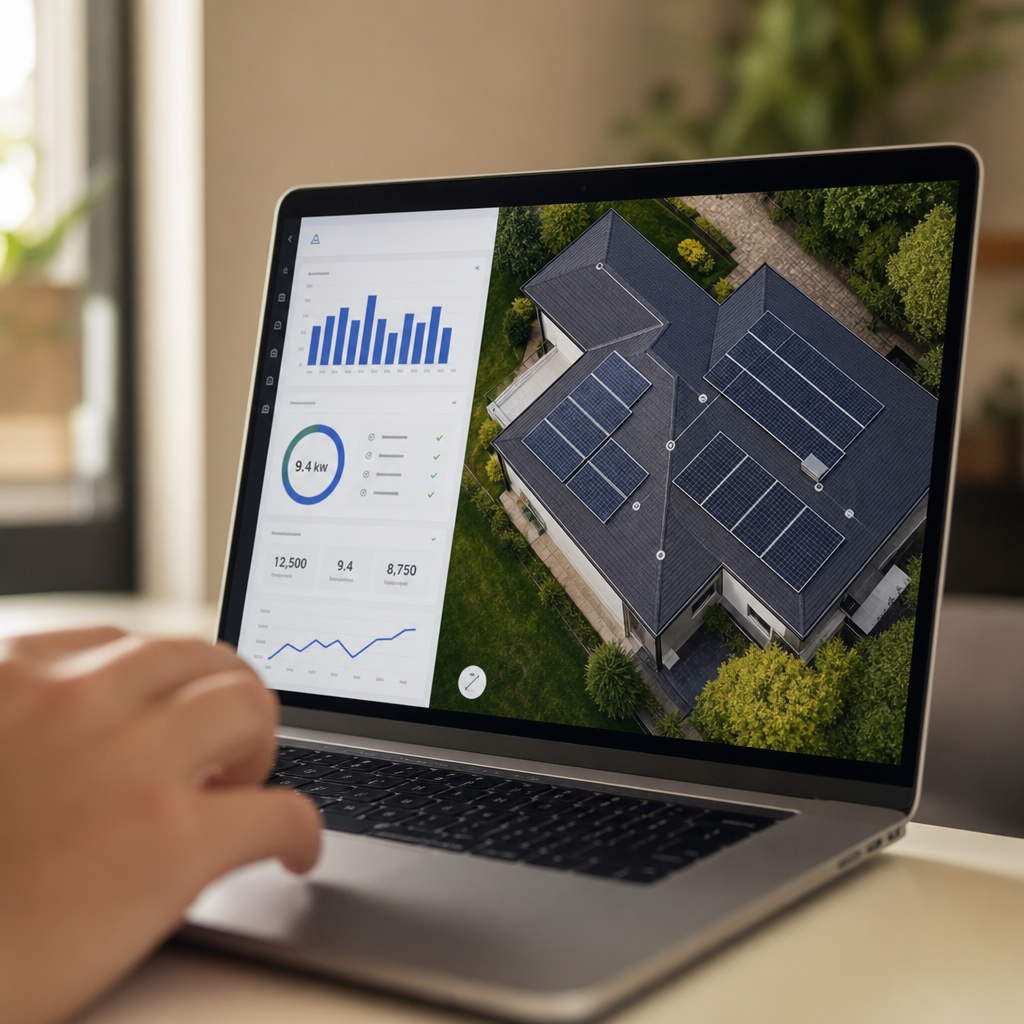
Choosing the right solar panel system size is one of the most important decisions a California homeowner will make during the transition to clean energy. Install too small a system and you'll still be writing checks to your utility every month. Install too large a system and you'll overpay for equipment you don't need. This is exactly why a solar panel system size calculator has become an essential first step for homeowners researching solar — it translates your electricity usage, roof characteristics, and local sunlight data into a right-sized recommendation before you ever talk to an installer.
This article breaks down exactly how these calculators work, what inputs drive accuracy, and how to interpret the results so you can make a confident, informed decision. We'll also look at real data tables, common mistakes, and how a properly sized system pairs with battery storage for maximum savings.
A solar panel system size calculator is a digital tool that estimates how many solar panels — and how much total system capacity, measured in kilowatts (kW) — your home needs to offset your electricity usage. It does this by combining several data points:
The calculator then runs these variables through a production formula to estimate the system size needed to generate enough electricity to meet your household's annual demand. Reputable tools, including resources like the National Renewable Energy Laboratory's PVWatts Calculator, use decades of weather and irradiance data to produce highly accurate estimates.
For California homeowners specifically, this matters more than in most states. California has some of the highest electricity rates in the country and a uniquely sunny climate, meaning the math around system size directly affects your payback period and long-term savings. According to the U.S. Energy Information Administration, California residential electricity rates have consistently ranked among the top five highest in the nation, which makes accurate system sizing even more financially significant.
While every calculator has its own interface, nearly all of them rely on a version of the same underlying formula:
System Size (kW) = Annual kWh Usage ÷ (Peak Sun Hours × 365 × System Efficiency)
Let's break that down:
Here's an example calculation for a household using 11,000 kWh annually in Sacramento, which averages about 5.8 peak sun hours per day:
11,000 ÷ (5.8 × 365 × 0.82) ≈ 6.3 kW system
This is a simplified version of what professional-grade tools calculate automatically, but understanding the formula helps you sanity-check any estimate you receive online or from an installer.
Small changes in input data can shift your recommended system size significantly. Here are the variables that matter most:
| Input Variable | Why It Matters | Typical Impact on System Size |
|---|---|---|
| Annual electricity usage | Primary driver of total energy demand | High |
| Roof orientation | South-facing roofs produce more energy than east/west | Moderate to High |
| Shading (trees, chimneys, neighboring structures) | Reduces usable sunlight hours | Moderate |
| Local climate/peak sun hours | Determines how much energy each panel produces | Moderate |
| Planned EV or battery addition | Increases future electricity demand | High |
| Panel efficiency rating | Higher efficiency means fewer panels needed for same output | Moderate |
Homeowners planning to purchase an electric vehicle or add a battery storage system in the next few years should account for that future demand now. Resizing a system later is far more expensive than installing slightly larger capacity upfront. This is a conversation worth having early with a solar provider — the team at www.everysun.com routinely helps homeowners model future energy needs, including EV charging, as part of the initial system design process.
Not every home needs the same system. Below is a general comparison of typical system sizes based on household energy consumption patterns common across California.
| Household Profile | Avg. Monthly Usage (kWh) | Estimated System Size | Approx. Panel Count (400W panels) |
|---|---|---|---|
| Small home, 1-2 occupants | 400–600 | 3.5–5 kW | 9–13 |
| Average family home, 3-4 occupants | 700–1,000 | 6–8 kW | 15–20 |
| Larger home with pool/AC | 1,100–1,500 | 8.5–11 kW | 21–28 |
| Home with EV charging | 1,300–1,800 | 10–13 kW | 25–33 |
| Home with EV + battery storage | 1,500–2,000+ | 11–15 kW | 28–38 |
These figures are estimates and will vary based on your specific location, roof conditions, and panel efficiency. Still, this table is useful for setting expectations before you request a formal quote.
Even with a reliable calculator, it's easy to end up with an inaccurate estimate if the wrong inputs are used. Here are the most frequent mistakes:
Avoiding these pitfalls is one reason many California homeowners choose to pair an online calculator estimate with a professional site assessment. Installers can physically verify shading, roof condition, and electrical panel capacity — details a calculator alone cannot capture. For an in-depth explanation of what that formal assessment typically includes, see this resource on what to expect from a solar panel installation quote.
California's solar policy landscape has changed significantly in recent years, and it directly affects how calculators should be interpreted. Under the state's current net billing structure, known as NEM 3.0, the value of exporting excess solar electricity back to the grid is substantially lower than it was under previous net metering rules. This shift, detailed by the California Public Utilities Commission, has changed the calculus for how big a system should be.
Under the old framework, oversizing a system to export extra power was often financially advantageous. Under NEM 3.0, however, self-consumption — using the electricity you generate directly, or storing it in a battery for evening use — is far more valuable than exporting it to the grid at reduced compensation rates. This means:
This is a critical nuance that generic, national calculators sometimes miss, since net metering rules vary significantly by state and utility. A locally informed installer can adjust your sizing recommendation to reflect current California billing structures and your specific utility — whether that's PG&E, SCE, or SDG&E — each of which has slightly different rate structures and time-of-use periods, as outlined by the U.S. Department of Energy's Solar Energy Technologies Office.

Adding battery storage to your solar system doesn't just provide backup power during outages — it fundamentally changes how your solar system should be sized. When batteries are part of the equation, the goal shifts from "produce enough to offset annual usage" to "produce and store enough to cover daily and evening demand with minimal grid reliance."
Here's how battery storage typically affects sizing decisions:
| Scenario | System Sizing Priority | Typical Battery Capacity |
|---|---|---|
| Solar only, grid-tied | Match annual production to annual usage | None |
| Solar + partial backup battery | Cover essential loads during outages | 5–10 kWh |
| Solar + whole-home battery | Cover most evening/night usage | 10–20 kWh |
| Solar + battery for storm resilience | Prioritize reliability over cost optimization | 15–30 kWh |
Because California experiences periodic wildfire-related public safety power shutoffs, many homeowners are sizing systems not just for bill savings but for resilience. A calculator that doesn't ask about backup power goals may under-recommend battery capacity, leaving homeowners without enough stored energy when it matters most.
If you're evaluating whether to bundle battery storage with your solar installation, it's worth reviewing how combined systems affect monthly costs and savings. The team at www.everysun.com specializes in designing systems that balance upfront investment with long-term resilience and savings, using US-made high-efficiency panels paired with rigorous Swedish-standard safety and installation practices.
Once you have a system size estimate — whether from an online calculator or manual calculation — the next step is translating that number into a real-world installation plan. Here's a simple roadmap:
A reputable installer will walk you through each of these steps, not just hand you a number. Because sizing errors are costly and difficult to correct after installation, it's worth investing time upfront to get this right — ideally with both a calculator estimate and a professional consultation working together.
A solar panel system size calculator is a valuable starting point, but it's most useful when paired with real-world site data, accurate utility rate structures, and a clear understanding of your household's future energy needs. California's unique combination of high electricity rates, strong solar irradiance, and evolving net metering rules means generic estimates only go so far — precision matters, and so does local expertise.
Everysun combines US-made high-efficiency solar panels with Swedish-engineered safety and installation standards, backed by a 20-year installation guarantee and 25-year product warranties, to help California homeowners design systems that are sized correctly the first time. Whether you're exploring solar for the first time or refining your battery storage strategy, www.everysun.com offers the technical expertise and flexible payment options to make a right-sized, future-ready solar investment both achievable and affordable.
© 2025 Everysun Inc. All Rights Reserved.


Get Your Free Solar Quote
Request your free quote and see how solar can work for your home and budget